
Close Menu
    Trending
    • Red Sox face a tough question for the next two weeks
    • What It Really Takes to Turn Income Into Real Wealth
    • Speeding may be costing drivers far more than a ticket
    • Fishery Satellite Surveillance Redefines Ocean Oversight
    • The Ebb & Flow | Armstrong Economics
    • Firefighters Forced to Cut Apart Porta-Potty After Man Somehow Became Trapped Underneath the Toilet * The Gateway Pundit * by Jim Hᴏft
    • Kesha Reveals How Her Failed Album Led to Her ‘Freedom’
    • New Zealand downgrades tsunami alert after quake
    Benjamin Franklin Institute
    Thursday, July 16
    • Home
    • Politics
    • Business
    • Science
    • Technology
    • Arts & Entertainment
    • International
    Benjamin Franklin Institute
    Home»Science»Seafarers were visiting remote Arctic islands over 4000 years ago
    Science

    Seafarers were visiting remote Arctic islands over 4000 years ago

    Team_Benjamin Franklin InstituteBy Team_Benjamin Franklin InstituteFebruary 9, 2026No Comments4 Mins Read
    Share Facebook Twitter Pinterest Copy Link LinkedIn Tumblr Email VKontakte Telegram
    Share
    Facebook Twitter Pinterest Email Copy Link


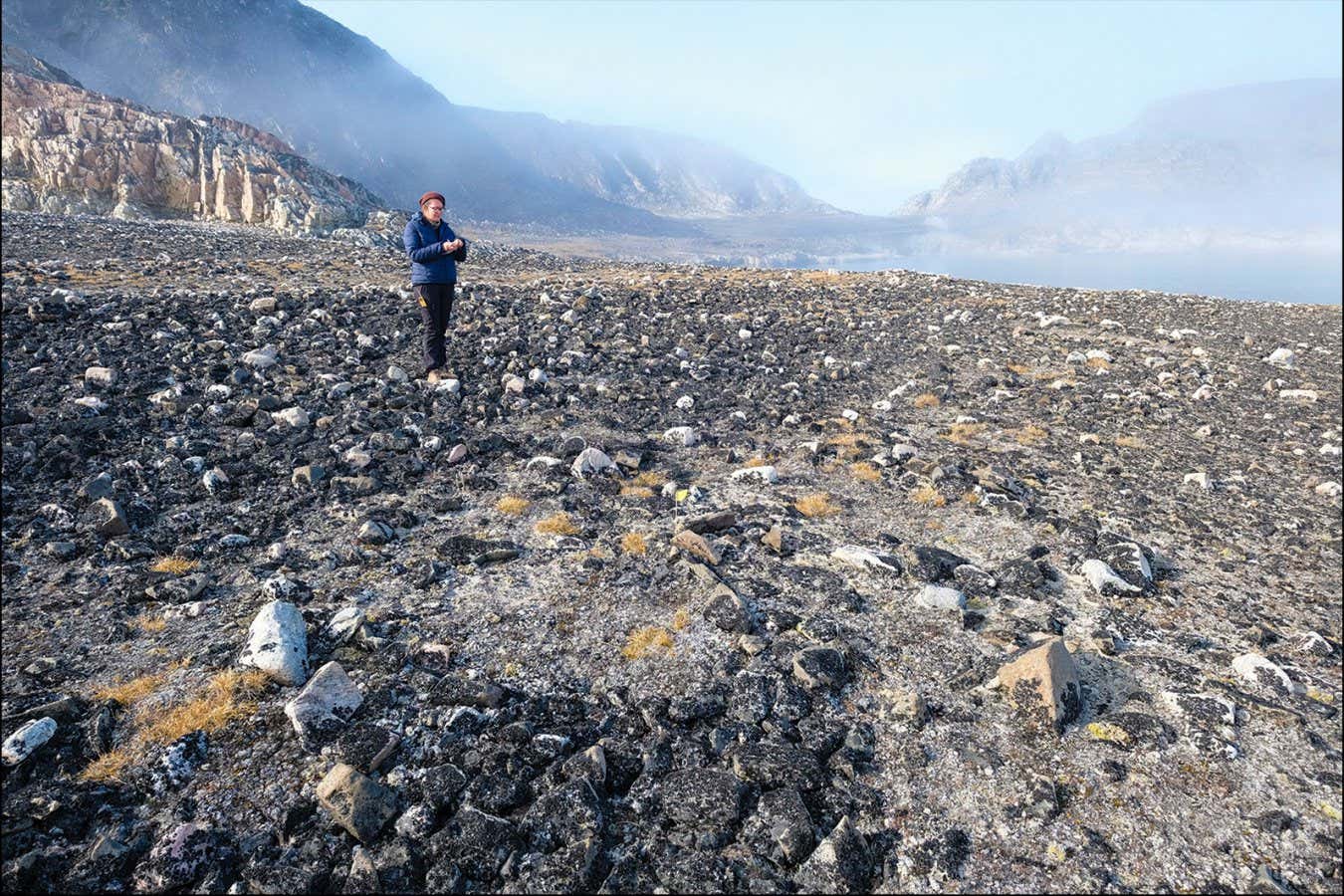
    A site on Isbjørne Island where Palaeo-Inuit people erected a circular tent

    Matthew Walls, Mari Kleist, Pauline Knudsen

    Humans were voyaging to remote islands off the north-west coast of Greenland 4500 years ago. This required them to cross over 50 kilometres of open water – one of the longest sea journeys made by Indigenous peoples in the Arctic.

    These intrepid seafarers were the first humans to ever reach these islands, says archaeologist John Darwent at the University of California, Davis, who wasn’t involved in the study.

    In 2019, Matthew Walls at the University of Calgary in Canada and his colleagues surveyed the Kitsissut Islands, also known as the Carey Islands, north-west of Greenland. The islands lie in the Pikialasorsuaq polynya, an area of open water surrounded by sea ice. Studies of marine sediments indicate that the polynya only formed about 4500 years ago.

    The researchers focused on the three central islands: Isbjørne, Mellem and Nordvest. They found five sites with a total of 297 archaeological features. The biggest clusters were on Isbjørne, along beach terraces. There, the team found traces of 15 circular tents, each divided into two halves by stones, with a central hearth. These “bilobate” tents are characteristic of the Paleo-Inuit, the first peoples to reach northern Canada and Greenland.

    Walls and his colleagues radiocarbon-dated a single wing bone from a seabird called a thick-billed murre, found in one of the tent rings. They estimate the bone is 4400 to 3938 years old. This indicates that people were on the Kitsissut Islands by this time, very soon after the polynya formed.

    “There’s a nesting colony of thick-billed murre,” says Walls. People would have collected their eggs and hunted them for meat. He suspects they also hunted seals.

    The Paleo-Inuit were already on Greenland by this time and probably voyaged west from there to Kitsissut, says Walls. “The shortest distance is about 52.7 kilometres.” However, given prevailing currents and winds, they probably set off from a more northerly point, resulting in a longer but safer journey. To the west of Kitsissut is Ellesmere Island, which today is part of Canada, but it is further away and the currents in between are challenging.

    The only comparable sea journey known from Arctic prehistory is the crossing of the 82-kilometre Bering Strait, from Siberia into Alaska, which was probably first made at least 20,000 years ago. However, the Diomede Islands serve as a stopping point halfway across.

    “They did have to have some sophisticated watercraft in order to cross that stretch of water,” says Darwent. Given the size of the community on Kitsissut, single-person kayaks wouldn’t have been enough. “It is whole families, and you’re not going to be able to take kids and maybe elderly across into that sort of area with kayaks,” he says. Instead, the Paleo-Inuit must have used larger craft that could carry perhaps nine or 10 people.

    No boat remains were found on Kitsissut, and such remains are scarce in the Arctic. “They would have been skin-on-frame watercraft,” says Walls, like those used by later Inuit communities.

    These first Paleo-Inuit settlers would have helped shape the ecosystem of Kitsissut, says Walls. By bringing nutrients in from the sea and leaving their waste on land, they fertilised the barren soils and enabled vegetation to grow on the islands. “You have rich vegetation there, at least at the start, that’s dependent in some ways on humans who are part of the cycling of nutrients between those systems.”

    New Scientist. Science news and long reads from expert journalists, covering developments in science, technology, health and the environment on the website and the magazine.

    Arctic expedition cruise with Dr Russell Arnott: Svalbard, Norway

    Embark on an unforgettable marine expedition to the Arctic, accompanied by marine biologist Russell Arnott.

    Topics:


    Source link

    Share. Facebook Twitter Pinterest LinkedIn Tumblr Email Telegram Copy Link

    Related Posts

    Science

    Speeding may be costing drivers far more than a ticket

    July 16, 2026
    Science

    Astronomers just accidentally spotted the faintest exoplanet ever seen from Earth

    July 16, 2026
    Science

    Watch SpaceX’s Starship flight 13 launch tonight

    July 16, 2026
    Science

    See the first x-rays of humans taken in space

    July 16, 2026
    Science

    Mathematicians are closing in on the hidden order inside chaos

    July 16, 2026
    Science

    How to avoid getting cyclosporiasis—and why washing lettuce may not be enough

    July 16, 2026
    Editors Picks

    Trump battles Minneapolis shooting fallout as agents put on leave

    January 29, 2026

    Trump says he could be impeached if Republicans lose Congress in midterms | Donald Trump News

    January 6, 2026

    BYD’s annual profit drops for first time in four years as price war hurts margins

    March 27, 2026

    Tate McRae Doesn’t ‘Regret’ Collaboration With Morgan Wallen

    December 12, 2025

    Israelis and Iranians Embrace a Return to Normalcy as Truce Holds

    June 25, 2025
    About Us
    About Us

    Welcome to Benjamin Franklin Institute, your premier destination for insightful, engaging, and diverse Political News and Opinions.

    The Benjamin Franklin Institute supports free speech, the U.S. Constitution and political candidates and organizations that promote and protect both of these important features of the American Experiment.

    We are passionate about delivering high-quality, accurate, and engaging content that resonates with our readers. Sign up for our text alerts and email newsletter to stay informed.

    Latest Posts

    Red Sox face a tough question for the next two weeks

    July 16, 2026

    What It Really Takes to Turn Income Into Real Wealth

    July 16, 2026

    Speeding may be costing drivers far more than a ticket

    July 16, 2026

    Subscribe for Updates

    Stay informed by signing up for our free news alerts.

    Paid for by the Benjamin Franklin Institute. Not authorized by any candidate or candidate’s committee.
    • Privacy Policy
    • About us
    • Contact us

    Type above and press Enter to search. Press Esc to cancel.