
Close Menu
    Trending
    • Beijing’s new supply chain rules deepen concerns for US firms in China
    • India denounces ‘hellhole’ remark shared by Trump | Donald Trump News
    • New photos of Mike Vrabel and Dianna Russini emerge
    • AI search demands a new audience playbook
    • How do earthquakes end? A seismic ‘stop sign’ could help predict earthquake risk
    • Trump Announces Cease-Fire Between Israel and Lebanon
    • Google Is Tracking Your Life – Photo Cloud Feeding AI System
    • Rachel Zoe Confronts Amanda Frances In ‘RHOBH’ Reunion Clip
    Benjamin Franklin Institute
    Friday, April 24
    • Home
    • Politics
    • Business
    • Science
    • Technology
    • Arts & Entertainment
    • International
    Benjamin Franklin Institute
    Home»Science»Satellites could use magnetic fields to avoid collisions
    Science

    Satellites could use magnetic fields to avoid collisions

    Team_Benjamin Franklin InstituteBy Team_Benjamin Franklin InstituteJanuary 20, 2026No Comments3 Mins Read
    Share Facebook Twitter Pinterest Copy Link LinkedIn Tumblr Email VKontakte Telegram
    Share
    Facebook Twitter Pinterest Email Copy Link


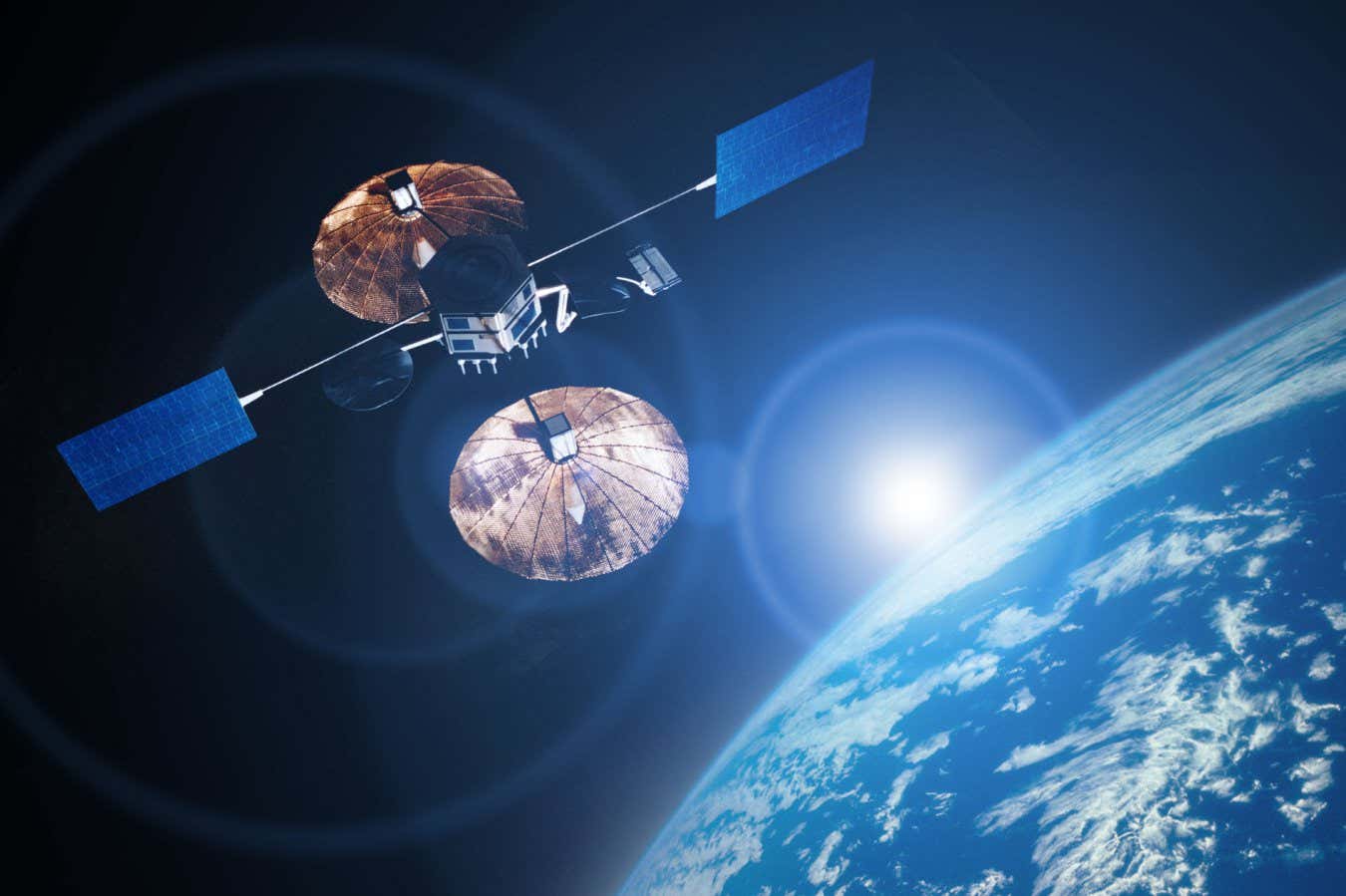
    There may be a new way to control satellites in space

    Mike_shots/Shutterstock

    It may be possible to keep space exploration missions running longer and avoid spacecraft colliding with each other using a technique that harnesses magnetic fields to move satellites.

    Currently, most space missions and satellites have a finite lifespan because the objects are moved around in space using propellant fuel, which often runs out. One alternative method called Electromagnetic Formation Flying (EMFF) relies on renewable power sources, such as solar panels, to power electromagnetic coils on board the satellites. These generate a magnetic field which, through interaction with similar magnetic fields generated on any nearby satellite, can theoretically be used to manoeuvre the spacecraft.

    But researchers have encountered difficulties in using EMFF to move objects in space because of an issue called magnetic coupling. The magnetic field generated by a satellite doesn’t interfere with just one nearby satellite but with all the satellites around it, making it tricky to move more than two nearby satellites in a controlled way.

    A team of researchers at the University of Kentucky has found a potential solution through the use of a different approach, called Alternating Magnetic Field Forces (AMFF).

    This approach allows two satellites to communicate and control their movement relative to each other without interfering with a third nearby satellite. To do this, the researchers used unique interaction frequencies, which means that two satellites can communicate and coordinate their movement on one frequency while simultaneously communicating with other nearby satellites on different frequencies.

    The AMFF concept was tested on Earth rather than in space. Three satellites were placed on special linear rails that use high-pressure air to create a low-friction environment. The satellites successfully managed to interact with each other, moving to precise distances the researchers had defined with the help of in-built laser ranging modules.

    The team behind the project did not respond to interview requests. But Alvar Saenz Otero at the University of Washington says that the paper is a step forward in a long-running area of research. “The complexity of formation flying systems takes a big jump from two units to three units,” he explains.

    But Otero is less certain whether we’re likely to see this driving satellites in low Earth orbit, including in the mega constellations of satellites like those powering Starlink. “Everything we ever did for EMFF was always about deep space operations,” he says.

    Earth’s atmosphere, as well as the moon and sun, can create interference at the frequencies used for either EMFF or AMFF, he says.

    And while three units can now fly in unison and be moved using magnetic fields, scaling that up to control the movement of thousands of satellites is a different task entirely. “It’s not something that applies at a constellation level,” says Ray Sedwick at the University of Maryland.

    “The range that EMFF can work over increases significantly if you employ superconducting magnetic coils, but there are technical challenges here,” explains Sedwick – suggesting that magnetic movement at a grand scale is a while off yet.

    Topics:


    Source link

    Share. Facebook Twitter Pinterest LinkedIn Tumblr Email Telegram Copy Link

    Related Posts

    Science

    How do earthquakes end? A seismic ‘stop sign’ could help predict earthquake risk

    April 24, 2026
    Science

    ‘Kraken’ fossils show enormous, intelligent octopuses were top predators in Cretaceous seas

    April 24, 2026
    Science

    Largest ever octopus was great white shark of invertebrate predators

    April 24, 2026
    Science

    Do you need to worry about Mythos, Anthropic’s computer-hacking AI?

    April 23, 2026
    Science

    How many dachshunds would it take to get to the moon?

    April 23, 2026
    Science

    The Age Code review: Can you slow ageing with your diet? A new book gives it a go

    April 23, 2026
    Editors Picks

    Why Entrepreneurs Are Swapping Beach Vacations for Longevity Retreats

    July 2, 2025

    Opinion | America Is Bad at Accountability

    January 7, 2026

    Israeli forces kill Palestinian man in occupied West Bank | Israel-Palestine conflict News

    January 25, 2026

    Why your best ideas get ignored during meetings

    March 13, 2026

    Pope Leo, in Cameroon, decries ‘handful of tyrants’ ravaging the world

    April 16, 2026
    About Us
    About Us

    Welcome to Benjamin Franklin Institute, your premier destination for insightful, engaging, and diverse Political News and Opinions.

    The Benjamin Franklin Institute supports free speech, the U.S. Constitution and political candidates and organizations that promote and protect both of these important features of the American Experiment.

    We are passionate about delivering high-quality, accurate, and engaging content that resonates with our readers. Sign up for our text alerts and email newsletter to stay informed.

    Latest Posts

    Beijing’s new supply chain rules deepen concerns for US firms in China

    April 24, 2026

    India denounces ‘hellhole’ remark shared by Trump | Donald Trump News

    April 24, 2026

    New photos of Mike Vrabel and Dianna Russini emerge

    April 24, 2026

    Subscribe for Updates

    Stay informed by signing up for our free news alerts.

    Paid for by the Benjamin Franklin Institute. Not authorized by any candidate or candidate’s committee.
    • Privacy Policy
    • About us
    • Contact us

    Type above and press Enter to search. Press Esc to cancel.