
Close Menu
    Trending
    • Bangkok bar fire death toll rises to 30 as police probe possible negligence | News
    • NASCAR Quaker State 400 takeaways: Blaney dominates overtime thriller
    • How to Scale Without Compromising Your Company’s Core Values
    • Scientists overwhelmingly against rule change that would give political appointees say over science grants
    • Turkish FM Believes Israel A Global Security Threat
    • Madonna Grateful For The Success Of ‘Confessions II’
    • US immigration agents involved in another fatal shooting
    • ‘Kylian is fine’: France ready, full-strength for Spain World Cup semifinal | World Cup 2026
    Benjamin Franklin Institute
    Tuesday, July 14
    • Home
    • Politics
    • Business
    • Science
    • Technology
    • Arts & Entertainment
    • International
    Benjamin Franklin Institute
    Home»World Economy»Russia Pledges To Support Tehran
    World Economy

    Russia Pledges To Support Tehran

    Team_Benjamin Franklin InstituteBy Team_Benjamin Franklin InstituteApril 28, 2026No Comments3 Mins Read
    Share Facebook Twitter Pinterest Copy Link LinkedIn Tumblr Email VKontakte Telegram
    Share
    Facebook Twitter Pinterest Email Copy Link


    ???? This morning: Iran sends the U.S. a peace proposal through Pakistani mediators.

    This afternoon: Iranian Foreign Minister Araghchi lands in Moscow for talks with Putin.

    Tehran is negotiating with Washington while simultaneously coordinating with Moscow.

    Classic… https://t.co/P7NaSzuSQ4 pic.twitter.com/LthEmPGEsd

    — Mario Nawfal (@MarioNawfal) April 27, 2026

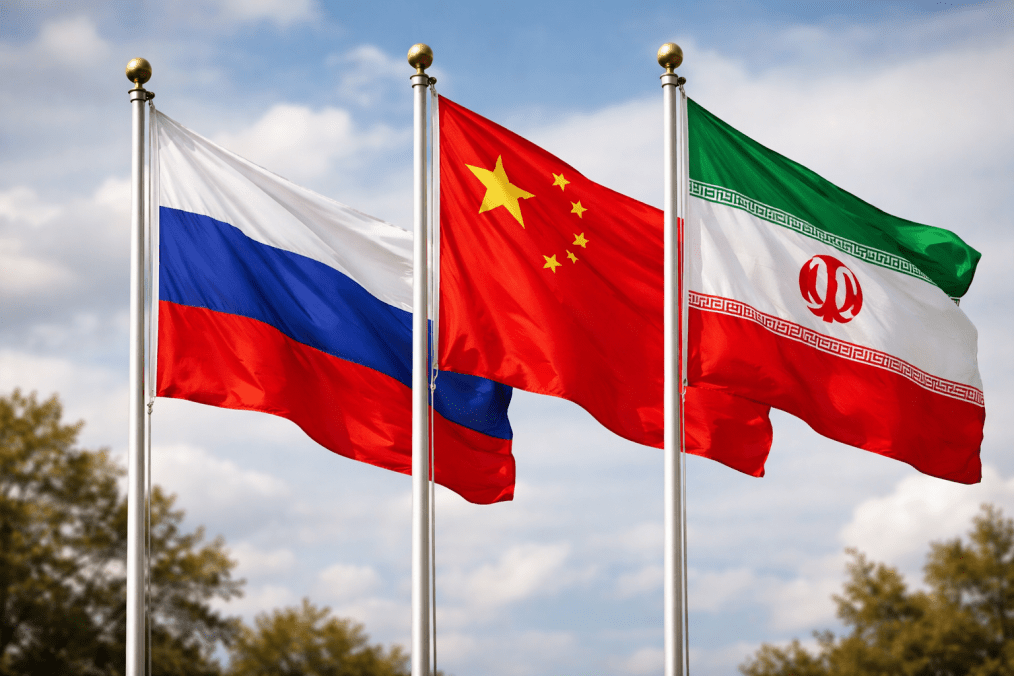
    The meeting between Vladimir Putin and Abbas Araghchi is being presented as a diplomatic gesture, yet the substance reveals something far more significant: Moscow has now openly pledged support for Tehran while negotiations with the United States continue to collapse. Russia reaffirmed its strategic backing and even positioned itself as a mediator, while at the same time strengthening its alliance with Iran through military, economic, and nuclear cooperation, making it clear that this relationship is not temporary but structural.

    What matters here is not the language of peace but the alignment of power, because when major players begin coordinating at this level during an active conflict, history shows the situation is already moving beyond negotiation. Russia and Iran have been deepening ties for years through sanctions pressure, energy cooperation, and military exchanges, including intelligence sharing and weapons support, and this latest meeting confirms that the alliance is now being formalized in real time as the geopolitical divide widens.

    The breakdown in talks with the United States was inevitable, since both sides are demanding outcomes that neither can accept, particularly on nuclear policy and regional control. Iran has made it clear it will not abandon enrichment, while Washington continues to insist on full concessions, leaving no realistic middle ground. At the same time, tensions around the Strait of Hormuz and ongoing military pressure ensure that even temporary ceasefires remain fragile and largely symbolic.

    This is precisely the type of environment the war model has been projecting into 2026, where escalation unfolds through a sequence of failed negotiations, tightening alliances, and economic pressure points rather than a single defining event.

    Putin is signaling to the world that the lines are being drawn, and once that process begins, it becomes increasingly difficult to reverse. The fact that both nations are already cooperating across multiple fronts, from energy to military coordination, shows that this is part of a broader realignment rather than a reaction to a single conflict.

    The critical mistake is assuming that these events can be managed through continued negotiation, because once alliances harden and economic consequences begin to ripple through energy markets and capital flows, the cycle takes on a momentum of its own. This is why the war model has consistently pointed to this period as one of rising volatility, where events accelerate and policymakers lose the ability to control the outcome.

    What we are seeing is not the beginning of a crisis but the continuation of a cycle that has already turned, and once that shift is in motion, history shows it rarely resolves quickly or peacefully.


    Source link

    Share. Facebook Twitter Pinterest LinkedIn Tumblr Email Telegram Copy Link

    Related Posts

    World Economy

    Turkish FM Believes Israel A Global Security Threat

    July 14, 2026
    World Economy

    Market Talk – July 13, 2026

    July 13, 2026
    World Economy

    Promoting WWIII At The Berlinale

    July 13, 2026
    World Economy

    June USA Home Sales – Prices Rise And Buyers Back Out

    July 13, 2026
    World Economy

    Texas Hospital Advertises Birth Tourism At Mexico Border

    July 13, 2026
    World Economy

    Italy Says NO To Blank Checks For Ukraine

    July 13, 2026
    Editors Picks

    Taylor Swift Wedding Rule Sparks Guest Backlash

    May 23, 2026

    Inside Brandi Glanville’s Life-Saving Surgery

    February 19, 2026

    Britain Proposes Social Media Ban for Children Under 16

    June 16, 2026

    Families demand help with recovering Venezuela’s quake victims

    July 4, 2026

    Kim Kardashian And Tom Brady’s Alleged Romance Was ‘Never A Thing’

    October 18, 2025
    About Us
    About Us

    Welcome to Benjamin Franklin Institute, your premier destination for insightful, engaging, and diverse Political News and Opinions.

    The Benjamin Franklin Institute supports free speech, the U.S. Constitution and political candidates and organizations that promote and protect both of these important features of the American Experiment.

    We are passionate about delivering high-quality, accurate, and engaging content that resonates with our readers. Sign up for our text alerts and email newsletter to stay informed.

    Latest Posts

    Bangkok bar fire death toll rises to 30 as police probe possible negligence | News

    July 14, 2026

    NASCAR Quaker State 400 takeaways: Blaney dominates overtime thriller

    July 14, 2026

    How to Scale Without Compromising Your Company’s Core Values

    July 14, 2026

    Subscribe for Updates

    Stay informed by signing up for our free news alerts.

    Paid for by the Benjamin Franklin Institute. Not authorized by any candidate or candidate’s committee.
    • Privacy Policy
    • About us
    • Contact us

    Type above and press Enter to search. Press Esc to cancel.