

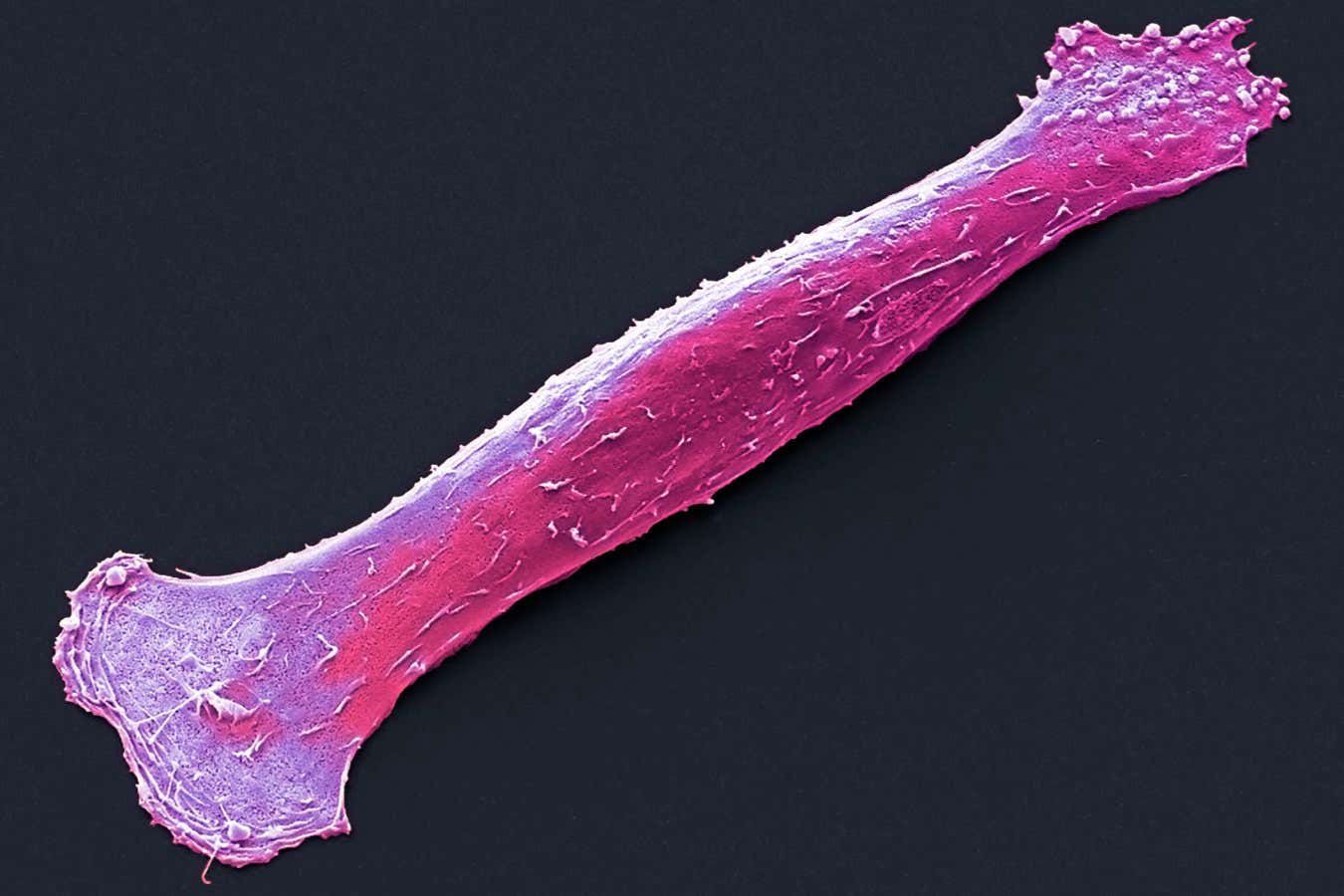
A scanning electron micrograph of an embryonic muscle cell differentiating in to a skeletal muscle cell
STEVE GSCHMEISSNER/SCIENCE PHOTO LIBRARY
Old mice grow bigger muscles and recover from injuries better when stem cells are taken out of their aged muscles, given a reboot, then put back in. A similar approach may allow rejuvenation of ageing muscles in people too.
“In theory, if you took an elderly person’s muscle stem cells out, charged them up and put them back in, they would probably be more functional,” says James White at Duke University in North Carolina.
Muscle stem cells generally lie dormant in muscle tissue, but when a muscle is injured, they grow into new muscle cells to patch up the damage. “Muscles rely very much on regeneration because they’re so susceptible to mechanical strain,” says White. “When you work out and feel sore, that’s muscle damage. The immune system talks to the stem cells and they repair the damage by making new muscle from scratch.”
With age, however, muscle stem cells decline in number and become worse at regenerating injured tissue. In experiments in mice, White and his colleagues found that this is because aged muscle stem cells contain less of an enzyme called glutaminase. This affects their ability to produce fatty molecules like palmitate and oleate, known as lipids, which are fundamental building blocks of cells. “Stem cells have to get multiple times larger to turn into muscle cells, so they need lipids to build cell membranes and also to use for energy,” says White.
To correct this deficiency, the researchers took muscle stem cells from old mice and supplemented them with extra palmitate and oleate in a dish. These replenished stem cells were then injected into injured leg muscles of other old mice. Over the next few days, the mice grew new muscle fibres in their injured legs that were 45 per cent bigger than when they received untreated muscle stem cells. The treatment also resulted in better leg function when the mice walked on a treadmill and did other mobility tests.
In people, levels of glutaminase enzyme also decline with age in muscle stem cells, which may explain why our muscles become smaller and weaker as we get older and don’t bounce back as well from injury. These muscle changes often reduce mobility and quality of life, while also increasing the risk of falls.
We may be able to reduce or reverse this muscle deterioration by boosting levels of glutaminase enzyme or palmitate and oleate lipids in muscle stem cells, says team member David Lee, also at Duke University. “We’re now looking for ways in which we can translate this to clinical approaches,” he says.
Swallowing glutaminase, palmitate or oleate in the form of oral supplements probably wouldn’t work because not enough would reach the tiny stem cells in muscles, says White. There would also be a risk of driving cancer, since cancer cells have similar ways of growing that use the same ingredients, he says. However, removing stem cells from older people’s muscles, activating them with enzymes or nutrients in a lab and then putting them back in may be safer and more effective, he says.
Young bodybuilders or athletes would not be able to gain bigger muscles or enhance recovery this way because they do not have stem-cell deficiencies to begin with, says White. “Their muscles are already chock full of stem cells and they’re all very functional and ready to go,” he says.
In related research, Florida-based company Longeveron is investigating whether infusions of young people’s stem cells might rejuvenate muscles and reduce frailty in older people. The company harvests mesenchymal stem cells, which have the capacity to turn into various cell types including muscle cells, from the bone marrow of healthy donors aged 18 to 45. When frail volunteers aged 75 to 80 received intravenous infusions of these young stem cells in a clinical trial, they were able to walk further afterwards.
Topics: