
Close Menu
    Trending
    • LeBron’s decision might force Jalen Brunson to do the unthinkable
    • 8 Unique Side Hustle Ideas for Summer 2026 and Beyond
    • NHTSA considers new car door safety rules after fatal Tesla crashes
    • PlayStation Network outage resolved after thousands of gamers unable to play
    • Market Talk – July 24, 2026
    • Joe Biden Gives Up, Declines to Seek Further Review of Appeals Court Ruling on Release of Audiotapes with Ghostwriter
    • Meghan McCain Claps Back At Being Called ‘Old And Ugly’
    • Mixed day for global equities as oil prices retreat
    Benjamin Franklin Institute
    Saturday, July 25
    • Home
    • Politics
    • Business
    • Science
    • Technology
    • Arts & Entertainment
    • International
    Benjamin Franklin Institute
    Home»Science»People saw a new colour for the first time in 2025
    Science

    People saw a new colour for the first time in 2025

    Team_Benjamin Franklin InstituteBy Team_Benjamin Franklin InstituteDecember 27, 2025No Comments3 Mins Read
    Share Facebook Twitter Pinterest Copy Link LinkedIn Tumblr Email VKontakte Telegram
    Share
    Facebook Twitter Pinterest Email Copy Link


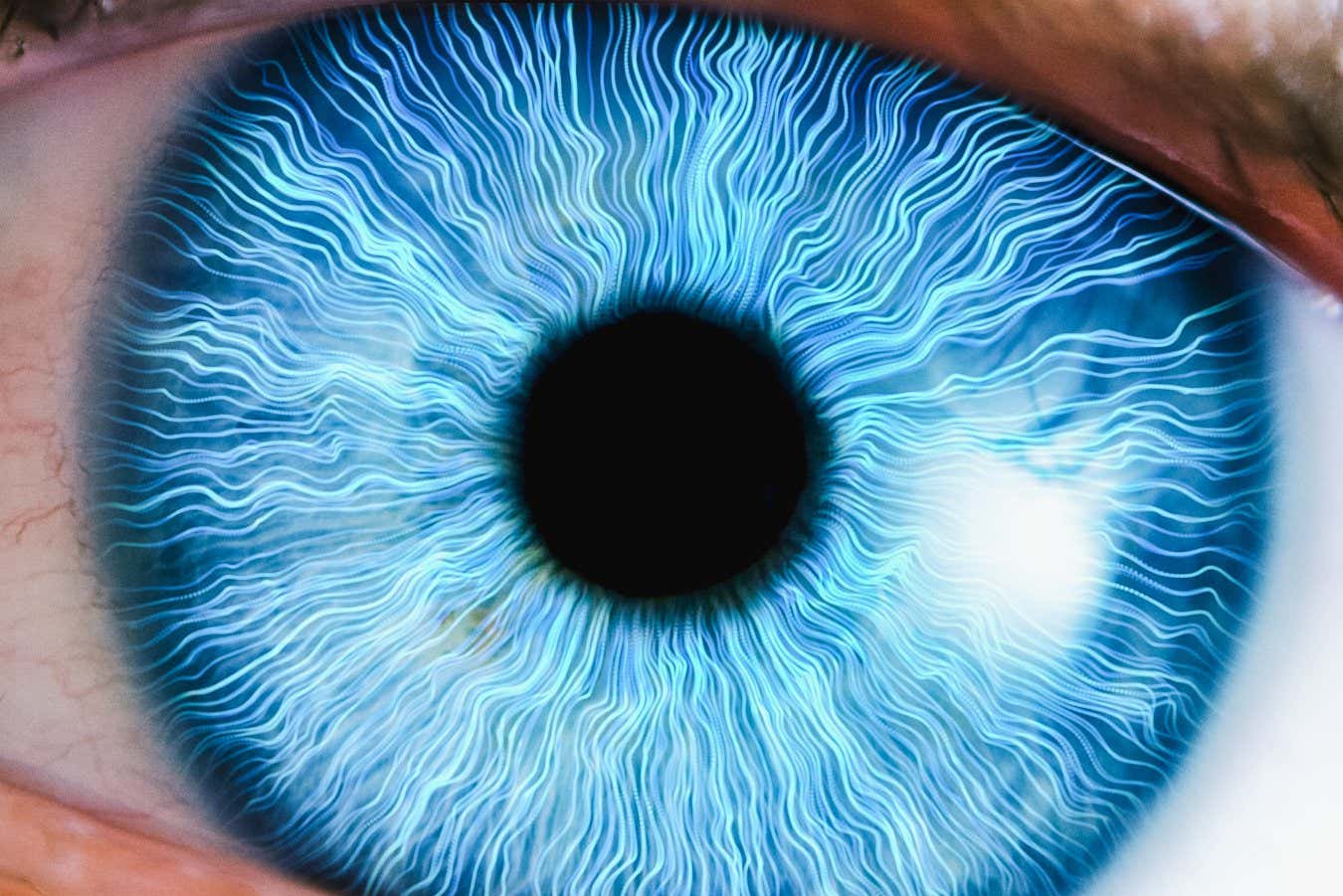
    We perceive colour using input from the cone cells in our retinas

    Shutterstock/Kitreel

    In April, a team of researchers reported a device enabled them to witness an intense green-blue colour that had never been seen by humans before. After the announcement, they were bombarded by requests from the public to see the colour for themselves.

    The device could enable people with some kinds of colour blindness to experience typical vision, and could even allow people with typical vision to perceive a wider range of hues. “We’re very interested in expanding the dimensions of the colour experience,” says Austin Roorda at the University of Waterloo in Canada.

    In most people, the retina at the back of the eye contains three types of cone cells – called S, M and L – that each detect light with a different range of wavelengths. Our brains create our perception of colour based on the signals from these three types of cones.

    The range of the visible spectrum detected by M cone cells overlaps with the ranges of the other two types, so we don’t normally receive signals from the M cells alone.

    Roorda and his colleagues used an extremely precise laser to specifically activate about 300 M cones in a small square patch of the retina. This patch corresponds with a part of the visual field equivalent to the size of your fingernail at arm’s length, says Roorda.

    When five of the researchers used the device, they saw a blue-green colour that was more intense than anything they had seen before, which they named “olo”. This was verified using a colour-matching test where they compared olo with the full spectrum of shades in the visible spectrum.

    “That was really quite a stunning moment,” says Roorda, who has seen olo more times than anyone else, owing to his key role in developing the system. “The most saturated natural light just looked pale by comparison.”

    After the achievement made a splash in the media, the team received dozens of requests from people – including artists – to view olo. But it takes several days to get the system set up for a new person, so the team couldn’t afford to accept these, says Roorda.

    Instead, they are focusing on two ongoing experiments. In the first, they will test whether the device could enable people with colour blindness to temporarily experience typical vision. Certain kinds of colour blindness are caused by only having two types of cones rather than three. “We would play some of the cones belonging to a single cone type a little differently to others of that cone type, and we think this will send signals to the brain as if they had a third cone type,” says Roorda. The hope is people’s brains will interpret those signals as new colours they haven’t perceived before, he says.

    The team is also exploring whether a similar approach could allow people with three cone types to experience the world as if they have four, which some people have naturally, enabling them to see a wider range of hues. Results from both experiments should be available next year, says Roorda.

    Topics:

    • neuroscience /
    • 2025 news review


    Source link

    Share. Facebook Twitter Pinterest LinkedIn Tumblr Email Telegram Copy Link

    Related Posts

    Science

    NHTSA considers new car door safety rules after fatal Tesla crashes

    July 24, 2026
    Science

    Fungus made fashion—researchers turn living organisms into textiles

    July 24, 2026
    Science

    How a 99-year-old mathematician unraveled a century-old braid mystery

    July 24, 2026
    Science

    Is it possible to regain a sense of smell? These scientists are working on it

    July 24, 2026
    Science

    Why don’t insects live in the ocean?

    July 24, 2026
    Science

    Why environmental groups are suing over SpaceX’s land swap deal

    July 24, 2026
    Editors Picks

    Israeli air strikes on Lebanon continue despite US-Iran deal | Israel attacks Lebanon News

    June 17, 2026

    Trump administration doubles down on military action in Latin America | Donald Trump News

    March 5, 2026

    Spain cruise past Peru in final World Cup 2026 warm-up match | World Cup 2026

    June 9, 2026

    China to stage drills around Taiwan in ‘stern warning’ to external forces | Military News

    December 29, 2025

    Wordle game to be turned into TV show with Jimmy Fallon’s company

    May 13, 2026
    About Us
    About Us

    Welcome to Benjamin Franklin Institute, your premier destination for insightful, engaging, and diverse Political News and Opinions.

    The Benjamin Franklin Institute supports free speech, the U.S. Constitution and political candidates and organizations that promote and protect both of these important features of the American Experiment.

    We are passionate about delivering high-quality, accurate, and engaging content that resonates with our readers. Sign up for our text alerts and email newsletter to stay informed.

    Latest Posts

    LeBron’s decision might force Jalen Brunson to do the unthinkable

    July 25, 2026

    8 Unique Side Hustle Ideas for Summer 2026 and Beyond

    July 24, 2026

    NHTSA considers new car door safety rules after fatal Tesla crashes

    July 24, 2026

    Subscribe for Updates

    Stay informed by signing up for our free news alerts.

    Paid for by the Benjamin Franklin Institute. Not authorized by any candidate or candidate’s committee.
    • Privacy Policy
    • About us
    • Contact us

    Type above and press Enter to search. Press Esc to cancel.