
Close Menu
    Trending
    • Katie Holmes And Joshua Jackson Spark ‘Soul-Level’ Love Chatter
    • Singapore Airlines, Southwest Airlines partner to expand access to nearly 120 US destinations
    • Trump warns Netanyahu: ‘You’ll be on your own’ if attacks on Iran continue | US-Israel war on Iran News
    • Cristiano Ronaldo, ‘The Bosnian Diamond’ headline the World Cup 40-and-over club
    • How housing market inventory is shifting across every state
    • What is a ‘normal’ memory slowdown, and when should I worry?
    • Ariana Grande And Ethan Slater Are ‘Still Friends’ Following Split
    • US says BYD, Baidu, Alibaba and other tech giants are aiding China’s military
    Benjamin Franklin Institute
    Tuesday, June 9
    • Home
    • Politics
    • Business
    • Science
    • Technology
    • Arts & Entertainment
    • International
    Benjamin Franklin Institute
    Home»Science»Neurodiversity reveals there’s no such thing as a normal brain: Best ideas of the century
    Science

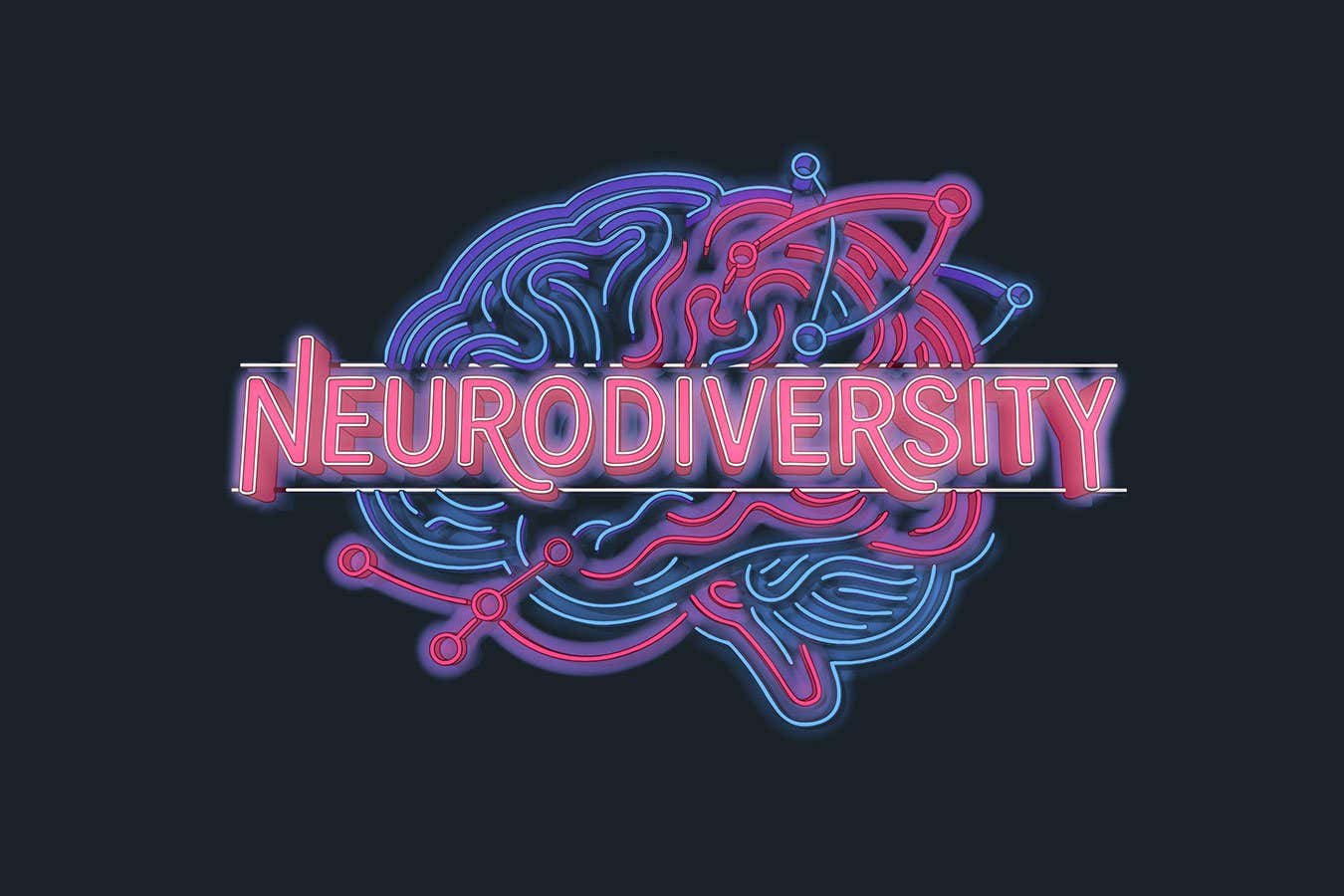
    Neurodiversity reveals there’s no such thing as a normal brain: Best ideas of the century

    Team_Benjamin Franklin InstituteBy Team_Benjamin Franklin InstituteJanuary 26, 2026No Comments3 Mins Read
    Share Facebook Twitter Pinterest Copy Link LinkedIn Tumblr Email VKontakte Telegram
    Share
    Facebook Twitter Pinterest Email Copy Link


    Once upon a time, science worked on the assumption that there was such a thing as a “normal” brain that neatly conformed to society. Those who were different might be diagnosed with an illness or mental health condition, and were treated as though something was wrong with them. Over the decades, scientists honed the concept that neurodevelopmental conditions such as autism, ADHD, dyslexia and dyspraxia should be considered distinct and were reflective of sharply different brains.

    Then, in the late 1990s, a new idea started to emerge. What if these “disorders” were better understood as natural variation in the way human brains can be wired? What if, instead of a hard line between normal and abnormal function, human traits and abilities existed on a spectrum along which we all fit somewhere? And while people towards the extremes experience challenges, their unusual brains also come with unique strengths. When seen this way, diverse brains aren’t a problem to be solved, but an asset that, if properly supported, could benefit everyone.

    The concept of neurodiversity grew out of discussions in online autism advocacy groups, but it wasn’t long before there was scientific evidence to support it. By 2013, the Diagnostic and Statistical Manual of Mental Disorders did away with the diagnosis of Asperger’s as a “higher-functioning” form of autism, instead recognising one condition, autism spectrum disorder, on a scale from level one to level three, depending on the amount of support required. The notion of neurodivergence as a spectrum was firmly embedded in medical literature.

    Studies from the early 2000s onwards have reported that autistic people are more likely to have above-average skills in mathematical reasoning and attention to detail. People with ADHD score higher on tests of creativity, as do people with dyslexia, who also excel at pattern recognition and big-picture thinking. People with dyspraxia have also been found to be more creative as they develop sophisticated coping methods.

    These kinds of findings led many scientists to believe that neurodiverse conditions are no evolutionary accident. They exist because our ancestors benefitted from having a few visionary thinkers, creative types and detail-driven perfectionists in the group. With a handful of brains wired with different specialist skills, the group would be better able to explore, adapt and survive. Some researchers are beginning to rethink the autism spectrum along these lines, too, suggesting that there may be distinct subtypes of the condition with different clusters of challenges and abilities.

    Some researchers warn that reframing neurodivergent conditions as “superpowers” may not always be helpful. “By being too positive, we risk undermining how serious it can be, particularly if unsupported,” says Jessica Eccles, a psychiatrist and neurodiversity researcher at Brighton and Sussex Medical School in the UK. Nevertheless, “now that we have a vocabulary for it, we have opened the door to understanding both its strengths and challenges so that people can move more easily through the world”, she says.

    Topics:


    Source link

    Share. Facebook Twitter Pinterest LinkedIn Tumblr Email Telegram Copy Link

    Related Posts

    Science

    What is a ‘normal’ memory slowdown, and when should I worry?

    June 9, 2026
    Science

    Wildlife thrives in solar farm built on restored peatland

    June 8, 2026
    Science

    You don’t need to worry about recursive-self-improving AI – yet

    June 8, 2026
    Science

    Understanding anorexia’s grip on the brain could unlock new therapies

    June 8, 2026
    Science

    Why GLP-1 drugs might reduce cancer risk

    June 8, 2026
    Science

    Landmark pancreatic cancer treatment paves way for targeting other tricky tumors

    June 8, 2026
    Editors Picks

    You’re banned from blocking Trump’s face on your national park pass—but there’s a work-around

    January 17, 2026

    Zoë Kravitz’s Fate At Taylor Swift’s Nuptials Sealed

    April 21, 2026

    The Relativistic Heavy Ion Collider’s end marks a new beginning for U.S. particle physics

    February 9, 2026

    Huge Bill Belichick, Bills update revealed after Philip Rivers interview

    January 26, 2026

    What we know about Iran’s response to US peace proposal

    May 11, 2026
    About Us
    About Us

    Welcome to Benjamin Franklin Institute, your premier destination for insightful, engaging, and diverse Political News and Opinions.

    The Benjamin Franklin Institute supports free speech, the U.S. Constitution and political candidates and organizations that promote and protect both of these important features of the American Experiment.

    We are passionate about delivering high-quality, accurate, and engaging content that resonates with our readers. Sign up for our text alerts and email newsletter to stay informed.

    Latest Posts

    Katie Holmes And Joshua Jackson Spark ‘Soul-Level’ Love Chatter

    June 9, 2026

    Singapore Airlines, Southwest Airlines partner to expand access to nearly 120 US destinations

    June 9, 2026

    Trump warns Netanyahu: ‘You’ll be on your own’ if attacks on Iran continue | US-Israel war on Iran News

    June 9, 2026

    Subscribe for Updates

    Stay informed by signing up for our free news alerts.

    Paid for by the Benjamin Franklin Institute. Not authorized by any candidate or candidate’s committee.
    • Privacy Policy
    • About us
    • Contact us

    Type above and press Enter to search. Press Esc to cancel.