

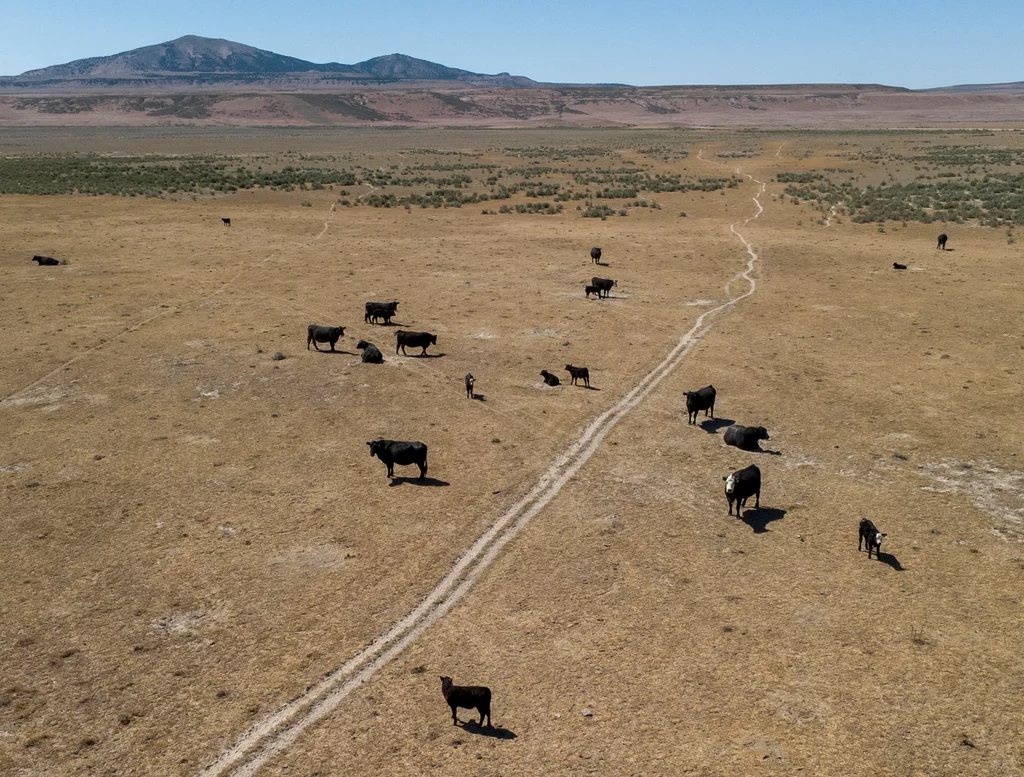
If it ever gets built, the 7.5-gigawatt Stratos data center project in Utah would dwarf the artificial intelligence infrastructure that’s been built to date. Covering 10,000 acres of cattle-grazing land north of the Great Salt Lake, it would arguably be the largest data center in the world.
That has many people in Utah concerned.
The developer behind the project is Kevin O’Leary, the real estate investor familiar to many as a star of the ABC television show Shark Tank (and also the villain in the 2025 movie Marty Supreme). He says the increasingly competitive race for AI dominance among hyperscaler companies like OpenAI, Anthropic, Amazon, Google, Meta, and Microsoft is paving the way for giant data centers like Stratos to become the new normal.
“They’re all going to be built like this because the economics are so brutal, you need scale,” he says.
Nonetheless, the prospect of a 10,000-acre data center has rankled some in the Salt Lake City area who worry about its energy use, impact on the land and, most sensitively, its potential to drain water from the Great Salt Lake.
The project received an initial approval on May 4 by the Box Elder County Commission, which oversees the unincorporated land on which the data center would be built, spurring further backlash.
O’Leary and his company, O’Leary Digital, have brushed aside many of the resource concerns, saying the project would be creating its own energy generation capacity and not be using any water from the lake, relying instead on closed-loop cooling systems.
He’s also found himself explaining to anyone who will listen that despite the project being widely reported as covering 40,000 acres, it’s actually a 10,000-acre data center set on a 40,000-acre site.
“We’re not building a 40,000-acre data center. Nobody is. That’s ludicrous. We’re not taking water from the Great Salt Lake. We are not taking energy from the grid in Utah. That’s all fiction,” he says.
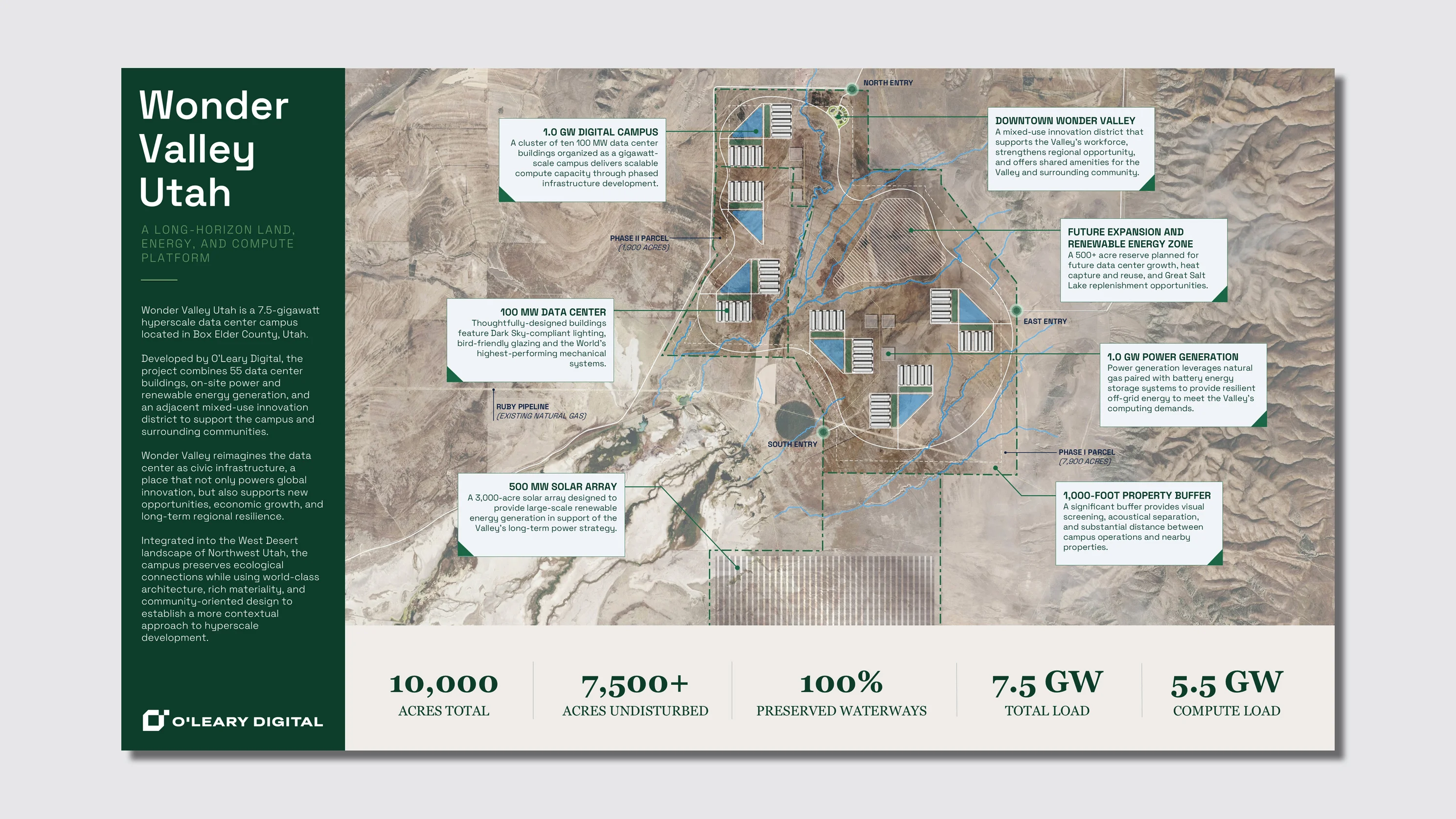
But even at 10,000 acres, which is about two-thirds the area of Manhattan, the project is still immense. O’Leary is hoping to offset some of the sheer gigantism of the project with a design approach that softens the look of the data center buildings.
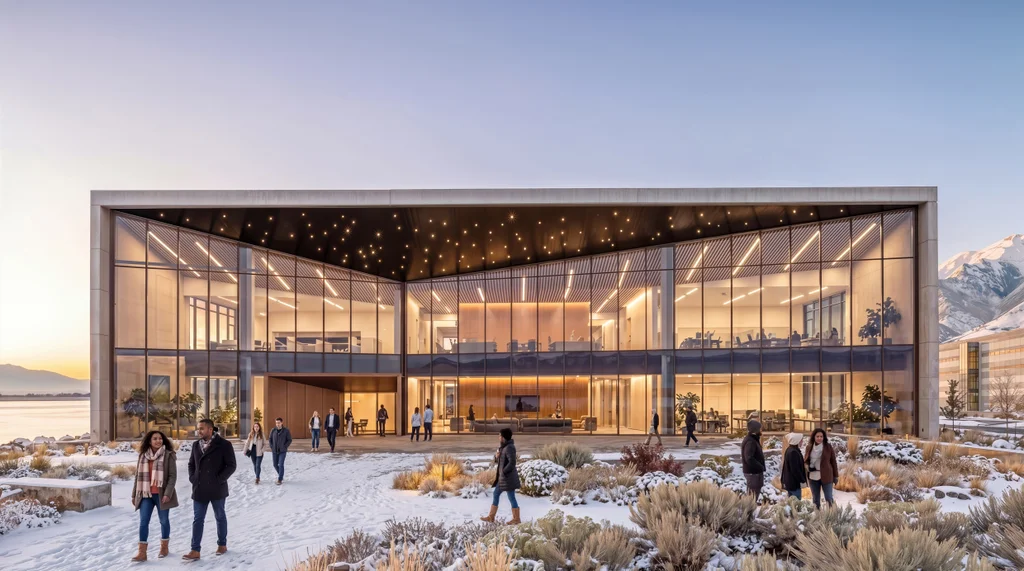
The project, which has not yet been officially permitted for construction, was designed by the global architecture firm Gensler. The plan is for 55 data center buildings constructed in six phases over the course of a decade, with each building diverging from the typical warehouse look of most data centers.
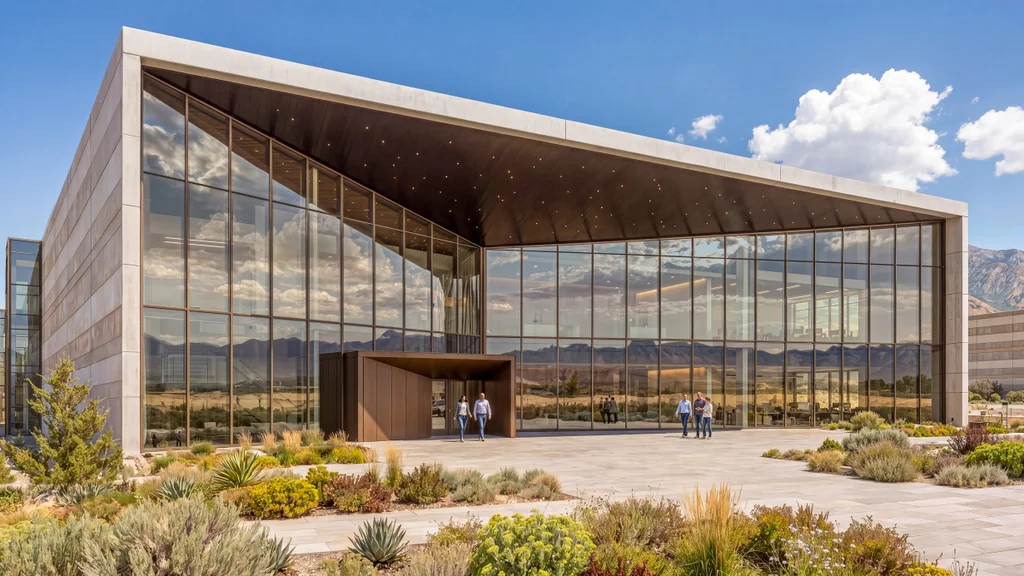
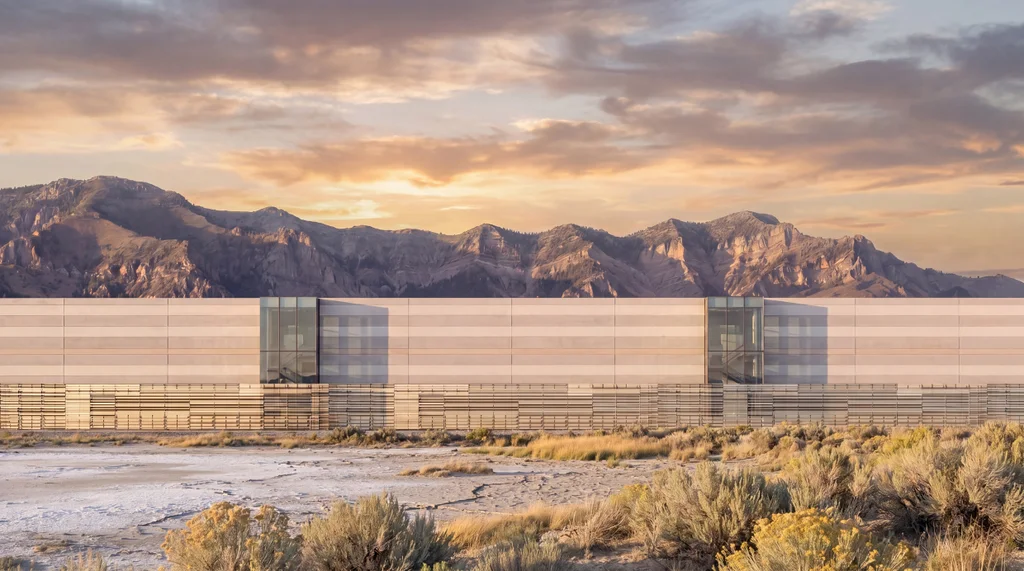
Instead, the renderings show angled glass facades looking in on modern offices and front-of-house spaces, followed by a long rectangular server floor broken up on its sides periodically by stairways built into a window well. The design recalls another O’Leary project the firm designed, Wonder Valley, a planned 7.5-gigawatt data center in Alberta, Canada, that has a more sculpted building form and a large facade of windows.
“I don’t believe in gray boxes,” O’Leary says. “There’s no reason a data center has to be ugly. I don’t know where that law was written. I think they can be beautiful.”
The Stratos project could eventually have more than 2,000 people working on the site, which would also include natural gas power generation, a 3,000-acre solar field, and a compact “mixed use innovation district.”
“I’m hoping both Wonder Valley and what we’re going to do in Utah are the shining examples of the new generation of data center, completely different than what was built 15 years ago,” O’Leary says.
That’s if the project is able to move ahead. A vocal opposition has arisen in Utah, calling for the project to be halted, and a referendum application has been filed to reverse the county commission’s approval.
The backlash
O’Leary has been claiming this is no normal backlash, though. On May 4, the day the county commission approved the project, O’Leary’s IT team alerted him to an atypical flood of direct messages coming into his X and Instagram accounts, all voicing opposition to the project. Looking into it, his IT team found that the messages were coming from similar IP addresses. Upon further research, many of these IPs were linked to Alliance for a Better Utah, a progressive nonprofit focused on holding elected officials accountable, and a political strategy group called Elevate Strategies.
O’Leary had his team keep digging, eventually auditing Alliance for a Better Utah’s publicly accessible IRS 990 forms to see where it was getting its money. “Lo and behold, multiple filings through multiple entities all over the world, all going back to something called Arabella,” he says. Until it was subsumed into another organization called Sunflower Services last year, Arabella Advisors was the leading dark money entity of the political left in the U.S., and O’Leary claims his investigation showed links between Arabella and various arms of the Chinese Communist Party.
The thin links between Alliance for a Better Utah and Arabella’s Chinese support make some of O’Leary’s concerns seem overblown. Shortly after O’Leary began calling out these ties, Alliance for a Better Utah issued a statement refuting his accusations. “It’s insulting to Utahns across the state to say that any opposition or protest to this data center is the work of a foreign government,” the statement reads. “We are proud to live in a state where there are people who deeply care about transparency, their community, and their kids’ futures. It is not strange to us that Utahns want to feel heard in decisions that will impact their lives for decades to come.”
O’Leary says the project is moving ahead regardless, and his firm will continue to seek the permits and reviews necessary to begin construction on this and other data centers in the future.
“There’s no question that this is the largest CapEx expenditure in history, but we are in a global competition for economic success,” he says. “Of course, we have to compete with the Chinese. They’re our primary adversary on this. And I’m beginning to learn how much of an adversary they are.”