

The rapid ascent of artificial intelligence and semiconductor manufacturing has created a paradox: Industries are booming yet they face a critical shortage of skilled workers. Demand for data center technicians, fabrication facility workers, and similar positions is growing. There aren’t enough candidates with the right skill sets to fill the in-demand jobs.
Although those technical roles are essential, they don’t always require a four-year degree—which has paved the way for skills-based microcredentials. By partnering with higher education institutions and training providers, industry leaders are helping to design targeted skills programs that quickly turn learners into job-ready technical professionals.
The new standard for skills validation
Because microcredentials are relatively new, consistency is key. Through its credentialing program, IEEE serves as a bridge between academia and industry. Developed and managed by IEEE Educational Activities, the program offers standardized credentials in collaboration with training organizations and universities seeking to provide skills-based qualifications outside formal degree programs. IEEE, as the world’s largest technical professional organization, has more than 30 years of experience offering industry-relevant credentials and expertise in global standardization.
IEEE is setting the benchmark for skills-based microcredentials by establishing a framework that includes assessment methods, qualifications for instructors and assessors, and criteria for skill levels.
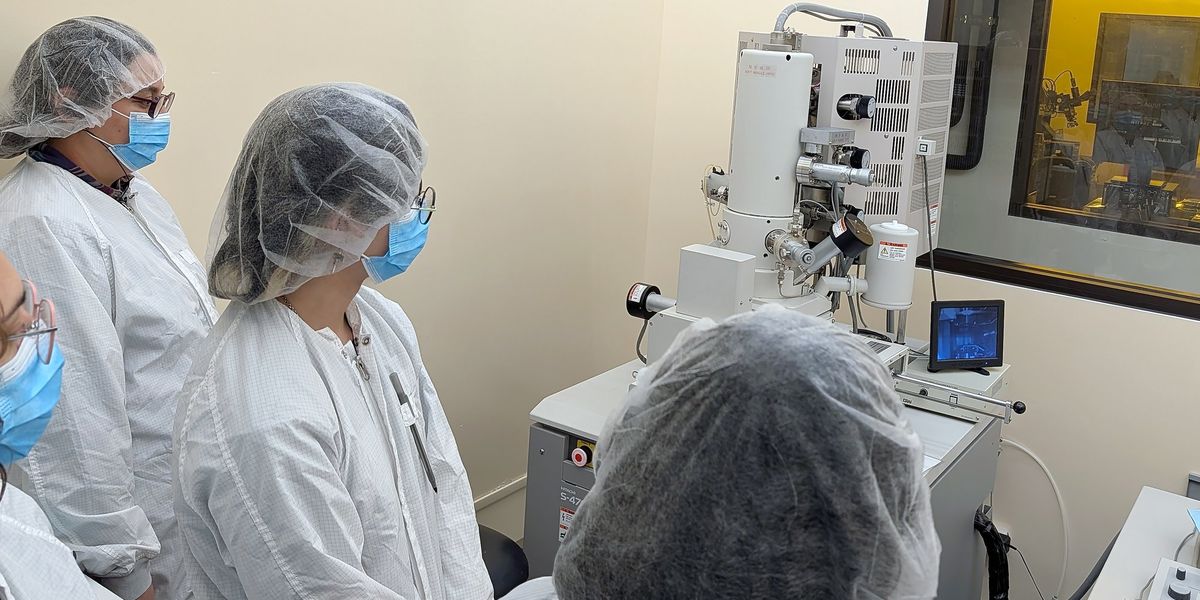
A recent collaboration with the University of Southern California, in Los Angeles, for example, developed microcredentials for USC’s semiconductor cleanroom program. USC heads the CA Dreams microelectronics innovation hub.
“The IEEE framework allows us to rapidly prototype training programs and adapt on the fly in a way that building new university courses—much less degree programs—won’t allow.” —Adam Stieg
IEEE worked with USC to create standardized skills assessments and associated microcredentials so that industry hiring managers can recognize the newly developed skills. The microcredentials help people with or without four-year degrees join the semiconductor industry as cleanroom technicians or as engineers with cleanroom experience.
IEEE also has partnered with the California NanoSystems Institute at the University of California, Los Angeles, to create skills-based microcredentials for its cleanroom protocol and safety program.
Best practices for designing microcredentials
Based on IEEE’s work designing microcredentials with USC, UCLA, and other leading academic institutions, three best practices have emerged.
1. Align with industry needs before design.
Collaborate with industry prior to starting the design process. There isn’t a one-size-fits-all approach. Workforce needs vary based on industry sector, company size, and geography. Higher education institutions and training providers build relationships with companies and industry groups to create effective microcredential programs and methods of assessment.
2. Build for flexibility.
Traditional academic cycles can be slow, but technology moves fast. A flexible skills-based microcredentials framework allows programs to create or pivot as new breakthroughs occur.
“Setting up a credit-bearing course is not easy. And in a rapidly changing environment, you need to pivot quickly,” says Adam Stieg, research scientist and associate director at UCLA’s CNSI. “IEEE skills-based microcredentials are a flexible way to keep up our curriculum aligned with an evolving technology landscape.”
Stieg’s team worked with IEEE to build a framework to create microcredentials for its cleanroom protocol and safety program, ensuring it kept pace with the industry’s evolution.
“The IEEE framework allows us to rapidly prototype training programs and adapt on the fly,” he says, “in a way that building new university courses—much less degree programs—won’t allow.”
3. Implement a continuous-feedback loop.
Many of the technical roles companies are looking to fill in emerging fields such as AI, cybersecurity, and semiconductors are still being developed or are quickly evolving. The rapidly changing landscape requires continual communications and feedback among higher education, training providers, and industry.
“We struggle to have feedback loops through the education system to the industry and back again,” says Matt Francis, president and CEO of Ozark Integrated Circuits, in Fayetteville, Ark. Francis, who has served as IEEE Region 5 director, is an IEEE volunteer who supports workforce development for the semiconductor industry.
Creating consistent feedback loops is critical for generating consensus on the skills sets needed for microcredential programs, experts say, and it allows providers to update assessments as new tools and safety protocols enter the workplace.
“If we start thinking about having training frameworks used within companies that are essentially on some sort of standard and align with a microcredential, we can start to build consensus,” Francis says.
Getting started
Through its credentialing program, IEEE is helping higher education and industry work together to bridge the technical workforce skills gap. Contact its team to learn how IEEE skills-based microcredentials can help you fill your workforce pipeline.
From Your Site Articles
Related Articles Around the Web