
Close Menu
    Trending
    • NHTSA considers new car door safety rules after fatal Tesla crashes
    • PlayStation Network outage resolved after thousands of gamers unable to play
    • Market Talk – July 24, 2026
    • Joe Biden Gives Up, Declines to Seek Further Review of Appeals Court Ruling on Release of Audiotapes with Ghostwriter
    • Meghan McCain Claps Back At Being Called ‘Old And Ugly’
    • Mixed day for global equities as oil prices retreat
    • Venezuela to exit International Criminal Court, accusing it of ‘bias’ | ICC News
    • Andy Reid shares massive Patrick Mahomes recovery update
    Benjamin Franklin Institute
    Friday, July 24
    • Home
    • Politics
    • Business
    • Science
    • Technology
    • Arts & Entertainment
    • International
    Benjamin Franklin Institute
    Home»Science»How to See the First Fiery Meteor Shower of 2026
    Science

    How to See the First Fiery Meteor Shower of 2026

    Team_Benjamin Franklin InstituteBy Team_Benjamin Franklin InstituteJanuary 4, 2026No Comments4 Mins Read
    Share Facebook Twitter Pinterest Copy Link LinkedIn Tumblr Email VKontakte Telegram
    Share
    Facebook Twitter Pinterest Email Copy Link


    January 1, 2026

    2 min read

    Add Us On GoogleAdd SciAm

    You Need to See the First Fiery Meteor Shower of 2026

    The new year has arrived, and the Quadrantid meteor shower is coming in hot. Here’s how to see this often-spectacular shower at its peak
    By Claire Cameron edited by Clara Moskowitz

    Quadrantid meteor

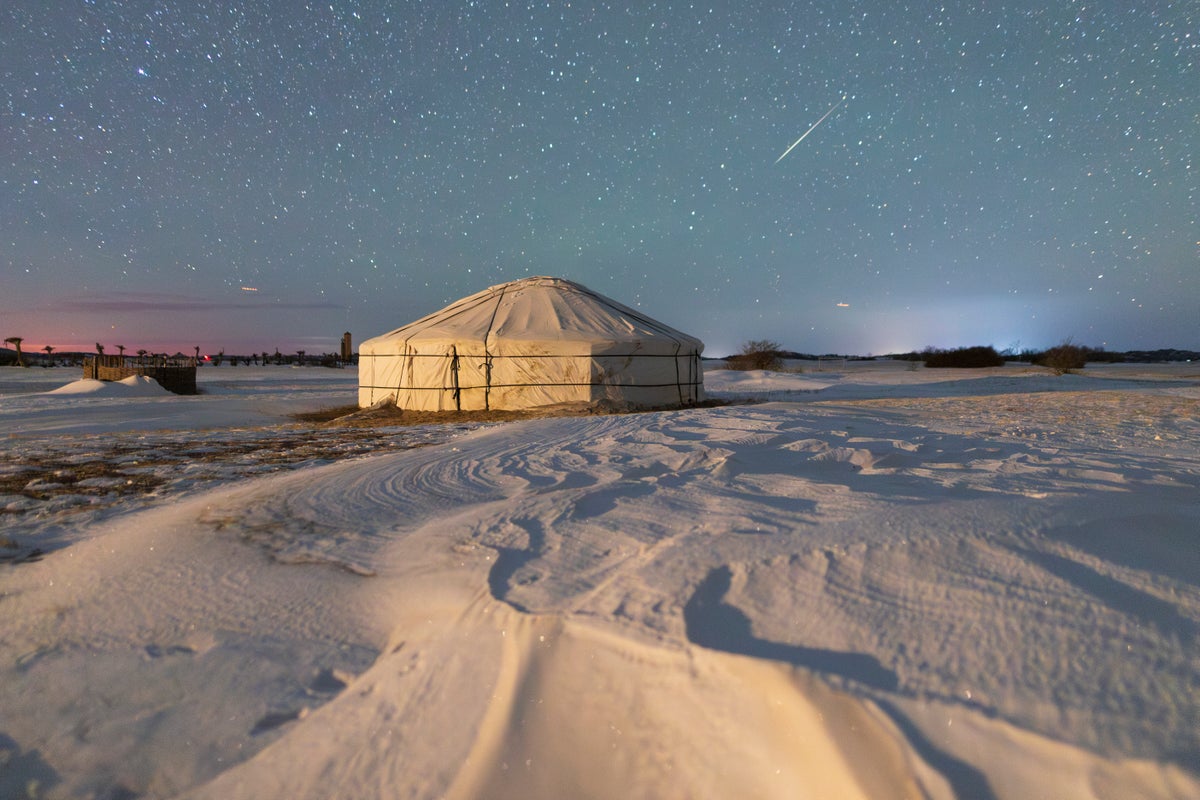
    The new year has arrived, and so have the Quadrantids. The first meteor shower of 2026 is known for its bright fireballs and bolides—large meteors that explode in the atmosphere in dramatic fashion, sometimes raining meteorites onto Earth below.

    The Quadrantids are an annual shower running from November through early January. This year the Quadrantids will peak on the night of January 3 through the early hours of January 4. Best viewed from the Northern Hemisphere, the ideal time to get outside and try to spot some of these luminous fireballs is in the predawn hours on January 4, according to NASA. Unfortunately, a full moon rises the night before, so the moon’s light may interfere with your ability to see these shooting stars.

    To have the best chance of spotting a meteor, look for the Quadrantids’ radiant—the point of the sky where they appear to originate. First observed in 1825, the meteor shower radiates from an obsolete constellation called Quadrans Muralis—named by a French astronomer in 1795, it was left out of the International Astronomical Union’s list of official constellations in 1922. Instead look for Ursa Major, or the Big Dipper, and gaze toward the end of its handle.


    On supporting science journalism

    If you’re enjoying this article, consider supporting our award-winning journalism by subscribing. By purchasing a subscription you are helping to ensure the future of impactful stories about the discoveries and ideas shaping our world today.


    The Quadrantids don’t come from the stars, however. Unlike other meteor showers, which tend to be caused by debris falling from comets, the Quadrantids are produced by an asteroid, 2003 EH1. Discovered in 2003, the asteroid may actually be a dead comet, NASA notes. Some astronomers think there may also be a second object that contributes to the meteor shower, a comet called 96P/Machholz.

    If you can get outside in the early hours of January 4, move as far as you safely can from bright light sources, such as street lamps and buildings. Give your eyes 30 minutes to adjust to the dark, and look toward the northern sky. Then just be patient!

    It’s Time to Stand Up for Science

    If you enjoyed this article, I’d like to ask for your support. Scientific American has served as an advocate for science and industry for 180 years, and right now may be the most critical moment in that two-century history.

    I’ve been a Scientific American subscriber since I was 12 years old, and it helped shape the way I look at the world. SciAm always educates and delights me, and inspires a sense of awe for our vast, beautiful universe. I hope it does that for you, too.

    If you subscribe to Scientific American, you help ensure that our coverage is centered on meaningful research and discovery; that we have the resources to report on the decisions that threaten labs across the U.S.; and that we support both budding and working scientists at a time when the value of science itself too often goes unrecognized.

    In return, you get essential news, captivating podcasts, brilliant infographics, can’t-miss newsletters, must-watch videos, challenging games, and the science world’s best writing and reporting. You can even gift someone a subscription.

    There has never been a more important time for us to stand up and show why science matters. I hope you’ll support us in that mission.


    Source link

    Share. Facebook Twitter Pinterest LinkedIn Tumblr Email Telegram Copy Link

    Related Posts

    Science

    NHTSA considers new car door safety rules after fatal Tesla crashes

    July 24, 2026
    Science

    Fungus made fashion—researchers turn living organisms into textiles

    July 24, 2026
    Science

    How a 99-year-old mathematician unraveled a century-old braid mystery

    July 24, 2026
    Science

    Is it possible to regain a sense of smell? These scientists are working on it

    July 24, 2026
    Science

    Why don’t insects live in the ocean?

    July 24, 2026
    Science

    Why environmental groups are suing over SpaceX’s land swap deal

    July 24, 2026
    Editors Picks

    Cowboys, Chiefs among five NFL teams poised for 2026 turnaround

    December 24, 2025

    The ‘NFL season passing leader by team’ quiz

    February 18, 2026

    Apple’s most important contribution over the past 50 years isn’t what you expect

    March 28, 2026

    Cyclone Koji downgraded to storm after crossing Australia’s northeast coast; flooding warning risks issued

    January 11, 2026

    Market Talk – January 29, 2026

    January 30, 2026
    About Us
    About Us

    Welcome to Benjamin Franklin Institute, your premier destination for insightful, engaging, and diverse Political News and Opinions.

    The Benjamin Franklin Institute supports free speech, the U.S. Constitution and political candidates and organizations that promote and protect both of these important features of the American Experiment.

    We are passionate about delivering high-quality, accurate, and engaging content that resonates with our readers. Sign up for our text alerts and email newsletter to stay informed.

    Latest Posts

    NHTSA considers new car door safety rules after fatal Tesla crashes

    July 24, 2026

    PlayStation Network outage resolved after thousands of gamers unable to play

    July 24, 2026

    Market Talk – July 24, 2026

    July 24, 2026

    Subscribe for Updates

    Stay informed by signing up for our free news alerts.

    Paid for by the Benjamin Franklin Institute. Not authorized by any candidate or candidate’s committee.
    • Privacy Policy
    • About us
    • Contact us

    Type above and press Enter to search. Press Esc to cancel.