

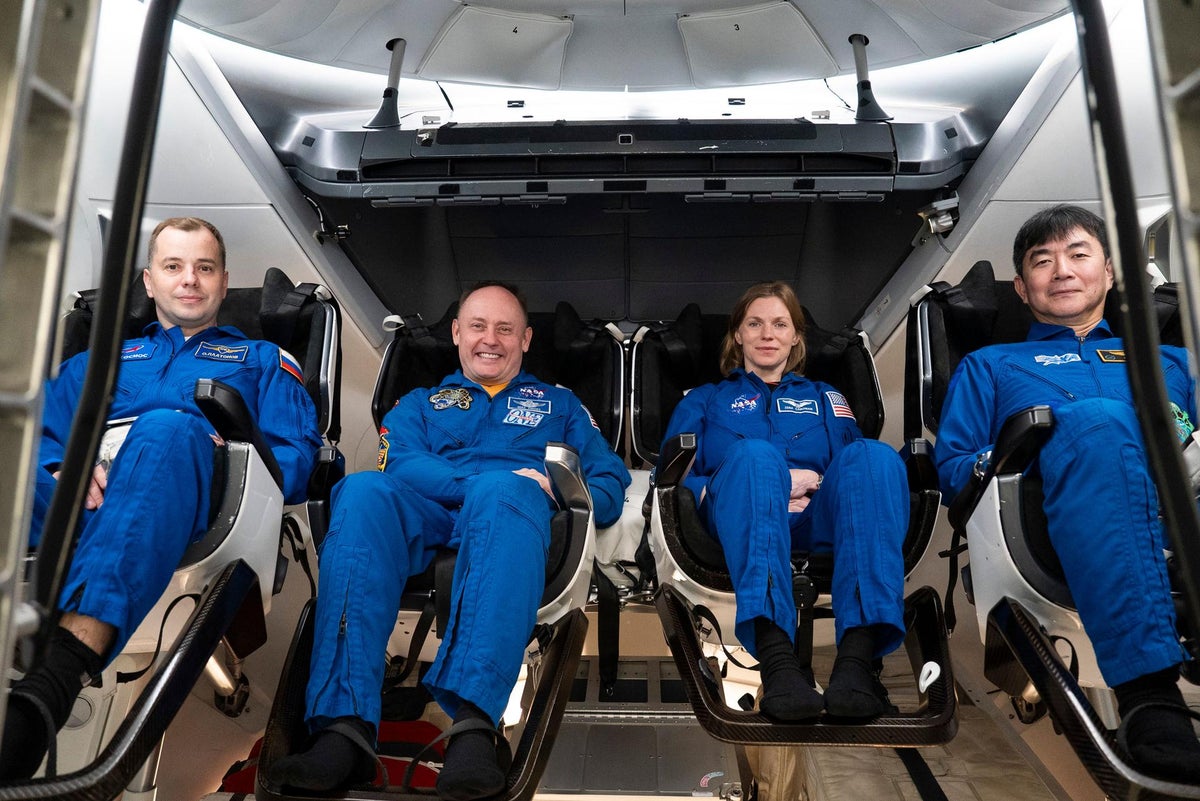
NASA’s unprecedented decision to prematurely end a mission to the International Space Station (ISS) because of a sick astronaut is shining a light on how the agency prepares for medical problems and emergencies in space.
The decision, announced by NASA’s new administrator Jared Isaacman during a press briefing on Thursday, marks the first time any space agency has ordered a medical evacuation of an ISS mission.
“Statistically, it probably should have happened many times by now over the last 25 years that we’ve had people on the International Space Station,” says former NASA astronaut Andrew Feustel, who was commander of an ISS mission while he was at the agency and is now lead astronaut at the private space company Vast. “But it hasn’t, and part of that speaks to the level of medical screening that’s done, at least currently, on government professional career astronauts before they fly in space.”
On supporting science journalism
If you’re enjoying this article, consider supporting our award-winning journalism by subscribing. By purchasing a subscription you are helping to ensure the future of impactful stories about the discoveries and ideas shaping our world today.
It also speaks to the preparedness of astronauts and the space station to deal with medical issues that arise. In orbit at least 370 kilometers above Earth, the ISS houses various medical equipment, from an ultrasound to IVs to a defibrillator, that can be used to diagnose and treat crew members who get sick or injured. It also carries an extensive array of drugs, including anesthetics, antisickness medication, hydration liquids and antibiotics.
“You can do things like administer oxygen to somebody. You can do wound care. There’s a whole pharmacy basically onboard,” says Jordan Bimm, a space historian and an assistant professor at the University of Chicago.
There are, however, limits to how much equipment the station can hold. There is neither a magnetic resonance imaging (MRI) machine to scan crew members nor enough supplies or space to perform extensive surgeries. Even so, Catherine Coleman, a former astronaut and author of the book Sharing Space, says she practiced gallbladder removal as part of her training, despite not being a medical professional. (The ISS does not currently have the equipment to perform such a surgery in orbit.)
Crews are extensively briefed on how to use all the equipment on the ISS and when needed they work with teams of doctors on the ground to talk through any medical issues that come up—a system Coleman compares to telemedicine on Earth.
Astronauts in line to go to the ISS spend weeks with doctors across different disciplines, including emergency medicine and dentistry, Coleman says. She and her colleagues learned how to put in IVs, insert a catheter, do a tracheostomy to create an airway and perform lifesaving techniques such as cardiopulmonary resuscitation (CPR).
“We’re doing things like that with great supervision, but we’re actually doing them so that, if it comes up, we’re ready to do them,” she says. Once astronauts are onboard the ISS, surgeons on the ground regularly talk to them about their health and tell them how to perform medical procedures as needed. Importantly, she says, that kind of close communication was likely key to the care and decision to bring home the stricken Crew-11 member.
Yet despite such coaching, being in the microgravity environment of orbit complicates even the most routine of procedures, Coleman says. The station is equipped with a stretcher with straps to hold crew members in place, should they require it for a procedure. And on her first day at the station, Coleman recalls working out how she would perform CPR in near weightlessness.
“Some people, it’s the knees under the stretcher, and then they’re going to be compressing on top using their stomach muscles,” she says. “It depends on the person, if that is going to be enough force or not.”
Microgravity also muddies the body’s baseline for health. Fluid moves differently in the body while in space, leading many crew members to feel stuffy, for example, or to experience headaches and backaches. The space station environment is also known to alter some astronauts’ vision in orbit or once back on Earth, and may cause cardiovascular changes, too. Crew members collect regular blood and urine samples, and they often take part in medical experiments while in orbit, making them very much in tune with their health.
“We are lab rats up there, and so we’re really taught to be actively thinking about how we’re doing,” Coleman says.
But the best laid plans can go awry. And perhaps nowhere is that truer than in an extreme environment such as space.
“We don’t have an operating room on ISS, and we really don’t have all of the support infrastructures that we need for any major complications,” former ISS mission commander Feustel says. “The fallback method for a low-Earth-orbit station, which is, you know, [more than] 350 kilometers above the surface, is to just come home.”
And that is what is happening for Crew-11. While the sick crew member’s status was described by NASA chief Isaacman as “stable” on Thursday, the decision to bring them back to Earth would not have been made lightly.
“It clearly went to the top of the organization,” Coleman says. “It’s nontrivial to decide you’re going to end a space mission, given how much effort is put into executing one in the first place.”