
Close Menu
    Trending
    • No Dong Jun, but plenty of China at Shangri-La Dialogue
    • Satellite imagery shows erasure of southern Gaza as Israel expands control | Crimes Against Humanity News
    • 17-year-old Spurs fan suffers tragedy during victory celebration
    • Kevin O’Leary believes his 10,000-acre data center can be ‘beautiful’
    • These exotic particles could break physics
    • Trace Cyrus Unleashes On Sister Brandi In Fiery Post
    • Trump says Iran has agreed to no nuclear weapons
    • Trump tightens terms on Iran war deal, US media say | Donald Trump News
    Benjamin Franklin Institute
    Sunday, May 31
    • Home
    • Politics
    • Business
    • Science
    • Technology
    • Arts & Entertainment
    • International
    Benjamin Franklin Institute
    Home»Science»Glaciers in the ‘roof of the world’ have suddenly started melting
    Science

    Glaciers in the ‘roof of the world’ have suddenly started melting

    Team_Benjamin Franklin InstituteBy Team_Benjamin Franklin InstituteMay 29, 2026No Comments2 Mins Read
    Share Facebook Twitter Pinterest Copy Link LinkedIn Tumblr Email VKontakte Telegram
    Share
    Facebook Twitter Pinterest Email Copy Link


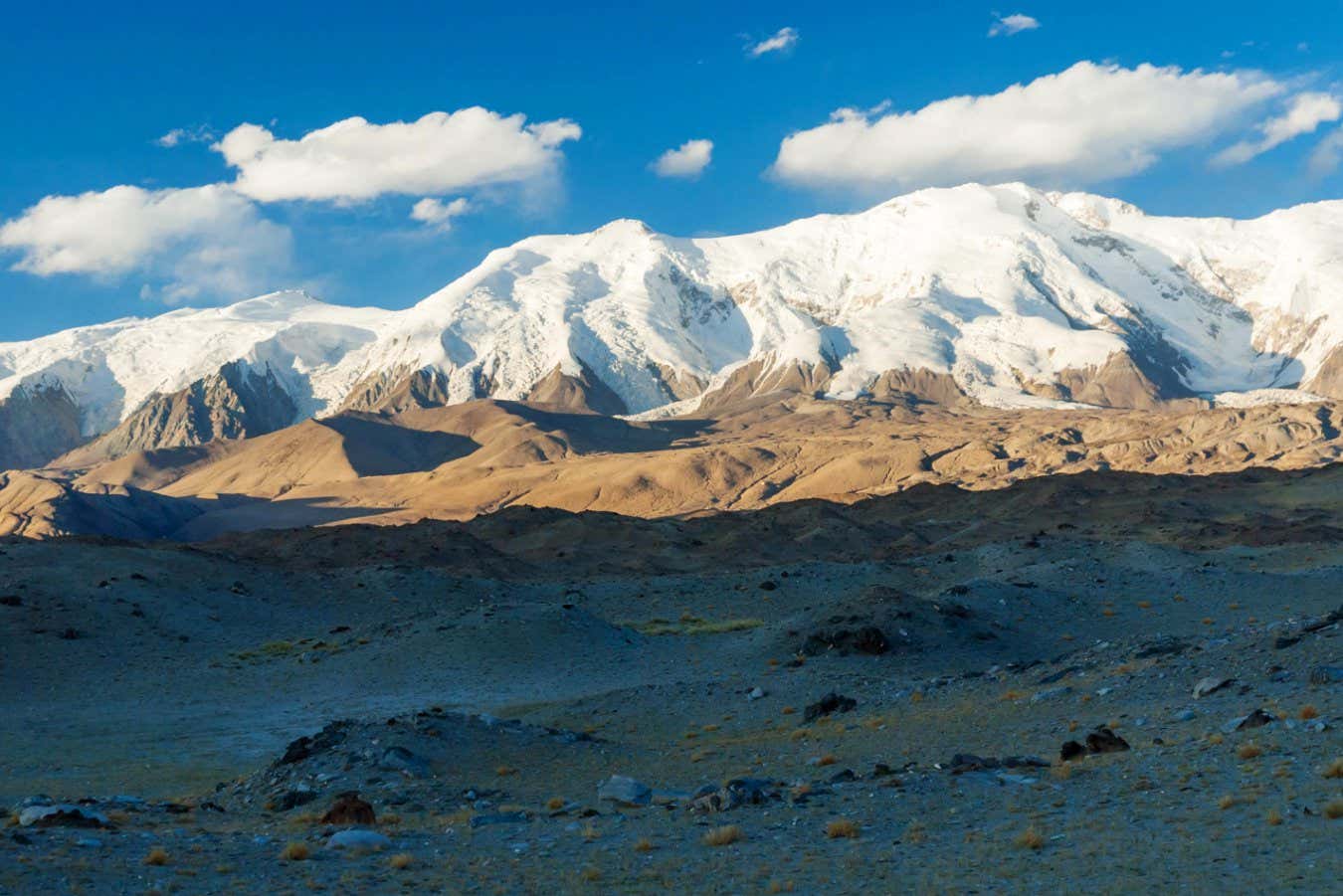
    The Kongur Shan mountains in China, part of the Pamir range

    Mark Andrews/Alamy

    One of the world’s last stable glacier regions may have finally begun to succumb to global warming, with researchers recording an unprecedented loss of ice across the Pamir mountains of Asia.

    For decades, glaciers all over the world have been retreating due to rising temperatures, but in central Asia, a region dubbed “the roof of the world” has bucked this trend. From the 1970s to the early 21st century, glaciers in the western Kunlun mountains, the Karakoram mountains and the eastern Pamir mountains have remained stable or grown slightly.

    Fan Yu at the Chinese Academy of Sciences and his colleagues have been monitoring the 3-kilometre-long Kangxiwa glacier in the Xinjiang Uyghur Autonomous Region, China. The glacier is within the eastern Pamir range and is 5350 metres above sea level at its highest point.

    Before 2022, the ice mass of the glacier exhibited some fluctuations but remained in a stable pattern of moderate mass loss, with occasional years showing slight growth.

    But since then, ice loss has accelerated. In 2025, the team recorded a record-high loss of ice, equivalent to the entire surface of the glacier losing 1.5 metres of water. This is more than four times greater than the glacier’s average for 2011–2024.

    The record-breaking melt seen at Kangxiwa, mirrored at other glaciers across the Pamir mountains, was driven by exceptional heat. Unlike other years, when extreme temperatures were confined to a single month, high temperatures in 2025 persisted throughout the entire melt season.

    The findings suggest the glaciers of the Pamir-Karakoram region are no longer an exception to the global trend, and extreme events are likely to further accelerate glacier melt there, say the researchers.

    Shaun Eaves at the Victoria University of Wellington, New Zealand, says the results are consistent with predictions that human-induced climate change will increase the probability of extreme warm temperatures that can drive glacier melt, but it is too early to conclude that such melting is locked in.

    Glacial ice mass measurements have been undertaken at Kangxiwa glacier only since 2011, so it is hard to describe 2025 as extreme in a historical context, he says.

    Topics:


    Source link

    Share. Facebook Twitter Pinterest LinkedIn Tumblr Email Telegram Copy Link

    Related Posts

    Science

    These exotic particles could break physics

    May 31, 2026
    Science

    How smartphones and AI are reshaping our bodies and minds

    May 31, 2026
    Science

    How big can a galaxy get?

    May 31, 2026
    Science

    Why high-bandwidth memory is a bottleneck for AI chips

    May 31, 2026
    Science

    NASA’s Hubble captures gorgeous new photo of a spiral galaxy as it wanders through the Virgo Cluster

    May 30, 2026
    Science

    New protein-folding AI vastly expands on Alphafold’s efforts

    May 30, 2026
    Editors Picks

    Trump cites progress with Iran, US proposes plan to end war

    March 25, 2026

    When is London Marathon 2026? Start time and how to watch race for FREE

    April 24, 2026

    Sports world reacts to Lindsey Vonn’s Winter Olympics crash

    February 9, 2026

    Ravens must avoid Derrick Henry mistake with Lamar Jackson returning vs. Steelers

    January 3, 2026

    Price Controls Never Solve A Crisis

    March 10, 2026
    About Us
    About Us

    Welcome to Benjamin Franklin Institute, your premier destination for insightful, engaging, and diverse Political News and Opinions.

    The Benjamin Franklin Institute supports free speech, the U.S. Constitution and political candidates and organizations that promote and protect both of these important features of the American Experiment.

    We are passionate about delivering high-quality, accurate, and engaging content that resonates with our readers. Sign up for our text alerts and email newsletter to stay informed.

    Latest Posts

    No Dong Jun, but plenty of China at Shangri-La Dialogue

    May 31, 2026

    Satellite imagery shows erasure of southern Gaza as Israel expands control | Crimes Against Humanity News

    May 31, 2026

    17-year-old Spurs fan suffers tragedy during victory celebration

    May 31, 2026

    Subscribe for Updates

    Stay informed by signing up for our free news alerts.

    Paid for by the Benjamin Franklin Institute. Not authorized by any candidate or candidate’s committee.
    • Privacy Policy
    • About us
    • Contact us

    Type above and press Enter to search. Press Esc to cancel.