

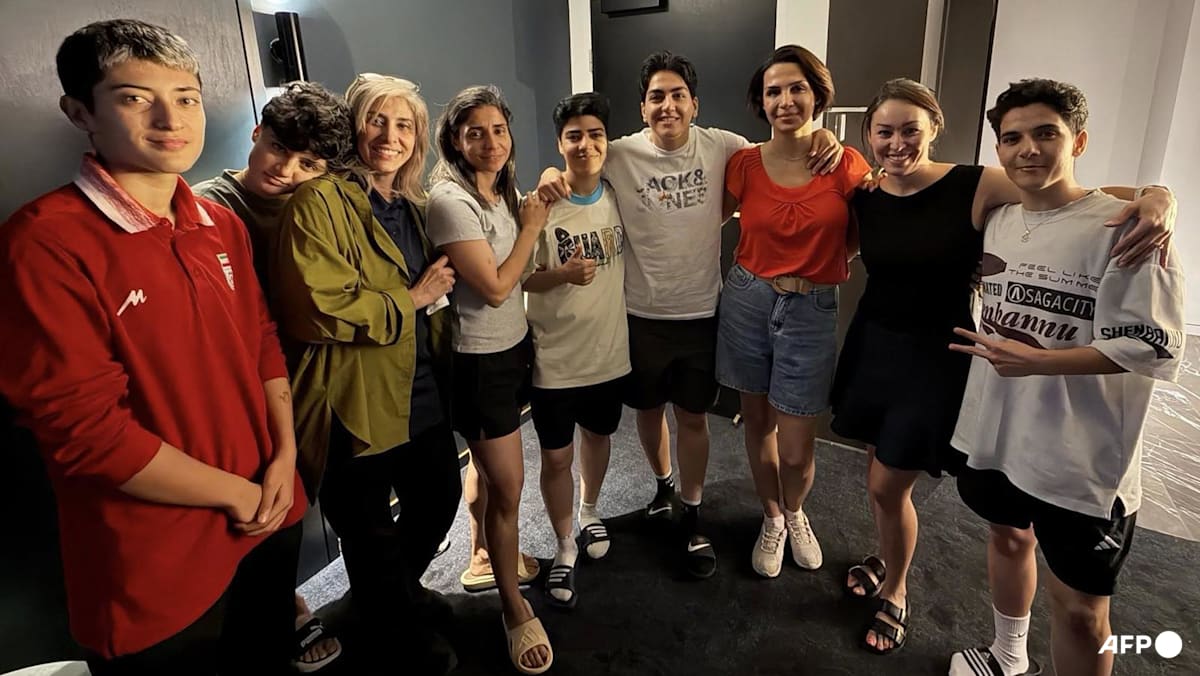
Assistant Immigration Minister Matt Thistlethwaite described the women’s plight in Australia as a “very complex situation”.
“We’ve been working very, very closely with them, but obviously this is a very complex situation. These are deeply personal decisions, and the government respects the decisions of those that have chosen to return. And we continue to offer support to the two that are remaining,” Thistlethwaite told Sky News television.
“They’re being given all the support of the Australian government and indeed the diaspora community to remain here and settle in Australia,” he added.
Kylie Moore-Gilbert, a political scientist at Melbourne’s Macquarie University who spent more than two years in Iranian prisons on spying charges from 2018 to 2020, said “winning the propaganda war” had overshadowed the women’s welfare.
“The high stakes made the Iranian regime sit up and pay attention and try to force their hand in response, in my view,” Moore-Gilbert told the Australian Broadcasting Corp.
“But it wasn’t necessarily to be known that this story would blow up and become the international story that it did. But I do think in this case, had these women quietly sought asylum without that publicity around them, it’s possible that the Islamic Republic officials might have, as they have in the cases of other Iranian sports people in the past who’ve defected … simply allowed that to happen,” she added.
Iran’s Tasnim News Agency said after the three left Australia on Saturday and that they were “returning to the warm embrace of their family and homeland”.
Concerns about the team’s safety in Iran heightened when the players didn’t sing the Iranian national anthem before their first match.
The Australian government was urged to help the women by Iranian groups in Australia and by Trump.