

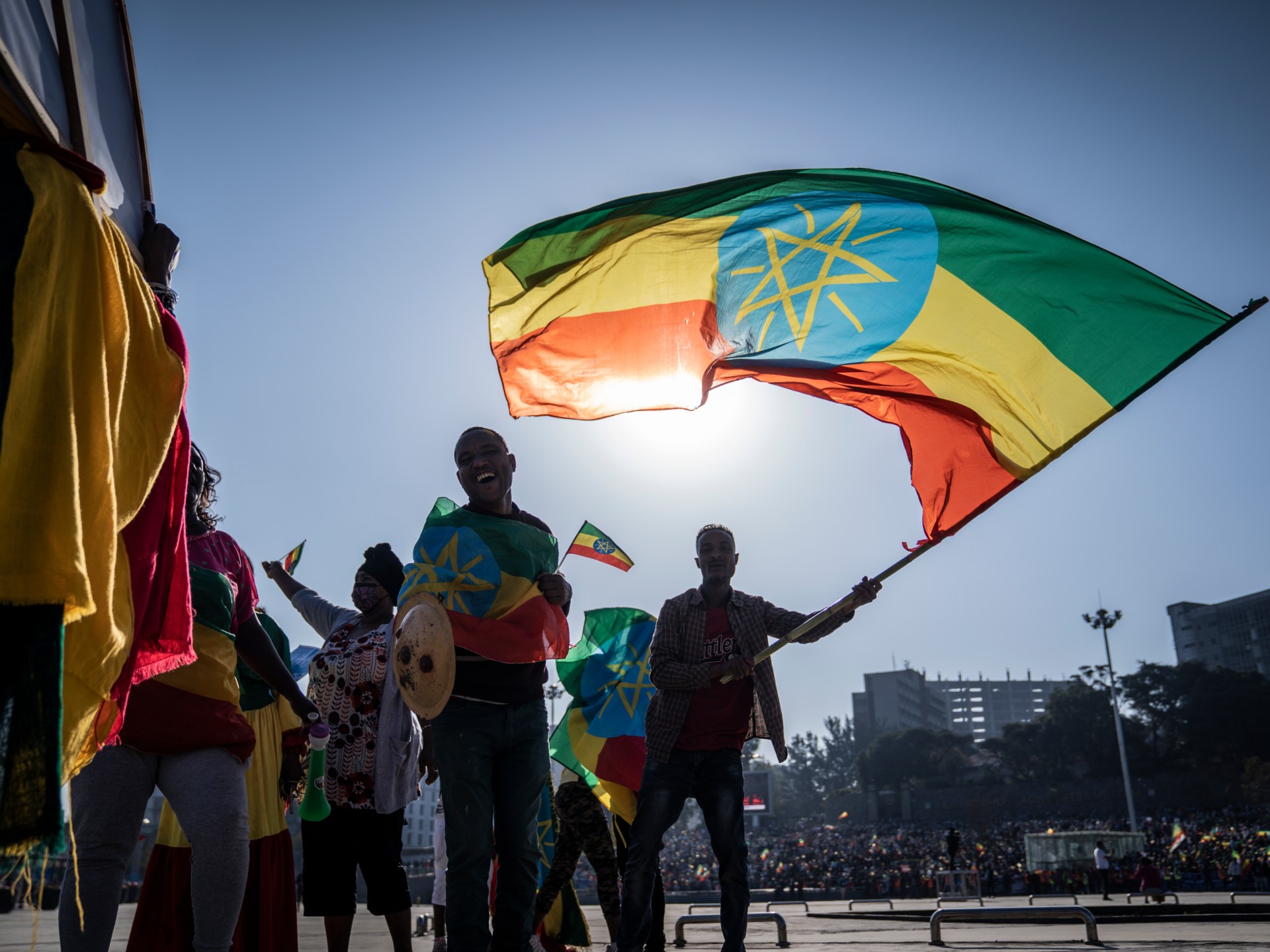
Addis Ababa, Ethiopia – Ethiopians vote on Monday in a general election to choose members of parliament, who will in turn select the next prime minister. The National Election Board of Ethiopia (NEBE) said 47 political parties and more than 10,900 candidates are in the race, including 2,198 for the federal parliament, 8,736 for regional and city councils and 73 independents.
More than 50 million voters are registered, with official voter registration figures showing women account for around half of the electorate. Young Ethiopians make up a large share of the population, with a median age of about 19 years, according to United Nations population estimates, giving them a substantial presence in the country’s electorate.
The contest brings together ruling, opposition, regional and independent politicians under Ethiopia’s federal parliamentary system, where the government is formed through a parliamentary majority and MPs select the prime minister.
Here is a closer look at the main political parties, coalitions and independent candidates.
Prosperity Party (PP)
The Prosperity Party is the ruling political party in Ethiopia, led by Prime Minister Abiy Ahmed. It was formed in 2019 following the merger of several regional parties that previously made up the Ethiopian People’s Revolutionary Democratic Front (EPRDF). The party holds a majority in the House of Peoples’ Representatives following the 2021 general election.
According to the Prosperity Party programme and public statements, it emphasises national unity, economic reform and state-led development within Ethiopia’s federal system.
The party is fielding candidates for seats in the House of Peoples’ Representatives and regional councils across almost all federal and regional constituencies under Ethiopia’s parliamentary system.
National Movement of Amhara (NAMA)
The National Movement of Amhara is a regional political party operating mainly in Ethiopia’s Amhara region. It is led by Belete Molla and participates in Ethiopia’s federal parliamentary elections through constituency-based contests.
According to party statements, NAMA focuses on political representation, security concerns and cultural and regional rights of the Amhara population within Ethiopia’s federal system.
The party is fielding candidates primarily within the Amhara region for federal and regional council seats under Ethiopia’s electoral framework.
Ethiopian Citizens for Social Justice (EZEMA)
The Ethiopian Citizens for Social Justice is a national political party led by Berhanu Nega. Formed in 2019, it has participated in national elections since 2021 and operates across multiple regions.
According to party statements and its leadership, EZEMA promotes liberal democratic governance, the rule of law, market-oriented reforms and broader national unity.
For this vote, the party is contesting seats in both the House of Peoples’ Representatives and regional councils across multiple federal and regional constituencies.
Peace for Ethiopia coalition
The Peace for Ethiopia coalition is an alliance of smaller regional parties, including the Agew National Council, Gamo Democratic Party, Gambella Peoples’ Freedom Movement, Kaffa Green Party, and Tigray Democratic Cooperation.
According to coalition statements, the alliance brings together member parties to improve coordination and representation of diverse regional interests within Ethiopia’s federal system.
The coalition coordinates candidate lists across its member parties while allowing each to retain separate regional identities. Members are contesting seats in both federal and regional councils.
Regional and ethnic-based parties
Regional parties contest seats across Ethiopia’s federal system, including in Oromia, Somali, Tigray and southern regions. They operate within their respective states and are registered with NEBE to field candidates in federal and regional constituencies.
According to their public positions, these parties generally focus on regional governance, local autonomy, and development priorities specific to their constituencies.
They participate in the House of Peoples’ Representatives and regional councils under Ethiopia’s parliamentary electoral system.
Independent candidates
A total of 73 independent candidates are registered to contest seats in the 2026 elections.
According to political observers, independent candidates tend to focus on local governance issues and constituency-level concerns rather than formal party platforms or national ideological positions.
They are running for both federal and regional council positions under Ethiopia’s constituency-based parliamentary system.
Electoral stakes
The election will determine the composition of Ethiopia’s federal government and which party or coalition controls parliament. Elected MPs will select the prime minister, who then forms the federal government.
The results will shape the distribution of power between federal and regional authorities under Ethiopia’s constitutional system. The vote is part of the country’s regular parliamentary electoral cycle under the 1995 constitution.
The allocation of seats in the House of Peoples’ Representatives will determine legislative authority at the federal level.
The election is being held under Ethiopia’s federal parliamentary system, in which executive power is derived from a parliamentary majority.
Political environment
The National Election Board of Ethiopia oversees the administration of voting and candidate registration across all regions. Polling arrangements have been established nationwide under Ethiopia’s electoral framework.
Voting will take place in constituencies across urban and rural areas in all federal member states.
Electoral procedures are implemented under national electoral law, which defines the responsibilities of federal and regional election authorities.
NEBE is responsible for coordinating polling operations, voter registration, and ballot administration across constituencies.
Youth and voter engagement
NEBE reports that more than 50 million people are registered to vote in the election.
Young people make up a large share of the population, with a median age of about 19 years, according to UN population estimates.
Registered voters include both first-time and returning voters participating in federal and regional elections across the country.
Voting is conducted under Ethiopia’s legal framework for universal adult suffrage, which grants citizens aged 18 and above the right to vote.
Women voters and participation
According to NEBE voter registration figures, women account for around half of registered voters.
They are eligible to vote and contest seats at both federal and regional levels under Ethiopia’s electoral law, and female candidates are participating across multiple regions.
Both sexes are subject to the same voter registration and candidacy requirements under Ethiopia’s electoral framework.
Female candidates are contesting seats in both federal and regional races across the country.