
Close Menu
    Trending
    • How do earthquakes end? A seismic ‘stop sign’ could help predict earthquake risk
    • Trump Announces Cease-Fire Between Israel and Lebanon
    • Google Is Tracking Your Life – Photo Cloud Feeding AI System
    • Rachel Zoe Confronts Amanda Frances In ‘RHOBH’ Reunion Clip
    • China’s DeepSeek says it released long-awaited new AI model
    • China’s DeepSeek unveils latest models a year after upending global tech | Technology News
    • Malik Nabers’ reaction to Cowboys drafting Caleb Downs should thrill Dallas fans
    • AI is replacing creativity with ‘average’
    Benjamin Franklin Institute
    Friday, April 24
    • Home
    • Politics
    • Business
    • Science
    • Technology
    • Arts & Entertainment
    • International
    Benjamin Franklin Institute
    Home»Latest News»Displaced Sudanese women caught up in war suffer wretched Ramadan | Sudan war News
    Latest News

    Displaced Sudanese women caught up in war suffer wretched Ramadan | Sudan war News

    Team_Benjamin Franklin InstituteBy Team_Benjamin Franklin InstituteFebruary 25, 2026No Comments4 Mins Read
    Share Facebook Twitter Pinterest Copy Link LinkedIn Tumblr Email VKontakte Telegram
    Share
    Facebook Twitter Pinterest Email Copy Link


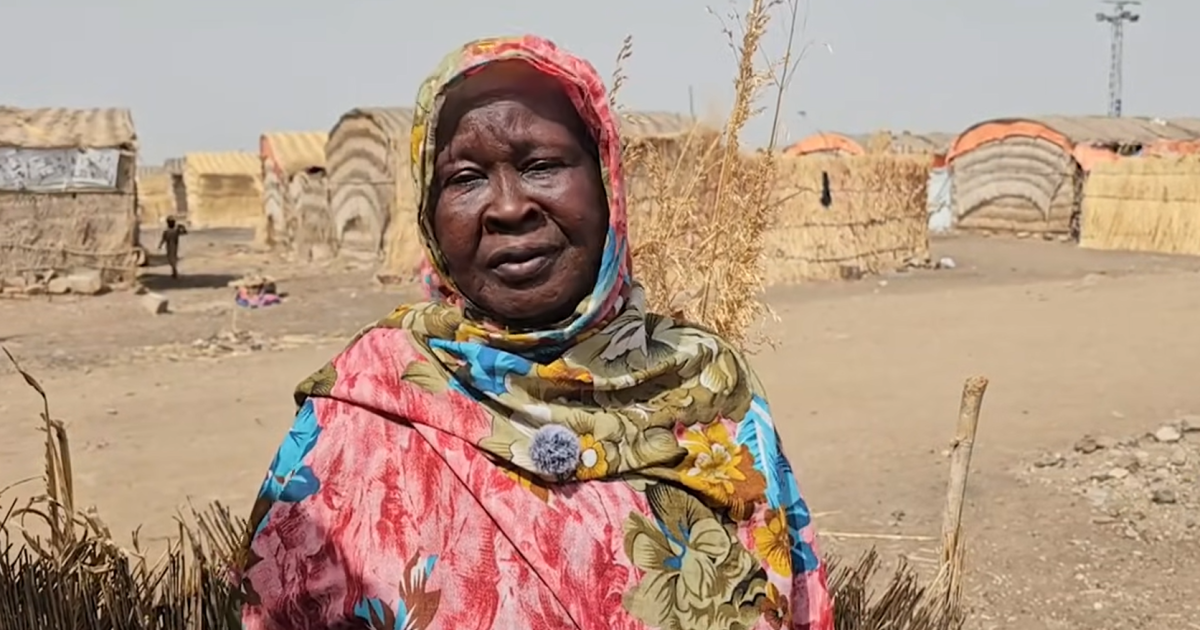
    After fleeing the inferno of war in el-Fasher in North Darfur State and travelling more than 1,600km (9,995 miles) to safety, Sanaa Ahmed thought the worst was behind her. But in the Al-Sarraf camp in eastern Sudan, she has faced suffering of a different kind.

    “We fled here with nothing,” Sanaa told Al Jazeera Mubasher. “Now Ramadan has come, and we don’t even have a pot to cook in or a cup to drink from. If you have a bucket or a jug, that’s it.”

    Sanaa is one of thousands of displaced people who have sought refuge in Al-Gedaref state, far from the front lines of the war in the west. But safety has come at a steep price. The camp, intended as a sanctuary, has become a site of deprivation.

    “The water is available, but there is no food,” she said. “They give us a meal, but it’s not a real meal, and it’s not enough.”

    A Ramadan of hunger

    For Muslims, Ramadan is traditionally a month of community, prayer and shared meals. For the displaced women of Al-Sarraf, it has become a daily struggle to find enough scraps to feed their children at sunset.

    Majd Abdullah, another survivor from el-Fasher, described the stark contrast between her past life and her current reality.

    “Back home, Ramadan was perfect. You would prepare everything a month or two in advance,” she recalled. “But here, we fasted the first day, not knowing what we would break our fast with. We ended up eating with neighbours because we had nothing.”

    A recent United Nations report said the paramilitary Rapid Support Forces’ (RSF) atrocities in el-Fasher bore all the hallmarks of genocide.

    The aid that does arrive is often woefully inadequate. Majd described receiving a single bowl of porridge to feed a family of seven or 10 people.

    “No organisation has entered with a food basket or cash assistance,” she said. “We can’t feed our children unless we go into the city to wash clothes or iron – menial jobs just to survive.”

    ‘The children ask for biscuits’

    The lack of food is compounded by a total absence of basic household necessities. Sumaya Saleh, who fled from Kutum in North Darfur, listed the items they are desperate for: cooking pots, charcoal and sugar.

    “The children are missing so much,” Sumaya said. “They ask for a biscuit, and you don’t have the money to buy it for them.”

    The camp’s elderly residents are also suffering. Sumaya noted that many suffer from diabetes and high blood pressure but cannot access medication or proper care at the local health centres.

    Mawaheb Ibrahim, a diabetic who lost her mother, sister and uncle to shelling in el-Fasher, is now caring for orphans in the camp with no resources.

    “I am a diabetic, and I had retinal surgery,” Mawaheb said. “My blood sugar has risen to 477… I went into a state of acetone [ketoacidosis], and it affected my ear. I’m just taking painkillers to sleep. I have no access to a doctor.”

    Disease and neglect

    Beyond the hunger, the sanitary conditions in the camp are deteriorating. Sanaa Ahmed described the health situation as “medium” but worsening, citing cases of diarrhoea and eye infections.

    “There are huge amounts of flies,” she said. “The bathrooms are hot and not clean enough. We need spraying campaigns and cleaning tools.”

    While some hygiene kits and soap have been distributed, the primary need – food – remains unmet. One unnamed displaced woman described the communal kitchen as insufficient for the number of people it serves.

    “It doesn’t satisfy a man, a woman, or a child,” she said. “The topic of food baskets is completely finished here; they don’t bring them.”

    For these women, the “safety” of Al-Gedaref has become a slow-motion crisis of neglect. They have survived the war, but they are now fighting to survive where they are not under fire.

    “We need help,” Mawaheb pleaded. “I need something to keep us going, for the children I am raising and for myself.”


    Source link

    Share. Facebook Twitter Pinterest LinkedIn Tumblr Email Telegram Copy Link

    Related Posts

    Latest News

    China’s DeepSeek unveils latest models a year after upending global tech | Technology News

    April 24, 2026
    Latest News

    US professors sue university over arrest during pro-Palestine protest | Israel-Palestine conflict News

    April 24, 2026
    Latest News

    Meta lines up layoffs while Microsoft offers buyouts | Business and Economy News

    April 23, 2026
    Latest News

    US Senate passes ICE funding resolution after ‘vote-a-rama’: What’s next? | Donald Trump News

    April 23, 2026
    Latest News

    Turkiye MPs pass bill to restrict social media use for children under 15 | News

    April 23, 2026
    Latest News

    How Iran raised Hormuz stakes by capturing ships | US-Israel war on Iran News

    April 23, 2026
    Editors Picks

    Former Olympian Arrested on Drug Trafficking and Murder Charges

    January 24, 2026

    Iran suspends cooperation with UN nuclear watchdog

    July 2, 2025

    Olivia Munn Opens Up About Breast Cancer Journey After Silent Diagnosis

    March 30, 2026

    Actress Jane Seymour Talks Being ‘Very Sexually Active’ At 74

    December 10, 2025

    Donald Trump orders 50% steel and aluminium tariffs to begin on June 4

    June 4, 2025
    About Us
    About Us

    Welcome to Benjamin Franklin Institute, your premier destination for insightful, engaging, and diverse Political News and Opinions.

    The Benjamin Franklin Institute supports free speech, the U.S. Constitution and political candidates and organizations that promote and protect both of these important features of the American Experiment.

    We are passionate about delivering high-quality, accurate, and engaging content that resonates with our readers. Sign up for our text alerts and email newsletter to stay informed.

    Latest Posts

    How do earthquakes end? A seismic ‘stop sign’ could help predict earthquake risk

    April 24, 2026

    Trump Announces Cease-Fire Between Israel and Lebanon

    April 24, 2026

    Google Is Tracking Your Life – Photo Cloud Feeding AI System

    April 24, 2026

    Subscribe for Updates

    Stay informed by signing up for our free news alerts.

    Paid for by the Benjamin Franklin Institute. Not authorized by any candidate or candidate’s committee.
    • Privacy Policy
    • About us
    • Contact us

    Type above and press Enter to search. Press Esc to cancel.