
Close Menu
    Trending
    • Beijing’s new supply chain rules deepen concerns for US firms in China
    • India denounces ‘hellhole’ remark shared by Trump | Donald Trump News
    • New photos of Mike Vrabel and Dianna Russini emerge
    • AI search demands a new audience playbook
    • How do earthquakes end? A seismic ‘stop sign’ could help predict earthquake risk
    • Trump Announces Cease-Fire Between Israel and Lebanon
    • Google Is Tracking Your Life – Photo Cloud Feeding AI System
    • Rachel Zoe Confronts Amanda Frances In ‘RHOBH’ Reunion Clip
    Benjamin Franklin Institute
    Friday, April 24
    • Home
    • Politics
    • Business
    • Science
    • Technology
    • Arts & Entertainment
    • International
    Benjamin Franklin Institute
    Home»Business»Did AI write ‘Shy Girl’? A messy detection controversy rocks the world of book publishing
    Business

    Did AI write ‘Shy Girl’? A messy detection controversy rocks the world of book publishing

    Team_Benjamin Franklin InstituteBy Team_Benjamin Franklin InstituteMarch 21, 2026No Comments4 Mins Read
    Share Facebook Twitter Pinterest Copy Link LinkedIn Tumblr Email VKontakte Telegram
    Share
    Facebook Twitter Pinterest Email Copy Link

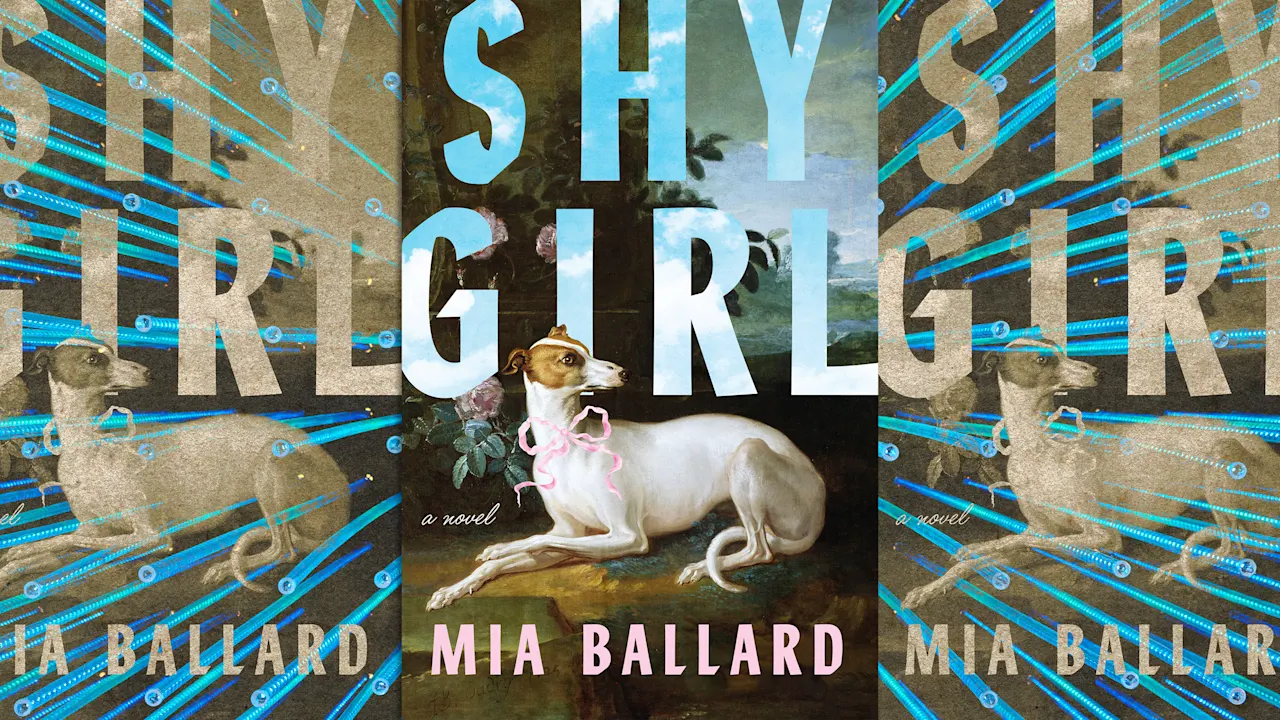
    A new drama has taken the book publishing world by storm: The upcoming U.S. release of the horror book Shy Girl was canceled by Hachette Book Group just weeks ahead of its launch date due to suspicion of AI use in its making.

    Authored by American poet and fiction writer Mia Ballard, Shy Girl is a novel described as focusing on the life of a girl with severe obsessive-compulsive disorder (OCD) who agrees to be held captive as an affluent man’s pet in order to rid herself of financial woes.

    The book was self-published early last year. Another edition was then released in November by Hachette’s U.K. imprint Wildfire. Hachette confirmed the cancellation by U.S. imprint Orbit to The New York Times, which first reported on the story.

    While Ballard’s self-published version initially received positive reviews, its more recent version has drawn speculation online.

    In a Reddit thread from two months ago, one user dissected the common syntax of large language models (LLMs) and compared it with the book’s prose.

    “It seems so obvious to me, but let me know if you agree,” the user said in a discussion that now includes hundreds of comments. “If it isn’t AI, she’s a terrible writer. Her writing is truly indistinguishable from an LLM.”

    In January, users on the novel’s Goodreads page chimed in with their own speculation.

    “As an editor, I’ve read a few specifically ChatGPT written books, and this has not only all the hallmarks, but some specific repeated phrases that I’ve read in other ChatGPT works,” one commenter wrote. 

    But despite online speculation, the book appeared to be on course for its U.S. release date, until this week.

    Why was the book canceled?

    According to The Times, Hachette pulled the book a day after it was approached by the newspaper with what it described as evidence that the novel was AI-generated.

    Fast Company has reached out to Ballard for comment via email. The author’s Instagram account appeared to be deactivated as of this writing.

    According to The Times, Ballard has since admitted that an acquaintance who edited the self-published version of the novel might have used AI.

    “This controversy has changed my life in many ways and my mental health is at an all time low and my name is ruined for something I didn’t even personally do,” Ballard told The New York Times over email.

    Who detects the detectors?

    The controversy underscores many questions that have gripped the book publishing industry in the era of ChatGPT, including how one might spot the use of AI in the first place.

    AI detectors essentially make a prediction on the likelihood that AI was used based on specific markers.

    “Unlike plagiarism detectors that check for copied content, or spam filters that look for malicious patterns, AI detectors focus on the subtle stylistic fingerprints left behind by machine-writing processes,” Adobe explains.

    Studies have shown that AI detectors can often spot AI use, yet no detector has yet achieved 100% reliability. In fact, in school settings, where these detectors are often employed, high error rates have led to false accusations of AI use.

    Even initiatives spearheaded by the AI companies themselves have been unsuccessful, with OpenAI shutting down its AI detection tool back in 2023.

    Readers, meanwhile, continue to debate the issue. For instance, the use of em dashes in writing has in the past been associated with LLMs like ChatGPT. But defenders of the punctuation mark say it’s not always a reliable sign.

    “This is not a great indicator in published creative writing—we love em dashes,” one Redditor wrote in a Shy Girl-related thread. “When might it raise an eyebrow? When it is consistently used to separate two quite simple clauses, and not so often used parenthetically.”


    Source link

    Share. Facebook Twitter Pinterest LinkedIn Tumblr Email Telegram Copy Link

    Related Posts

    Business

    AI search demands a new audience playbook

    April 24, 2026
    Business

    AI is replacing creativity with ‘average’

    April 24, 2026
    Business

    Palantir is dropping merch and stirring pots

    April 24, 2026
    Business

    NASA’s awe-inducing iPhone moon video is a free ad for Apple, but there’s a catch

    April 23, 2026
    Business

    The U.S. just changed marijuana law for the first time in decades

    April 23, 2026
    Business

    Want to live a longer, happier life? Science says work to be more successful (but not in the way you might think)

    April 23, 2026
    Editors Picks

    Trump says $72bn Netflix-Warner Bros deal ‘could be a problem’

    December 10, 2025

    Australia police recover two bodies in search for missing Chinese tourists

    March 12, 2026

    Belgium joins South Africa’s genocide case against Israel at ICJ | Israel-Palestine conflict News

    December 23, 2025

    Opinion | Why Jeff Bezos’ Tax Rate Is Lower Than Yours

    April 17, 2026

    Could an end to the Ukraine war be near? | Russia-Ukraine war

    December 11, 2025
    About Us
    About Us

    Welcome to Benjamin Franklin Institute, your premier destination for insightful, engaging, and diverse Political News and Opinions.

    The Benjamin Franklin Institute supports free speech, the U.S. Constitution and political candidates and organizations that promote and protect both of these important features of the American Experiment.

    We are passionate about delivering high-quality, accurate, and engaging content that resonates with our readers. Sign up for our text alerts and email newsletter to stay informed.

    Latest Posts

    Beijing’s new supply chain rules deepen concerns for US firms in China

    April 24, 2026

    India denounces ‘hellhole’ remark shared by Trump | Donald Trump News

    April 24, 2026

    New photos of Mike Vrabel and Dianna Russini emerge

    April 24, 2026

    Subscribe for Updates

    Stay informed by signing up for our free news alerts.

    Paid for by the Benjamin Franklin Institute. Not authorized by any candidate or candidate’s committee.
    • Privacy Policy
    • About us
    • Contact us

    Type above and press Enter to search. Press Esc to cancel.