

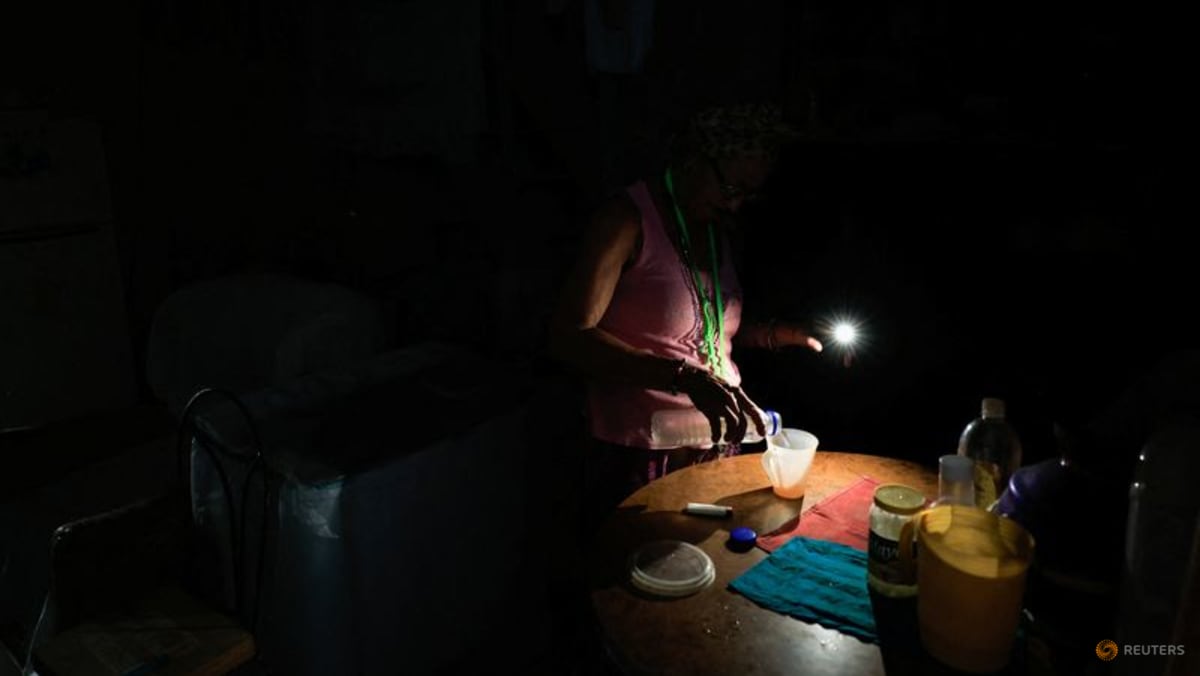
WITHOUT POWER
Power outages have been a feature of life for years in Cuba, where the electricity generation system, composed mainly of dilapidated Soviet-era plants, is in shambles.
The blackouts and power cuts have accelerated since the fuel blockade began, with authorities citing a lack of fuel to run the generators that prop up the national grid.
Since January, Washington has only allowed one oil tanker, from Russia, to dock in Cuba, as part of a pressure campaign aimed at ending more than six decades of communist rule in Havana.
Trump points to the US overthrow of Venezuela’s socialist president Nicolas Maduro and installation of a Washington-friendly successor as a potential blueprint for what he would like to achieve in Cuba.
Cuba has repeatedly said its political model is not up for discussion and vowed to resist any invasion militarily.
MAKING CUBA “INVESTABLE”
The US blockade, coupled with a flurry of sanctions on the Cuban state and foreign companies that do business with it, have nudged a country already mired in a generational crisis closer to collapse.
Food, drinking water and medicine are in increasingly short supply, and some surgeries have been put on hold, prompting the United Nations to warn of a humanitarian emergency.
Transport on the island has come to a near standstill.
Last month, the government unveiled a sweeping package of free-market reforms that, if implemented, would dramatically reduce state control over the economy.
The US State Department dismissed the plans as “superficial smoke signals” and said Trump was holding out for “much more substantial economic and political reforms that would make Cuba investable” and grant Cubans political freedom.
The two sides have held several rounds of talks but Cuban Foreign Minister Bruno Rodriguez last week said they had made “no progress” towards ending the impasse.
On Monday, Havana accused Washington of preventing a debate at the United Nations on its oil blockade and sanctions.