
Close Menu
    Trending
    • Meghan Trainor Speaks Out About Toxic Mom Group Drama
    • Trump posts image of himself with Jesus as administration’s pope criticism continues
    • Why many Kashmiris are donating gold, breaking piggy banks for Iran | US-Israel war on Iran News
    • Warriors elder statesmen stun Clippers in comeback win 
    • To thrive in the age of AI, don’t reinvent yourself. Try this instead
    • Neanderthal infants were enormous compared with modern humans
    • The Rise Of AI In Payments Is Not About Convenience
    • Allison Williams Addresses Lena Dunham’s Adam Driver Accusations
    Benjamin Franklin Institute
    Thursday, April 16
    • Home
    • Politics
    • Business
    • Science
    • Technology
    • Arts & Entertainment
    • International
    Benjamin Franklin Institute
    Home»Science»Crystal-based cooling could make fridges more sustainable
    Science

    Crystal-based cooling could make fridges more sustainable

    Team_Benjamin Franklin InstituteBy Team_Benjamin Franklin InstituteJanuary 3, 2025No Comments2 Mins Read
    Share Facebook Twitter Pinterest Copy Link LinkedIn Tumblr Email VKontakte Telegram
    Share
    Facebook Twitter Pinterest Email Copy Link


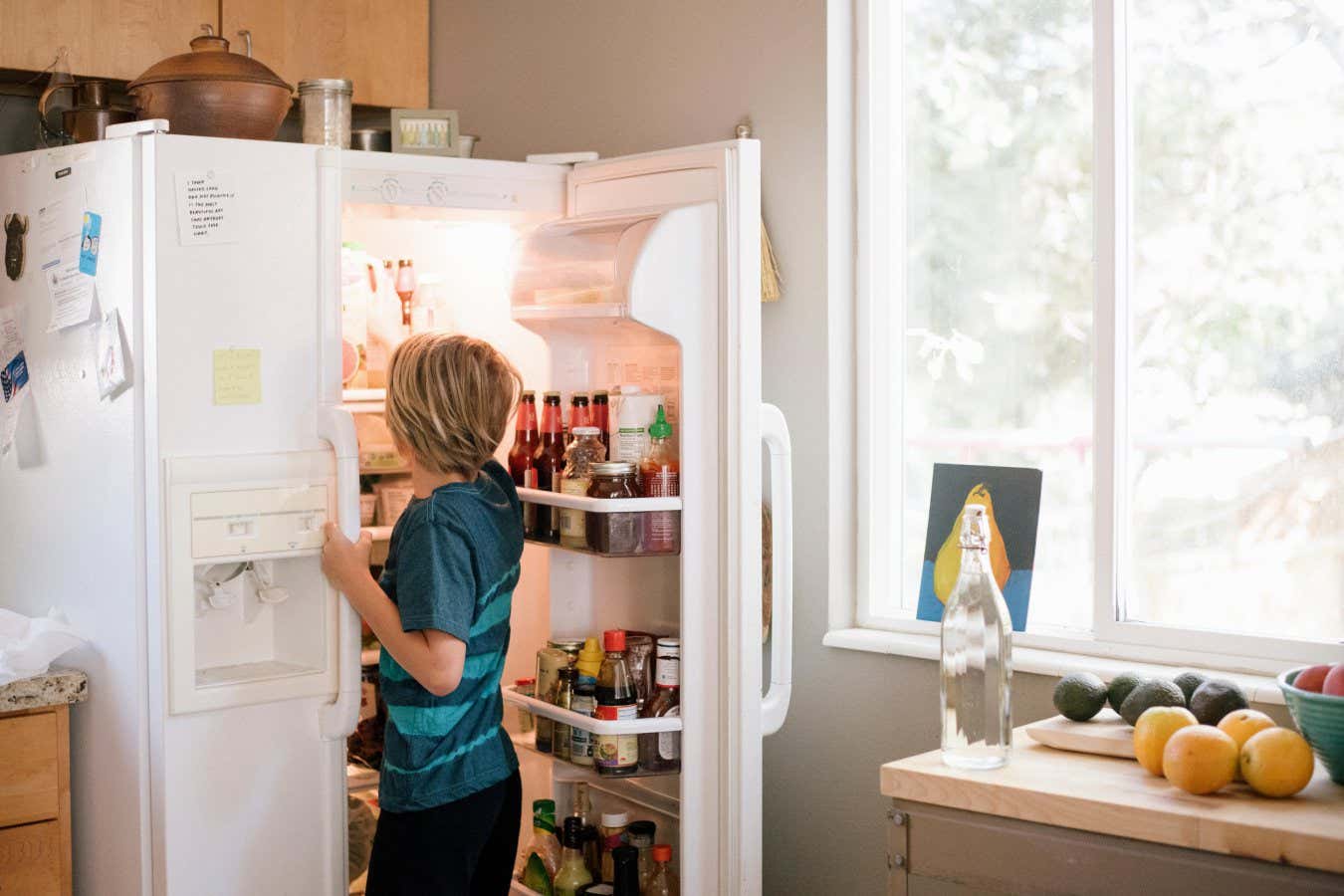
    Refrigerators and freezers typically get their cooling power from environmentally harmful fluids

    Mint Images Limited/Alamy

    A new type of crystal could enable refrigerators and air conditioners to keep us cool without warming the planet.

    Refrigerators and air conditioners get their cooling power by circulating a liquid through the device, which absorbs heat and causes chilling through a cycle of evaporation and condensation. But many such liquids contribute to the greenhouse effect, causing further warming when they leak. Now, Jenny Pringle at Deakin University in Australia and her colleagues have made a climate-friendly alternative to these liquids using “plastic crystals” – crystals with molecules that can move just enough to make them pliable.

    Under enough pressure, these plastic crystals can transform. Their molecules go from being randomly oriented to aligning themselves into a neat grid. Then, when pressure is removed, they become disordered again. As part of this disordering process, the crystals absorb heat, effectively cooling their surroundings.

    Such pressure-based cooling has been investigated before, but most materials capable of this transition could only do so at balmy temperatures, limiting their cooling power, says Pringle. In contrast, the heat-sucking ability of her team’s crystals kicks in at temperatures from -37°C (-34.6°F) to 10°C (50°F), a suitable range for household refrigerators and freezers.

    However, the new crystals are not ready to leave the lab yet. That’s because the pressures needed to make them work are very high – hundreds of times greater than atmospheric pressure and equivalent to being thousands of metres underwater, says Pringle.

    David Boldrin at the University of Glasgow, UK, says materials like those in the new study have “the potential to almost completely decarbonise this huge [cooling] industry”, but he shares the concern about the high pressures required.

    There may be another practical issue with this approach, says Bing Li at the Chinese Academy of Sciences. With every repeated use, each crystal may absorb less heat, as the grid the molecules form becomes more strained. Still, Li is optimistic and says he is confident the technology could be applied in the “near future”.

    Topics:


    Source link

    Share. Facebook Twitter Pinterest LinkedIn Tumblr Email Telegram Copy Link

    Related Posts

    Science

    Neanderthal infants were enormous compared with modern humans

    April 16, 2026
    Science

    Largest ever map of universe captures 47 million galaxies and quasars

    April 16, 2026
    Science

    Monkeys walk around a virtual world using only their thoughts

    April 15, 2026
    Science

    Requests for blood from unvaccinated donors is harming patients

    April 15, 2026
    Science

    Quantum computers could usher in a crisis worse than Y2K

    April 15, 2026
    Science

    How autoimmune conditions can unexpectedly drive mental illness

    April 15, 2026
    Editors Picks

    Poland Considers Using Gold To Fund Defense As War Pressures Rise

    April 8, 2026

    Trump name change at D.C.’s Kennedy Center is causing New Year’s Eve boycotts

    December 30, 2025

    Russia may gain more than lose from a US intervention in Venezuela | Conflict

    December 29, 2025

    Zelenskyy hopes for security guarantees plan in looming US talks

    January 16, 2026

    Highlights From the 2026 Winter Olympics, in Photos

    February 10, 2026
    About Us
    About Us

    Welcome to Benjamin Franklin Institute, your premier destination for insightful, engaging, and diverse Political News and Opinions.

    The Benjamin Franklin Institute supports free speech, the U.S. Constitution and political candidates and organizations that promote and protect both of these important features of the American Experiment.

    We are passionate about delivering high-quality, accurate, and engaging content that resonates with our readers. Sign up for our text alerts and email newsletter to stay informed.

    Latest Posts

    Meghan Trainor Speaks Out About Toxic Mom Group Drama

    April 16, 2026

    Trump posts image of himself with Jesus as administration’s pope criticism continues

    April 16, 2026

    Why many Kashmiris are donating gold, breaking piggy banks for Iran | US-Israel war on Iran News

    April 16, 2026

    Subscribe for Updates

    Stay informed by signing up for our free news alerts.

    Paid for by the Benjamin Franklin Institute. Not authorized by any candidate or candidate’s committee.
    • Privacy Policy
    • About us
    • Contact us

    Type above and press Enter to search. Press Esc to cancel.