
Close Menu
    Trending
    • How do earthquakes end? A seismic ‘stop sign’ could help predict earthquake risk
    • Trump Announces Cease-Fire Between Israel and Lebanon
    • Google Is Tracking Your Life – Photo Cloud Feeding AI System
    • Rachel Zoe Confronts Amanda Frances In ‘RHOBH’ Reunion Clip
    • China’s DeepSeek says it released long-awaited new AI model
    • China’s DeepSeek unveils latest models a year after upending global tech | Technology News
    • Malik Nabers’ reaction to Cowboys drafting Caleb Downs should thrill Dallas fans
    • AI is replacing creativity with ‘average’
    Benjamin Franklin Institute
    Friday, April 24
    • Home
    • Politics
    • Business
    • Science
    • Technology
    • Arts & Entertainment
    • International
    Benjamin Franklin Institute
    Home»Science»Could 2026 be the year we start using quantum computers for chemistry?
    Science

    Could 2026 be the year we start using quantum computers for chemistry?

    Team_Benjamin Franklin InstituteBy Team_Benjamin Franklin InstituteJanuary 1, 2026No Comments3 Mins Read
    Share Facebook Twitter Pinterest Copy Link LinkedIn Tumblr Email VKontakte Telegram
    Share
    Facebook Twitter Pinterest Email Copy Link


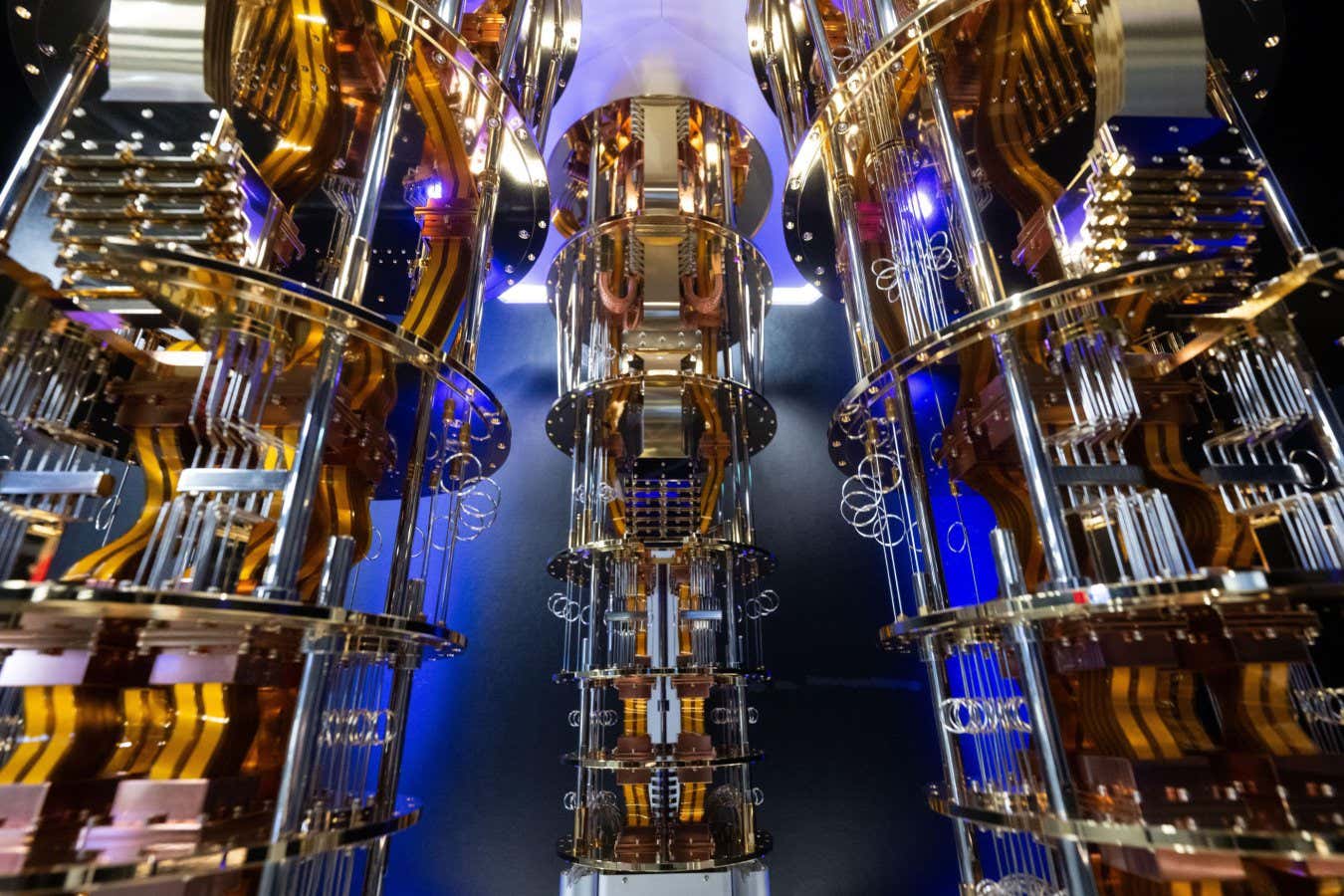
    Quantum computers are well-matched to solve chemistry problems

    Marijan Murat/dpa/Alamy

    Whether quantum computers can actually solve practical problems is one of the biggest unanswered questions of this growing industry – and one that might be answered by researchers in industrial and medical chemistry in 2026.

    Calculating the structure, reactivity and other chemical properties of a molecule is an intrinsically quantum problem because it involves its electrons, which are quantum particles. But the more complex a molecule is, the harder these calculations become, in some cases posing a real challenge even for traditional supercomputers.

    On the other hand, because quantum computers are also intrinsically quantum, they should have an advantage when it comes to tackling these chemical calculations. And as quantum computers have gotten larger and more easily combined with traditional computers, we are increasingly seeing them turned to this use.

    For example, in 2025, researchers at IBM and the Japanese scientific institute RIKEN used a quantum computer and a supercomputer to model several molecules. Researchers at Google developed and tested a quantum computing algorithm to help tease out the structure of molecules. RIKEN’s researchers also teamed up with the quantum computing firm Quantinuum to devise a workflow for computing molecules’ energies in such a way that the quantum computer caught its own errors. Finally, quantum software start-up Qunova Computing already provides an algorithm that partly uses a quantum computer to calculate these energies, which it claims is about 10 times more efficient than more traditional methods.

    We should expect to see much more of this in 2026 as larger quantum computers become available. “Upcoming bigger machines will allow us to develop more powerful versions of this [existing] workflow, and ultimately, we’ll be able to address general quantum chemistry problems,” says David Muñoz Ramo at Quantinuum. So far, his team has tackled only a hydrogen molecule, but he says that more complex structures like catalysts, which speed up industrially relevant reactions, could be on the horizon.

    Other research teams are gearing up to do similar work. For example, in December, Microsoft announced a collaboration with the quantum software start-up Algorithmiq with the explicit aim of developing more quantum chemistry algorithms more quickly. In fact, a survey of the quantum computing industry conducted by Hyperion Research found that chemistry is the leading area in which makers and buyers of quantum computers alike expect to see progress and success in the coming year. In the past two annual surveys, quantum chemistry was the second- and fourth-most promising use case for quantum computing, respectively, so the trend has seen steadily increasing interest and investment.

    Ultimately, however, quantum chemistry computations won’t really take off until quantum computers become error-proof or fault-tolerant – something that is also holding up other applications of these exotic devices. “The ability of a quantum computer to solve problems faster than a classical computer depends on fault-tolerant algorithm,” wrote Philipp Schleich and Alán Aspuru-Guzik at the University of Toronto in a recent commentary on quantum computing and chemistry for the journal Science. Luckily, reaching fault-tolerance is the one goal that every quantum computer manufacturer around the globe can agree on.

    Topics:

    • chemistry /
    • 2026 news preview


    Source link

    Share. Facebook Twitter Pinterest LinkedIn Tumblr Email Telegram Copy Link

    Related Posts

    Science

    How do earthquakes end? A seismic ‘stop sign’ could help predict earthquake risk

    April 24, 2026
    Science

    ‘Kraken’ fossils show enormous, intelligent octopuses were top predators in Cretaceous seas

    April 24, 2026
    Science

    Largest ever octopus was great white shark of invertebrate predators

    April 24, 2026
    Science

    Do you need to worry about Mythos, Anthropic’s computer-hacking AI?

    April 23, 2026
    Science

    How many dachshunds would it take to get to the moon?

    April 23, 2026
    Science

    The Age Code review: Can you slow ageing with your diet? A new book gives it a go

    April 23, 2026
    Editors Picks

    RFK, Jr. just claimed the keto diet can cure schizophrenia. Here’s what the science says

    February 8, 2026

    Charles Proteus Steinmetz: Electric Vehicle Visionary

    February 28, 2026

    ‘I have fought for Aaron’: A Ugandan mother confronts disability and stigma | Women

    March 21, 2026

    Gabrielle Union Draws Line in the Sand Over Stepdaughter Zaya

    May 25, 2025

    Thousands gather in Libya for funeral of Saif al-Islam Gaddafi | Muammar Gaddafi News

    February 6, 2026
    About Us
    About Us

    Welcome to Benjamin Franklin Institute, your premier destination for insightful, engaging, and diverse Political News and Opinions.

    The Benjamin Franklin Institute supports free speech, the U.S. Constitution and political candidates and organizations that promote and protect both of these important features of the American Experiment.

    We are passionate about delivering high-quality, accurate, and engaging content that resonates with our readers. Sign up for our text alerts and email newsletter to stay informed.

    Latest Posts

    How do earthquakes end? A seismic ‘stop sign’ could help predict earthquake risk

    April 24, 2026

    Trump Announces Cease-Fire Between Israel and Lebanon

    April 24, 2026

    Google Is Tracking Your Life – Photo Cloud Feeding AI System

    April 24, 2026

    Subscribe for Updates

    Stay informed by signing up for our free news alerts.

    Paid for by the Benjamin Franklin Institute. Not authorized by any candidate or candidate’s committee.
    • Privacy Policy
    • About us
    • Contact us

    Type above and press Enter to search. Press Esc to cancel.