
Close Menu
    Trending
    • India denounces ‘hellhole’ remark shared by Trump | Donald Trump News
    • New photos of Mike Vrabel and Dianna Russini emerge
    • AI search demands a new audience playbook
    • How do earthquakes end? A seismic ‘stop sign’ could help predict earthquake risk
    • Trump Announces Cease-Fire Between Israel and Lebanon
    • Google Is Tracking Your Life – Photo Cloud Feeding AI System
    • Rachel Zoe Confronts Amanda Frances In ‘RHOBH’ Reunion Clip
    • China’s DeepSeek says it released long-awaited new AI model
    Benjamin Franklin Institute
    Friday, April 24
    • Home
    • Politics
    • Business
    • Science
    • Technology
    • Arts & Entertainment
    • International
    Benjamin Franklin Institute
    Home»Science»Comets were on fire this year – for better or worse
    Science

    Comets were on fire this year – for better or worse

    Team_Benjamin Franklin InstituteBy Team_Benjamin Franklin InstituteDecember 10, 2025No Comments4 Mins Read
    Share Facebook Twitter Pinterest Copy Link LinkedIn Tumblr Email VKontakte Telegram
    Share
    Facebook Twitter Pinterest Email Copy Link


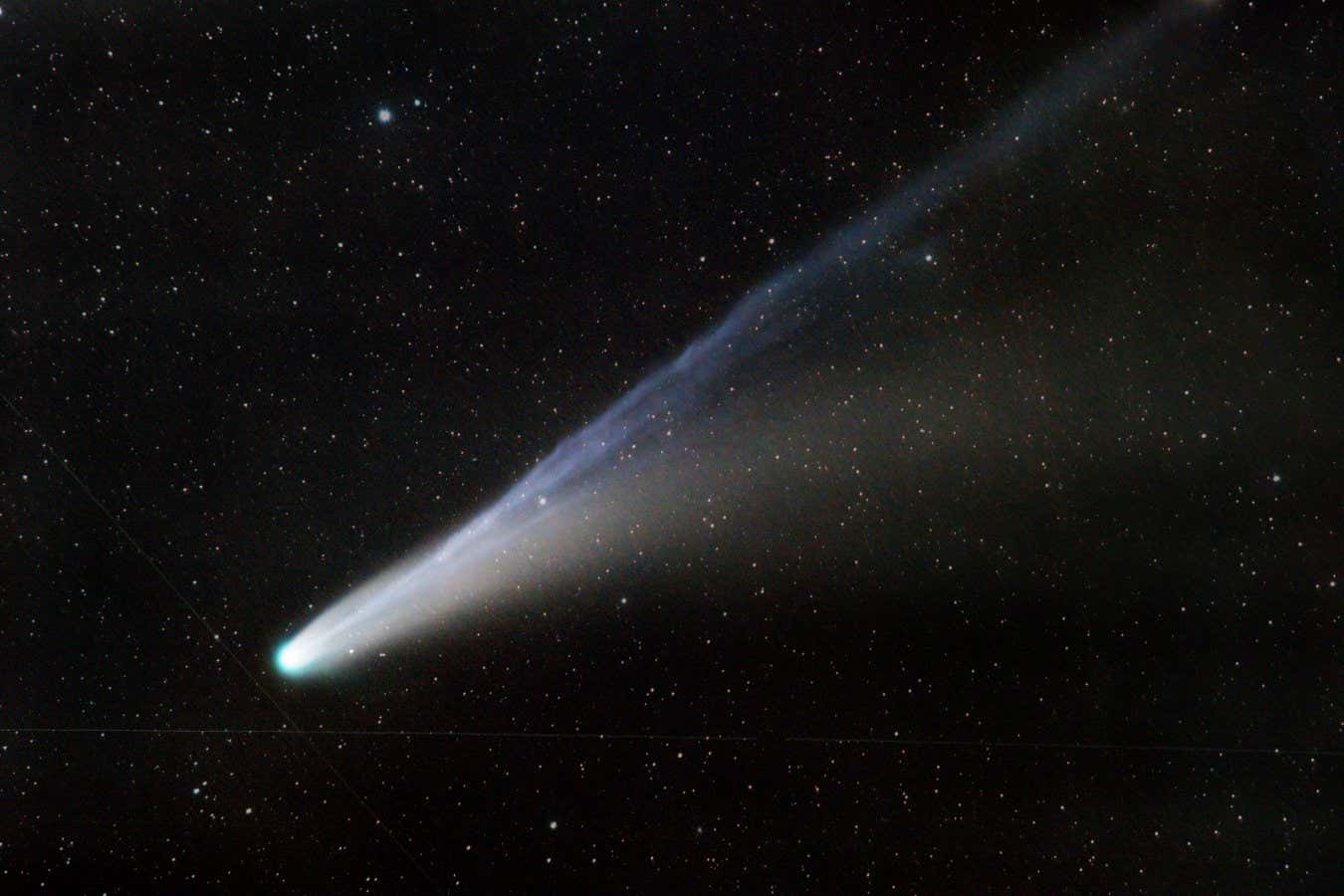
    Comet Lemmon, photographed from northern Italy on 26th October 2025

    Marcel Clemens/Alamy

    I don’t think anyone declared it, but 2025 was a big year for comets. There was comet Lemmon, which was discovered in January and stayed in the news for a good nine months. The images of Lemmon’s long and beautiful tail, created by solar heating of the comet, stopped me in my tracks every time.

    Then there was the September discovery of C/2025 R2 (SWAN), a comet so bright that even when it was near the moon on Halloween, it was still quite visible to observers. And there was comet 3I/Atlas, which became famous because an astronomer at Harvard University whose main area of expertise is cosmology declared it was an alien probe.

    As a cosmologist who knows she isn’t an expert on comets, I believe all of the experts who say that, without a doubt, comet 3I/Atlas isn’t an alien object. This shouldn’t be disappointing. The comet is still scientifically fascinating. It is different from Lemmon and SWAN because it has origins outside of our solar system. Comet 3I/Atlas is, by definition, interstellar.

    Its arrival in our solar system makes it an exciting opportunity. By studying its composition, we can learn a lot about its home star, even though it is impossible to reverse engineer its exact trajectory. In other words, we can learn about a mystery star’s composition, even if we don’t know which star we are studying.

    Our journey with comets this year is only the latest in a long arc of human reactions to mysterious celestial objects appearing in the sky. Perhaps most famously, the passage of Halley’s comet in 1066 was depicted in the Bayeux Tapestry as signalling the start of the Norman invasion of England. Today, we know that humanity isn’t the centre of the universe – and that the universe doesn’t have a centre – but I could forgive someone for momentarily thinking that 2025’s comets are trying to tell us something.

    As we look back on the year, so many scary and disappointing things happened that it can be easy to think these comets might have heralded the end of the world as we know it. US science is up against the ropes as the current administration cancels grants and programmes (see page 20). In both the US and the UK, attacks on immigrants have become more mainstream.

    As a Black and Jewish queer scientist and child of immigrants, keeping heart is a daily challenge for me. I am aware there are people who want me silenced. Against all my scientific training, I could choose to read the comets as a sign that I should give in. But there is another option: I can witness, as a scientist, the way that the comets hold hope for me. They are a beautiful visual sanctuary. The quest to see them has also brought people together. I delight in the posts about them in my astrophotography groups. While I find all of the “Is it an alien?” misinformation in various publications deeply frustrating, I love that people are looking up.

    Going forward into 2026, my wish list is long. Scientifically, I really want a paradigm-shifting dark matter observation. Socially, I want all children to have the food, housing, education and medical care they need in identity-affirming communities. These are big dreams that probably won’t happen by the end of the year. But the comets are a reminder that the universe is full of big, wonderful surprises. Just as we do the work of seeking out comets, we should also build the better world we need.

    Topics:


    Source link

    Share. Facebook Twitter Pinterest LinkedIn Tumblr Email Telegram Copy Link

    Related Posts

    Science

    How do earthquakes end? A seismic ‘stop sign’ could help predict earthquake risk

    April 24, 2026
    Science

    ‘Kraken’ fossils show enormous, intelligent octopuses were top predators in Cretaceous seas

    April 24, 2026
    Science

    Largest ever octopus was great white shark of invertebrate predators

    April 24, 2026
    Science

    Do you need to worry about Mythos, Anthropic’s computer-hacking AI?

    April 23, 2026
    Science

    How many dachshunds would it take to get to the moon?

    April 23, 2026
    Science

    The Age Code review: Can you slow ageing with your diet? A new book gives it a go

    April 23, 2026
    Editors Picks

    Ancient giant kangaroos could have hopped despite their huge size

    January 23, 2026

    Amazon has a gas discount most Prime members don’t even know exists

    April 10, 2026

    5 quick ways to make your iPhone act more like it used to, before Apple’s iOS 26 update

    January 26, 2026

    New Scientist recommends Hamnet, and its look at our links with nature

    February 14, 2026

    US-EU tensions deepen over Greenland as Trump’s Europe strategy comes under scrutiny

    January 21, 2026
    About Us
    About Us

    Welcome to Benjamin Franklin Institute, your premier destination for insightful, engaging, and diverse Political News and Opinions.

    The Benjamin Franklin Institute supports free speech, the U.S. Constitution and political candidates and organizations that promote and protect both of these important features of the American Experiment.

    We are passionate about delivering high-quality, accurate, and engaging content that resonates with our readers. Sign up for our text alerts and email newsletter to stay informed.

    Latest Posts

    India denounces ‘hellhole’ remark shared by Trump | Donald Trump News

    April 24, 2026

    New photos of Mike Vrabel and Dianna Russini emerge

    April 24, 2026

    AI search demands a new audience playbook

    April 24, 2026

    Subscribe for Updates

    Stay informed by signing up for our free news alerts.

    Paid for by the Benjamin Franklin Institute. Not authorized by any candidate or candidate’s committee.
    • Privacy Policy
    • About us
    • Contact us

    Type above and press Enter to search. Press Esc to cancel.