
Close Menu
    Trending
    • Netanyahu says he was successfully treated for prostate cancer
    • Negotiations that enable Israel’s land-grabs | Israel-Palestine conflict
    • True-or-false for Round 1 of 2026 NFL Draft: Will Cowboys regret their trade?
    • Opinion | Stewart Brand, Silicon Valley’s Favorite Prophet, on Life’s Most Important Principle
    • Struggling to scale your company? Here are five things that could be holding you back
    • What happens if you’re hit by a primordial black hole?
    • When is London Marathon 2026? Start time and how to watch race for FREE
    • Pentagon Requests $54 Billion For AI War
    Benjamin Franklin Institute
    Friday, April 24
    • Home
    • Politics
    • Business
    • Science
    • Technology
    • Arts & Entertainment
    • International
    Benjamin Franklin Institute
    Home»Trending News»CNA Explains: Why China mattered in the expiry of the last US–Russia nuclear treaty
    Trending News

    CNA Explains: Why China mattered in the expiry of the last US–Russia nuclear treaty

    Team_Benjamin Franklin InstituteBy Team_Benjamin Franklin InstituteFebruary 5, 2026No Comments2 Mins Read
    Share Facebook Twitter Pinterest Copy Link LinkedIn Tumblr Email VKontakte Telegram
    Share
    Facebook Twitter Pinterest Email Copy Link


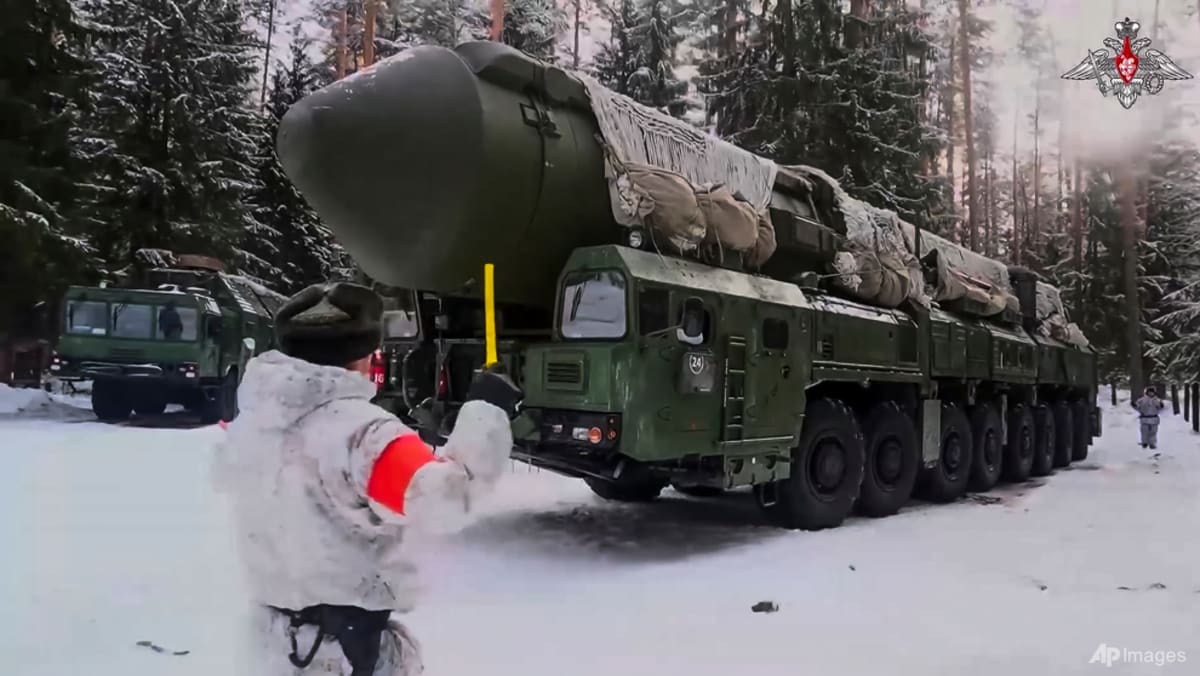
    SINGAPORE: The last nuclear treaty between the United States and Russia, the New Start agreement, lapsed on Thursday (Feb 5), ending decades of formal limits on how many nuclear warheads the two powers can deploy. 

    The pact’s expiry has sparked concerns of a renewed global arms race. 

    United Nations Secretary-General Antonio Guterres described the moment as a “grave moment for international peace and security” and urged Washington and Moscow to head quickly to the negotiating table.

    Russia had offered to extend the agreement, but received no formal response from the US.

    CNA takes a look at why Washington appeared reluctant to preserve the treaty – and how China may have factored into its calculations.

    What is the New Start treaty?

    Signed in 2010 by then US President Barack Obama and his Russian counterpart Dmitry Medvedev, the New Start treaty placed caps on the number of deployed strategic nuclear warheads and the missiles and bombers used to deliver them.

    Under the pact, each country was limited to 1,550 deployed nuclear warheads and no more than 700 deployed intercontinental ballistic missiles, submarine-launched ballistic missiles and heavy bombers.

    Crucially, the treaty also established a detailed verification regime, including data exchanges and short-notice, on-site inspections, allowing both sides to monitor compliance and reduce the risk of miscalculation.

    The inspections, however, were stopped during the COVID-19 pandemic and never resumed.  

    In 2023, Russian President Vladimir Putin said Russia could not allow US inspections of its nuclear sites when Washington and its NATO allies had openly declared Moscow’s defeat in its war with Ukraine as their goal.

    This forced each side to rely on its own intelligence assessments of what the other was doing.

    Despite this breakdown, both Washington and Moscow said they would continue to observe the treaty’s numerical limits until its expiration.

    The treaty followed a long line of US-Soviet and later US-Russian nuclear arms control agreements dating back to the Cold War, beginning with the Strategic Arms Limitation Talks (SALT I) in 1972.


    Source link

    Share. Facebook Twitter Pinterest LinkedIn Tumblr Email Telegram Copy Link

    Related Posts

    Trending News

    Netanyahu says he was successfully treated for prostate cancer

    April 24, 2026
    Trending News

    Beijing’s new supply chain rules deepen concerns for US firms in China

    April 24, 2026
    Trending News

    China’s DeepSeek says it released long-awaited new AI model

    April 24, 2026
    Trending News

    Meta plans 10% layoffs as AI spending soars: Source

    April 24, 2026
    Trending News

    Commentary: How the US and Iran could step back from the brink

    April 23, 2026
    Trending News

    Indonesia says Russia will supply 150 mn barrels of oil

    April 23, 2026
    Editors Picks

    Record-breaking tuna sells for $3.2 million at a Tokyo auction

    January 5, 2026

    Philippines alarmed after China sends ‘monster ship’ to disputed shoal

    January 14, 2025

    How worried should you be about your BMI?

    March 12, 2026

    Opinion | America Can’t Make What the Military Needs

    December 11, 2025

    7 things every leader must do to prepare their organization for 2026

    January 5, 2026
    About Us
    About Us

    Welcome to Benjamin Franklin Institute, your premier destination for insightful, engaging, and diverse Political News and Opinions.

    The Benjamin Franklin Institute supports free speech, the U.S. Constitution and political candidates and organizations that promote and protect both of these important features of the American Experiment.

    We are passionate about delivering high-quality, accurate, and engaging content that resonates with our readers. Sign up for our text alerts and email newsletter to stay informed.

    Latest Posts

    Netanyahu says he was successfully treated for prostate cancer

    April 24, 2026

    Negotiations that enable Israel’s land-grabs | Israel-Palestine conflict

    April 24, 2026

    True-or-false for Round 1 of 2026 NFL Draft: Will Cowboys regret their trade?

    April 24, 2026

    Subscribe for Updates

    Stay informed by signing up for our free news alerts.

    Paid for by the Benjamin Franklin Institute. Not authorized by any candidate or candidate’s committee.
    • Privacy Policy
    • About us
    • Contact us

    Type above and press Enter to search. Press Esc to cancel.