

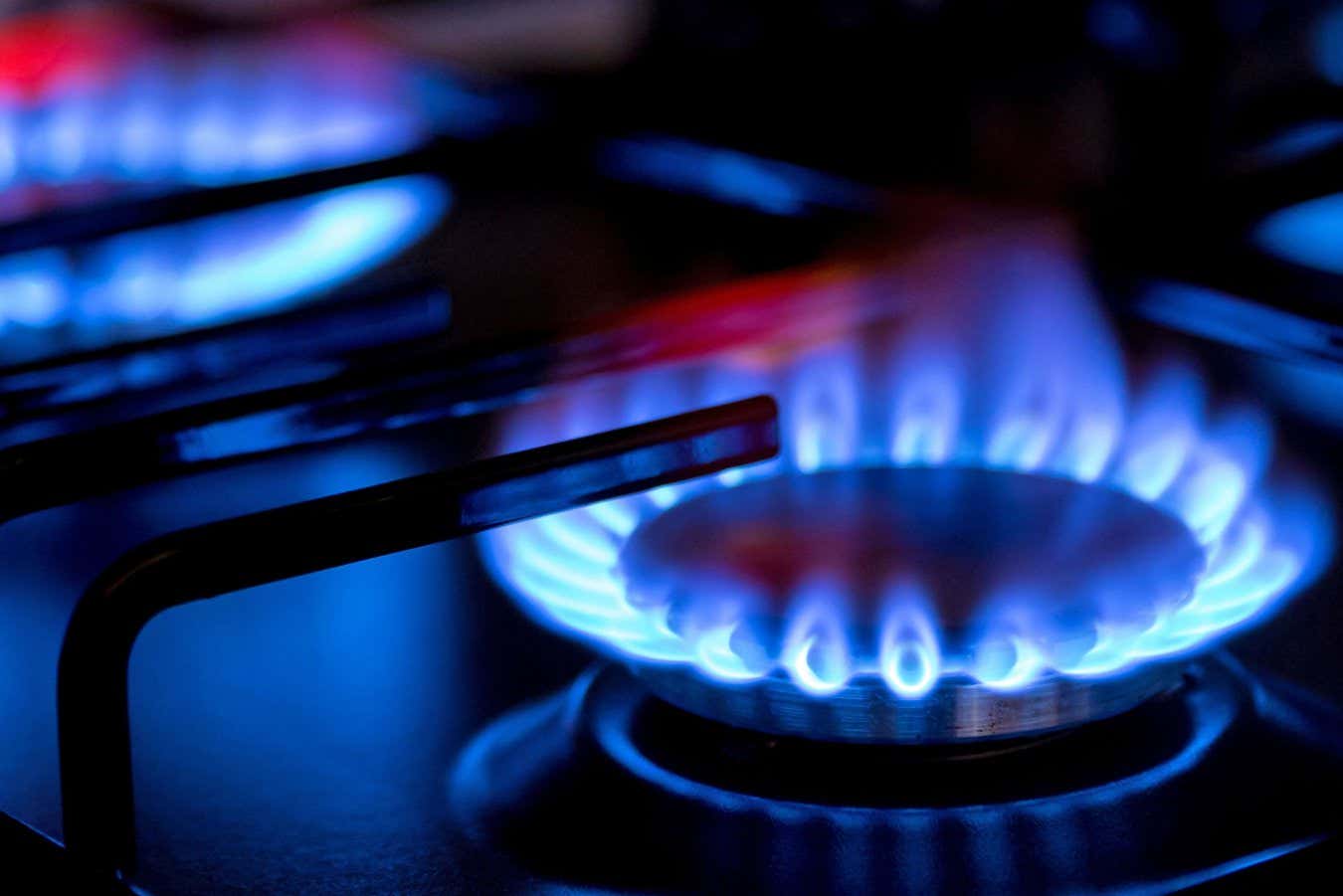
Gas burners can leak pollutants into homes
Maria Kray/Shutterstock
Many people in Europe may be exposed to dangerous chemicals as a result of slow leaks from gas cookers or ovens. Nearly 10 per cent of homes tested in the UK, Netherlands and Italy had leaks large enough to exceed exposure limits for the cancer-causing chemical benzene.
“It’s akin to living with a smoker,” says Drew Michanowicz at the research institute PSE Healthy Energy in Oakland, California. “Secondhand smoke creates a similar level of benzene indoors.”
Besides methane, natural gas can contain many volatile organic compounds (VOCs). Some are known to be harmful, including benzene, toluene, ethylbenzene, xylene and hexane. Benzene is the main concern as it can trigger cancers, especially leukaemia, suppress the immune system and cause anaemia and excessive bleeding.
Previous studies have found high levels of benzene in natural gas from the North Sea and the Netherlands, but it hasn’t been clear what levels people are exposed to. So Michanowicz’s team first collected samples of gas from cookers in 72 homes in the UK, the Netherlands and Italy.
Compared with US levels, benzene concentrations were 9 times higher in Italy, 37 times higher in the UK and 66 times higher in the Netherlands.
In 35 of the homes, the team sealed kitchens to check for gas leaks. They then estimated benzene levels in those homes based on the leakage rate, finding that 9 per cent would exceed UK and European Union safety limits – though there may be no safe level of benzene.
“This is just the benzene from the leaks,” says Michanowicz. “We know there’re other sources of benzene, so actual benzene levels could be even higher.”
“Depending on the balance between these different sources and ventilation rates, natural gas leakage from cookers could be a potentially important source of benzene,” says Nicola Carslaw at the University of York in the UK, who was not involved in the study. “But so much depends on specific behaviour within an individual home.”
Michanowicz thinks the 35 homes they studied are “within the ballpark of being representative of the larger population”.
The stove leak rates in Europe were lower on average than those the team has measured previously in the US, he says. So it could be that gas leakage really is lower in Europe, or that if more homes were tested the average leak rate in Europe would turn out to be higher.
For Paul Monks at the University of Leicester in the UK, the solution is obvious. “There is a growing body of evidence about indoor air pollution and gas stoves,” Monks says. “Given the dual benefit of reducing a potential health risk and decarbonisation, it’s worth moving away.”
Induction hobs are more energy-efficient, and safer in several ways – no pollution, lower fire risk and zero chance of blowing up entire buildings. But some people love cooking with gas, Michanowicz says.
Cooking with gas can produce pollutants, too, including benzene and nitrogen oxides. But people usually cook for short periods and often with an extractor fan on, Michanowicz says, so leaks may be a bigger risk.
Most of the leaks were below the level theoretically detectable by smell. Increasing the level of odorants in gas would enable more of these slow leaks to be detected, but not all of them, Michanowicz says. “Our noses are extremely imperfect. They vary a thousand-fold from person to person.”
Good ventilation will improve indoor air quality as long as the outside air is clean, Michanowicz says, but measures to improve energy efficiency often reduce ventilation rates.
“I think we still have a long way to go in terms of building codes that aren’t just about energy efficiency, but do include ventilation and indoor sources of pollution as well,” he says. For instance, installing heat recovery ventilation systems, also known as heat exchangers, can improve ventilation while minimising energy loss.
Topics: