
Close Menu
    Trending
    • Beijing’s new supply chain rules deepen concerns for US firms in China
    • India denounces ‘hellhole’ remark shared by Trump | Donald Trump News
    • New photos of Mike Vrabel and Dianna Russini emerge
    • AI search demands a new audience playbook
    • How do earthquakes end? A seismic ‘stop sign’ could help predict earthquake risk
    • Trump Announces Cease-Fire Between Israel and Lebanon
    • Google Is Tracking Your Life – Photo Cloud Feeding AI System
    • Rachel Zoe Confronts Amanda Frances In ‘RHOBH’ Reunion Clip
    Benjamin Franklin Institute
    Friday, April 24
    • Home
    • Politics
    • Business
    • Science
    • Technology
    • Arts & Entertainment
    • International
    Benjamin Franklin Institute
    Home»World Economy»British energy bills to fall as price cap cut by 7%
    World Economy

    British energy bills to fall as price cap cut by 7%

    Team_Benjamin Franklin InstituteBy Team_Benjamin Franklin InstituteFebruary 25, 2026No Comments3 Mins Read
    Share Facebook Twitter Pinterest Copy Link LinkedIn Tumblr Email VKontakte Telegram
    Share
    Facebook Twitter Pinterest Email Copy Link


    Stay informed with free updates

    Simply sign up to the UK energy myFT Digest — delivered directly to your inbox.

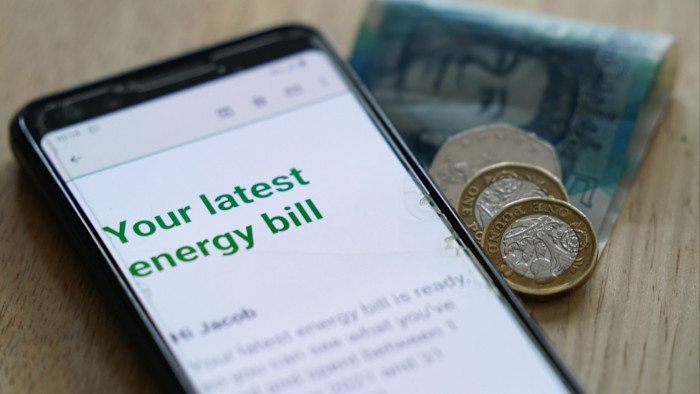
    British household bills are set to fall after the government re-categorised certain subsidy charges and axed an energy efficiency scheme, bringing the energy price cap lower.

    Ofgem, the energy regulator, has lowered the cap by 7 per cent for the April to June period, bringing it to a level that will see typical households pay £1,641 per year, down from £1,758 currently.

    The price cap covers accounts on default tariffs, which currently applies to about 60 per cent of the market. Fixed-tariff accounts will also benefit from the reductions in policy costs introduced by the government.

    In its Autumn Budget, the government said it would use taxation to pay three-quarters of households’ contribution to the renewables obligation subsidy scheme and end the ECO energy efficiency scheme, for which consumers had been paying via their bills.

    Wholesale prices have also fallen. However, the reductions were offset by a roughly £66 per typical household, or 17 per cent, increase in the costs for upgrading and maintaining electricity and gas networks.

    Ed Miliband, the energy secretary, is under pressure to meet the government’s goal of cutting bills by up to £300 a year by 2030.

    Wednesday’s reductions mean the price cap — which is reset every three months — is at its lowest level since the summer of 2024. However, it remains higher than it was before the energy crisis in 2021 and 2022, chiefly due to higher wholesale and network costs.

    The latter is expected to continue rising this decade due to investments such as new cables to transport electricity from new wind farms on remote parts of the Scottish coast.   

    “A fall in energy prices is welcome but for many people bills remain stubbornly high,” said Dame Clare Moriarty, chief executive of Citizens Advice, an organisation that assists people with debt and consumer issues. 

    Market experts Cornwall Insight said they currently expected the cap to reach £1,645 a year from July, although that would evolve depending on wholesale prices.

    The cap limits how much suppliers can charge households on default tariffs per unit of gas and electricity sold and the daily standing charge, varying slightly by region and payment method.

    On average, the cap on the unit rate is falling from 27.69 pence per kilowatt-hour to 24.67 pence per kilowatt-hour for electricity, and from 5.93 pence per kilowatt-hour to 5.74 pence per kilowatt-hour for gas.

    The cap on the standing charge will rise from 54.75 pence per day to 57.21 pence per day for electricity, and fall from 35.09 pence per day to 29.09 pence per day for gas.

    As well as the change to the price cap, all energy suppliers will also be legally obliged to apply the government’s cuts to policy costs to the roughly 40 per cent of accounts on fixed tariffs.

    Miliband will issue a legally binding directive to suppliers to pass on the reductions for the remaining length of the deal.

    High users of electricity could see even larger cuts to annual bills, with government predictions showing a price reduction of nearly £450 a year for the 2mn or so households that use electric storage heaters.


    Source link

    Share. Facebook Twitter Pinterest LinkedIn Tumblr Email Telegram Copy Link

    Related Posts

    World Economy

    Google Is Tracking Your Life – Photo Cloud Feeding AI System

    April 24, 2026
    World Economy

    Market Talk – April 23, 2026

    April 23, 2026
    World Economy

    Understanding Iran | Armstrong Economics

    April 23, 2026
    World Economy

    The Dollar Lifeline In War – Currency Swaps

    April 23, 2026
    World Economy

    Data Harvesting In The Classroom

    April 23, 2026
    World Economy

    Europe Turns On Turkey As The War Cycle Expands

    April 23, 2026
    Editors Picks

    Bumble Is Cutting Almost One-Third of Its Global Staff

    June 25, 2025

    Market Talk – February 25, 2026

    February 26, 2026

    Scooter Braun Talks Possible Taylor Swift Song About Him

    July 19, 2025

    Inside Jenny McCarthy’s ‘Last Resort’ Diet That She Admits ‘Sounds Gross’

    February 1, 2026

    Paying Fees To Pay Fees – Taxation In America

    November 21, 2025
    About Us
    About Us

    Welcome to Benjamin Franklin Institute, your premier destination for insightful, engaging, and diverse Political News and Opinions.

    The Benjamin Franklin Institute supports free speech, the U.S. Constitution and political candidates and organizations that promote and protect both of these important features of the American Experiment.

    We are passionate about delivering high-quality, accurate, and engaging content that resonates with our readers. Sign up for our text alerts and email newsletter to stay informed.

    Latest Posts

    Beijing’s new supply chain rules deepen concerns for US firms in China

    April 24, 2026

    India denounces ‘hellhole’ remark shared by Trump | Donald Trump News

    April 24, 2026

    New photos of Mike Vrabel and Dianna Russini emerge

    April 24, 2026

    Subscribe for Updates

    Stay informed by signing up for our free news alerts.

    Paid for by the Benjamin Franklin Institute. Not authorized by any candidate or candidate’s committee.
    • Privacy Policy
    • About us
    • Contact us

    Type above and press Enter to search. Press Esc to cancel.