
Close Menu
    Trending
    • Rigging Elections | Armstrong Economics
    • Imam Who Led Prayer Before Congress Faces Formal Rebuke for Disgusting Comments Celebrating Lindsey Graham’s Death
    • The Role That Made Zendaya Threaten To ‘Leave’ Tom Holland
    • China and Xi are seen more favourably than the US and Trump in many nations, Pew study suggests
    • ‘Epic squared’: Scaloni lauds Argentina’s back-to-back World Cup comebacks | World Cup 2026 News
    • Mensah talks how success of Ward, Beck persuaded him to transfer
    • How These High School Students Turned $1 Into More Than $100
    • How to avoid getting cyclosporiasis—and why washing lettuce may not be enough
    Benjamin Franklin Institute
    Thursday, July 16
    • Home
    • Politics
    • Business
    • Science
    • Technology
    • Arts & Entertainment
    • International
    Benjamin Franklin Institute
    Home»Science»Audacious mission to rescue NASA’s falling telescope has launched
    Science

    Audacious mission to rescue NASA’s falling telescope has launched

    Team_Benjamin Franklin InstituteBy Team_Benjamin Franklin InstituteJuly 3, 2026No Comments3 Mins Read
    Share Facebook Twitter Pinterest Copy Link LinkedIn Tumblr Email VKontakte Telegram
    Share
    Facebook Twitter Pinterest Email Copy Link


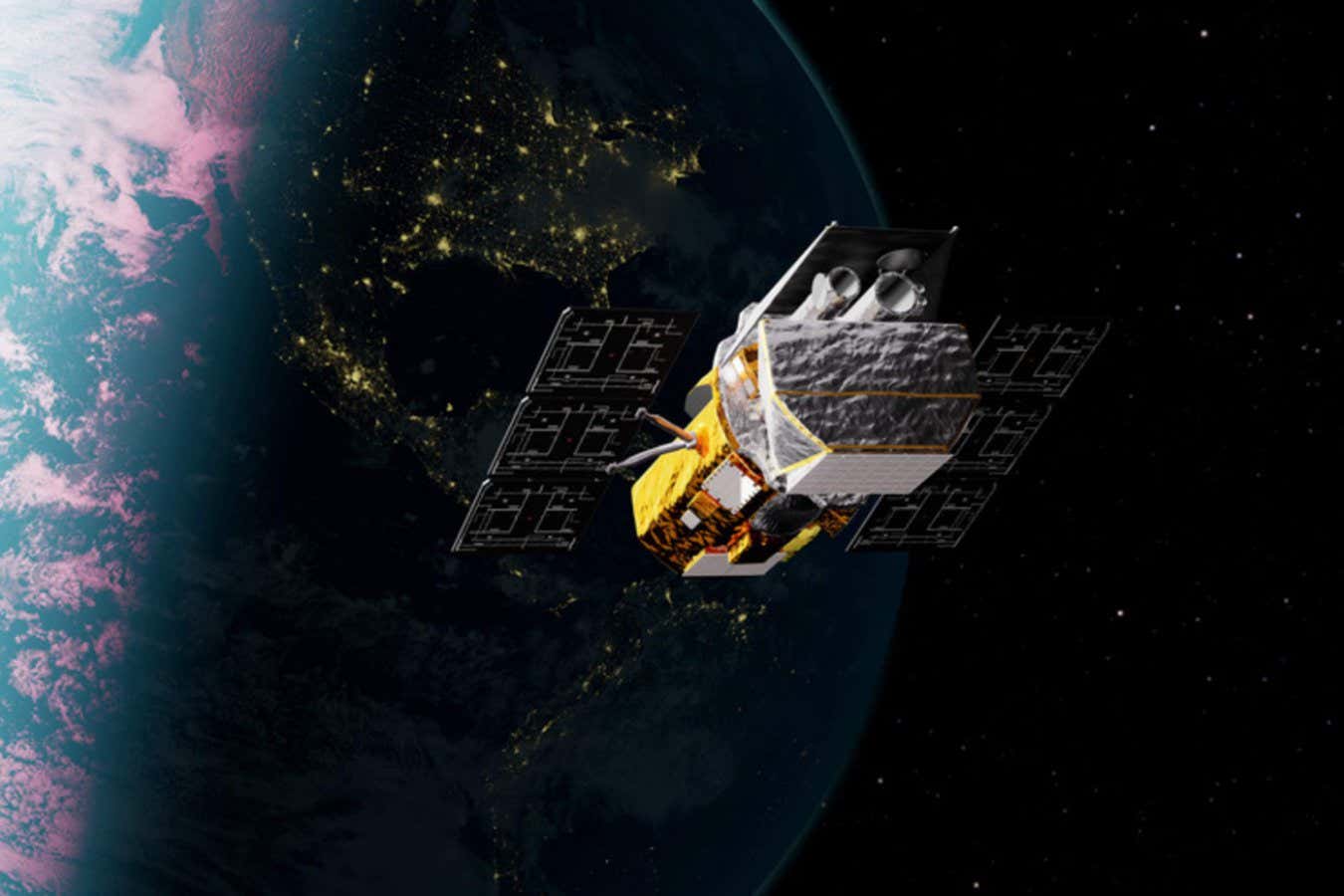
    NASA’s Neil Gehrels Swift Observatory

    NASA Goddard Space Flight Center

    One of NASA’s premier space telescopes is falling, and an audacious mission to rescue it has just begun. The Neil Gehrels Swift Observatory is months from dropping back to Earth, but if the rescue works, it could continue watching the sky for years to come.

    All satellites’ orbits eventually decay, and Swift is no exception. The outer edges of Earth’s atmosphere have been dragging it down since it launched in 2004: its initial orbit was at an altitude of about 600 kilometres from the ground, and now it’s only about 375 kilometres up. Its descent in recent years was faster than expected because of powerful solar flares depositing energy into the atmosphere, puffing it outwards and increasing drag on satellites.

    So if NASA wanted to keep Swift operating, the agency had few options. The one that won out was a proposal by Katalyst Space Technologies, a small start-up based in Arizona, to give the orbiting observatory a boost.

    The plan rests on a satellite called LINK, designed to grab Swift with a trio of robotic arms and pull it upward. At less than 2 metres tall, its main body is only about one-third the size of Swift, but it is flanked by immense sheets of solar panels to power its thrusters and grappling arms.

    LINK launched atop a Northrop Grumman Pegasus XL rocket on the morning of 3 July, in what is intended to be the final launch for Pegasus XL before it is retired. The spacecraft will now go through a few weeks of testing in space before it grabs Swift and slowly pushes upwards for about two months, letting go when it reaches its original 600-kilometre altitude. If all goes well, this manoeuvre will keep Swift operating for as much as a decade longer.

    Swift was originally built to study gamma-ray bursts, which are the brightest and most powerful explosions in the universe. Over the years, it has detected about 1800 of these blasts, and has also made crucial discoveries about other cosmic objects, ranging from comets and planets to supernovae and black holes.

    Boosting it will allow it to continue observing, but if it works, it will also be an important demonstration that it is possible to save a space telescope. “Swift wasn’t designed to be serviced,” said Ghonhee Lee, CEO of Katalyst, in a statement. “By demonstrating we can quickly and cost-effectively extend its lifetime, we’re creating a blueprint for servicing spacecraft that were never designed for on-orbit maintenance.” This could be a cost-effective way to extend the lifetimes of other satellites as well, in particular the Hubble Space Telescope, which is predicted to fall in the 2030s if it doesn’t get a boost.

    Topics:


    Source link

    Share. Facebook Twitter Pinterest LinkedIn Tumblr Email Telegram Copy Link

    Related Posts

    Science

    How to avoid getting cyclosporiasis—and why washing lettuce may not be enough

    July 16, 2026
    Science

    Scientists discover a ‘remarkable’ new monkey species with orange lips and a froglike roar

    July 15, 2026
    Science

    Trump’s latest CDC chief pick Erica Schwartz faces Senate confirmation hearing

    July 15, 2026
    Science

    Indonesia’s New Capital Is Changing the Borneo Rainforest Forever. Science is Listening to the Change

    July 15, 2026
    Science

    Here’s the deal with ‘corn sweat’—it’s not all actually corn’s fault

    July 15, 2026
    Science

    T. rex fossil named ‘Gus’ becomes the most expensive dinosaur sold at auction

    July 15, 2026
    Editors Picks

    Jared Verse sets expectations for himself, Browns

    June 4, 2026

    H5 bird flu detected in Australian seabird for first time

    July 10, 2026

    A Special Announcement For Socrates Pro Users

    May 26, 2026

    Thousands protest in Germany as far-right AfD sets sights on power

    July 4, 2026

    Amanda Told Kyle Cooke She’s Now ‘Scared’ Of Bravo Fans

    July 15, 2026
    About Us
    About Us

    Welcome to Benjamin Franklin Institute, your premier destination for insightful, engaging, and diverse Political News and Opinions.

    The Benjamin Franklin Institute supports free speech, the U.S. Constitution and political candidates and organizations that promote and protect both of these important features of the American Experiment.

    We are passionate about delivering high-quality, accurate, and engaging content that resonates with our readers. Sign up for our text alerts and email newsletter to stay informed.

    Latest Posts

    Rigging Elections | Armstrong Economics

    July 16, 2026

    Imam Who Led Prayer Before Congress Faces Formal Rebuke for Disgusting Comments Celebrating Lindsey Graham’s Death

    July 16, 2026

    The Role That Made Zendaya Threaten To ‘Leave’ Tom Holland

    July 16, 2026

    Subscribe for Updates

    Stay informed by signing up for our free news alerts.

    Paid for by the Benjamin Franklin Institute. Not authorized by any candidate or candidate’s committee.
    • Privacy Policy
    • About us
    • Contact us

    Type above and press Enter to search. Press Esc to cancel.