


For most people, leaving Apple after two decades would mean stepping away from sleek design and obsessive detail. For Xander Soren, it simply meant translating those principles into a different medium and bottling them.
During his 20-plus years at Apple, Soren helped shape some of the company’s most culture-defining products and creative tools. He was the original product manager for iTunes, worked on the launch of the iPod, led the development of GarageBand, and oversaw features like iPhone ringtones that became ubiquitous parts of Apple’s ecosystem.
His career spanned Apple’s rebirth into a design-led powerhouse, a period in which he absorbed the philosophy of simplicity, emotional resonance, and uncompromising craft that defined the company’s second act.
Soren is now the mind behind a radical wine venture years in the making, developing a high-end Pinot Noir crafted specifically to pair with Japanese cuisine.
After decades spent building products at Silicon Valley speed, he chose to pursue a more contemplative set of passions such as wine, Japanese culture, and Japanese food, while building a business that is deliberately small, design forward, and personal.
He produces just 600 to 800 cases per vintage, sometimes fewer than 100 cases of a single wine. It is a boutique operation with a big vision, rooted not in scale but in intention.
A Lifelong Connection to Apple and Japan
Ask Soren where this all began and he traces it back to two childhood obsessions, the Mac and Japan.
“My Apple journey probably started as a kid. I had the original Mac in 1984 that I was totally obsessed with. I was an Apple fan boy as a kid, and I followed the company . . . and I really was drawn to a lot of things with Japanese culture.”
When he eventually joined Apple, that thread only deepened.
“When I came to Apple, Steve [Jobs] had just been back as CEO for a little over three years . . . the first job I had was the iTunes product manager, the original iTunes product manager. So talk about throwing into the deep end . . . My first project that I worked on was the original iPod launch, which wound up changing the company.”
At Apple, Soren was steeped in design-first thinking. Now, it is inseparable from his winemaking.
A Pinot Noir Built for the Japanese Table
Soren’s wines are crafted from conception to blending to shine with Japanese cuisine.
He focuses on cooler appellations, especially the Santa Rita Hills, where unique terroir produces fruit capable of Burgundy-level nuance. He sources from historic sites including La Encantada, Sanford & Benedict, Sierra Mar, and Olivet Lane, as well as Yuki Vineyard on the Sonoma Coast, owned by Japanese producer Akiko Freeman.
Why Pinot? “I think I agree with a lot of the sommelier and chef community, where people feel the Pinot Noir is one of the most versatile food pairing wines,” Soren says.
Santa Rita Hills fruit, in particular, clicked. “They always say it has a saline sea spray, Nori, umami . . . flavors,” he says, flavors tailor-made for sukiyaki, wagyu, tempura, or even raw tuna. “You can drink Pinot Noir with raw tuna.”
The wines are deliberately high acid, bright, lower in alcohol, and built with balance in mind, attributes essential for delicate, complex dishes.
Minimal Intervention, Maximum Precision
Soren’s winemaker is Shalini Sekhar, a rising star who has earned 2015’s Winemaker of the Year (San Francisco International Wine Competition) and the San Francisco Chronicle’s 2019 Winemaker to Watch.
Her résumé spans Williams Selyem, Stag’s Leap, her own Ottavino label, and a portfolio of boutique producers.
At Xander Soren Wines, Sekhar leads a nonintrusive, labor-intensive approach. Not only vineyard blocks but individual clones are fermented and aged separately in carefully selected French oak before final blending. Production is small because the process demands it.
Soren describes their partnership this way: “I consider myself more of a creative director and then Shalini is this masterful, award-winning winemaker.”
Blending is their meeting point. “We both of us sit down, we try a whole bunch of different blends. It’s always done blind. [We ask] what do you think, A versus B?”
Design as Experience: Boxes, Logos, and the Apple Touch
Soren’s Apple design background is unmistakable the moment you unbox a bottle of Xander Soren wine. The packaging is deliberately minimalist, tactile, and engineered to create a moment of anticipation, much like peeling back the lid of a new Mac or iPhone.
“It started with wanting the unboxing experience to be something very special . . . made out of this beautiful but simple cardboard, which I felt like was more eco-friendly,” Soren says.
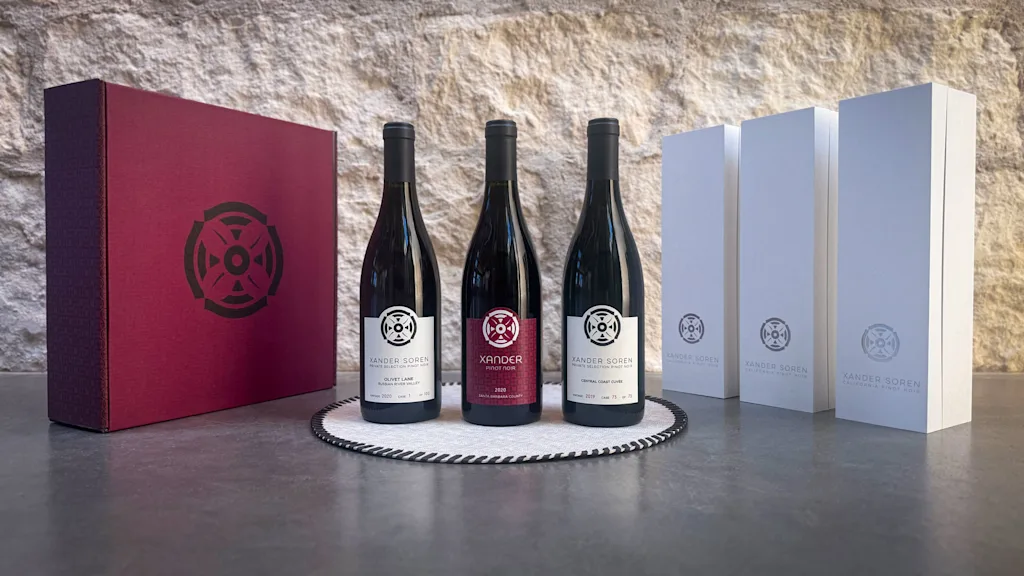
The idea for the packaging crystallized when he encountered a sake package he found almost impossibly elegant, with clean lines, restrained materials, and boxes that opened with gentle friction to reveal their contents with quiet ceremony.
It felt Japanese in its simplicity, but also familiar in a way he could not place. When he tracked down the designers, he got his answer.
“They told me, very coincidentally, that the sake box that I fell in love with was inspired by the original iPhone packaging. So it kind of felt like this full circle thing.”
For Soren, the connection was not just aesthetic. Both Apple and traditional Japanese design value containers that elevate the object inside rather than distract from it. His wine packaging follows the same logic, using understated materials, intentional geometry, and nothing extraneous. The experience begins before the cork is pulled.
And that attention to micro-details is central to his brand. “Small, little, tiny things are important,” he says.
The box, like the wine, is not meant to shout. It is designed to reveal itself slowly through weight, texture, proportion, and subtle precision that reflects both Soren’s Apple lineage and his reverence for Japanese craft.
After decades building software at breathtaking velocity, Soren had to adjust to a new rhythm when it came to wine. When shifting something like the vineyard a wine is made from or adjusting the blend, “We won’t really know the impact of that decision for four or five years,” he explains. A bit slower than an iPod launch.
That patience guides his small scale. The brand currently makes around 800 cases of wine each year.
A Logo of Symbolism and Storytelling
Soren’s logo blends Japanese symbolism with deeply personal references. Inspired by the traditional Kamon crests used by Samurai families, the mark embraces simplicity and iconic geometry.
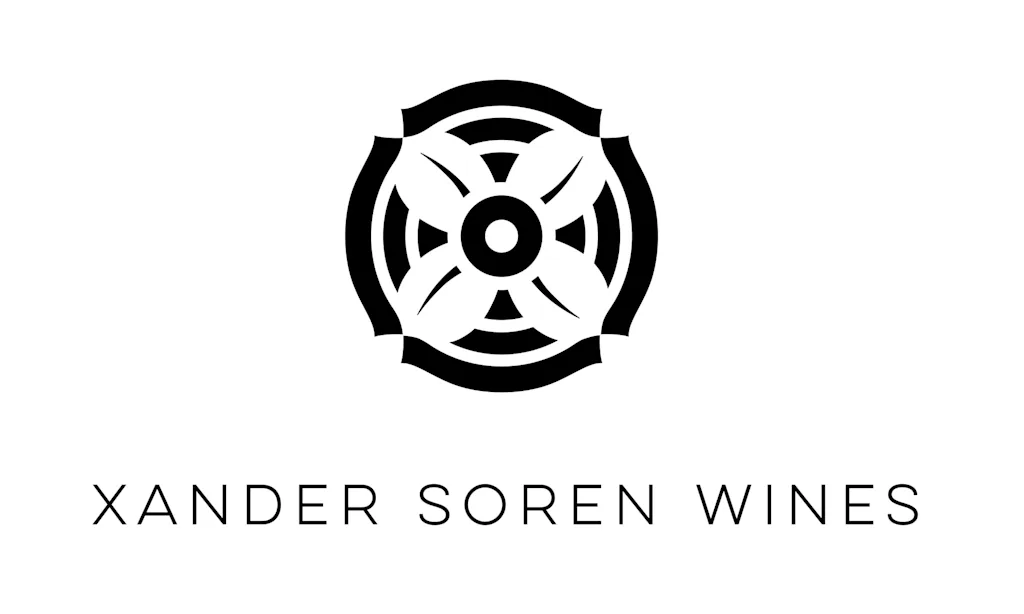
At its center sits an X-shaped Phacelia wildflower, chosen for its four petals that echo his own name, while the circular form subtly nods to elements of music, evoking the look of a speaker, a reel-to-reel tape, or even vintage vinyl inserts.
His father, industrial designer Leon Soren, contributed a final touch by breaking the top edge of the outer ring to mimic the silhouette of a Japanese temple roof. The result is a layered emblem meant to unfold slowly, rewarding close study and reflecting the Japanese appreciation for small, intentional details that reveal themselves over time.
Silicon Valley’s Quiet Migration Into Wine
Soren is not the first tech veteran to trade circuits for cellars. Silicon Valley has a long, often understated history of executives who eventually find their way into vineyards.
One of the earliest and most influential examples is Oracle cofounder Bob Miner, whose family transformed rugged hillside land in Napa into Oakville Ranch, now considered one of the valley’s most respected mountain estates.
Miner’s approach was a precursor to today’s tech-to-wine ethos, centered on small-lot production, meticulous farming, and a belief that great wine begins with great design in the vineyard.
Former Intel executive Dave House followed a similar path with House Family Vineyards in the Santa Cruz Mountains, where he built a boutique operation focused on Pinot Noir, Chardonnay, and Cabernet Sauvignon.
His shift from high-performance computing to high-elevation viticulture mirrors a familiar pattern among tech leaders seeking a more tactile, craft-driven second act.
Even the tech world’s biggest names have dipped into wine. Tesla’s Elon Musk previously owned Ellison Vineyards in Napa, although he never developed it into a consumer-facing label. Jeff Bezos of Amazon owns a sprawling estate in Napa’s Atlas Peak AVA, an ultra-premium site whose wines are not released under a public brand.
Both illustrate the tech sector’s fascination with wine, which often becomes an alternate industry where engineering instincts meet agricultural patience.
Soren admits that he still thinks like a product designer, even if the products now grow on vines. In tech, momentum is everything. In wine, momentum is measured in rains, ripeness, and the passing of seasons.
Soren seems content with that reversal. It’s not the speed that matters anymore, but the satisfaction of work that unfolds on its own clock.