
Close Menu
    Trending
    • LeBron’s decision might force Jalen Brunson to do the unthinkable
    • 8 Unique Side Hustle Ideas for Summer 2026 and Beyond
    • NHTSA considers new car door safety rules after fatal Tesla crashes
    • PlayStation Network outage resolved after thousands of gamers unable to play
    • Market Talk – July 24, 2026
    • Joe Biden Gives Up, Declines to Seek Further Review of Appeals Court Ruling on Release of Audiotapes with Ghostwriter
    • Meghan McCain Claps Back At Being Called ‘Old And Ugly’
    • Mixed day for global equities as oil prices retreat
    Benjamin Franklin Institute
    Saturday, July 25
    • Home
    • Politics
    • Business
    • Science
    • Technology
    • Arts & Entertainment
    • International
    Benjamin Franklin Institute
    Home»Science»A crucial methane-tracking satellite has died in orbit
    Science

    A crucial methane-tracking satellite has died in orbit

    Team_Benjamin Franklin InstituteBy Team_Benjamin Franklin InstituteJuly 1, 2025No Comments3 Mins Read
    Share Facebook Twitter Pinterest Copy Link LinkedIn Tumblr Email VKontakte Telegram
    Share
    Facebook Twitter Pinterest Email Copy Link


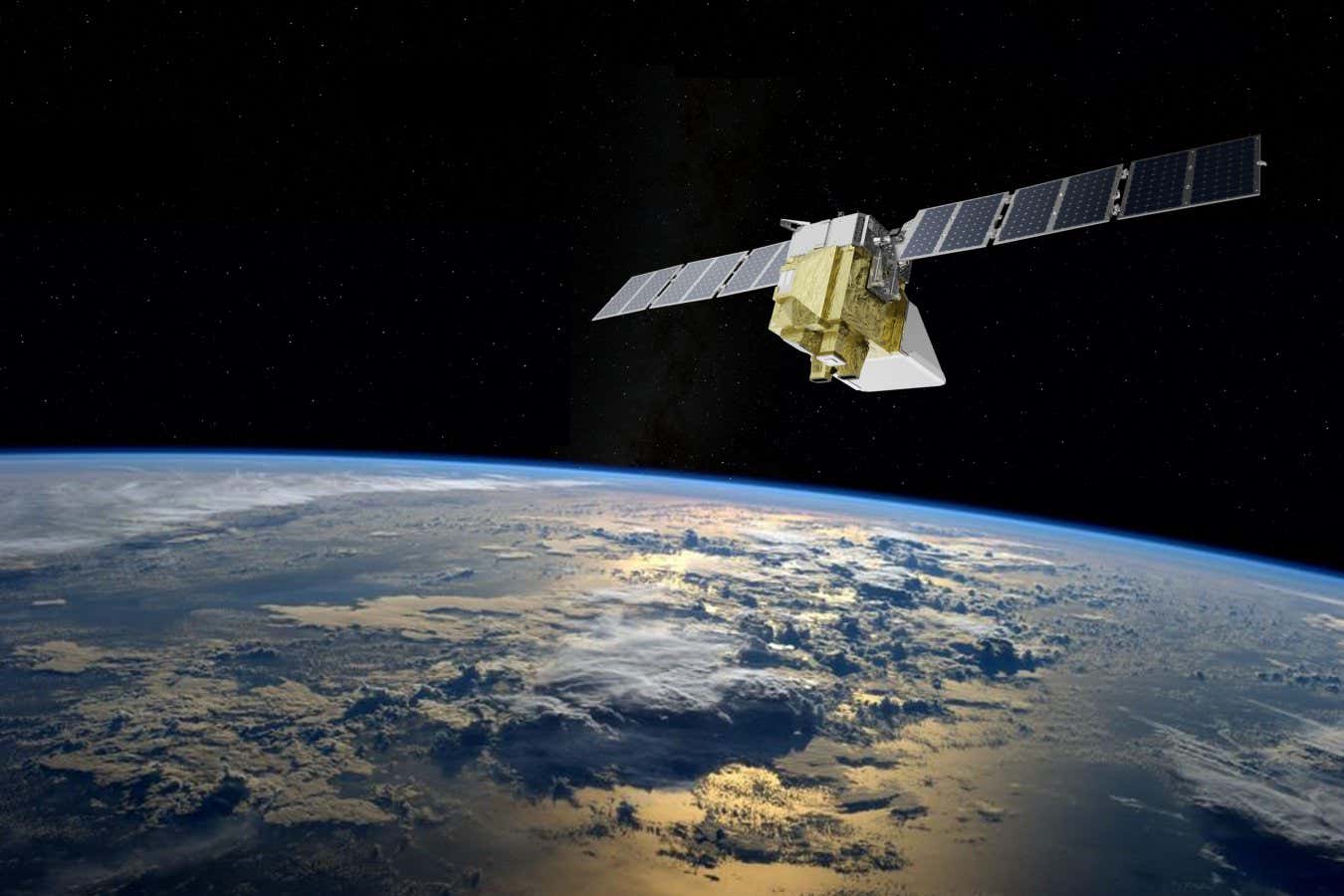
    An artist’s impression of the MethaneSAT satellite

    Environmental Defense Fund/NASA

    A satellite known as MethaneSAT, anticipated to transform our view of methane emissions, has lost power less than a year and a half after it was launched.

    MethaneSAT is “likely not recoverable”, according to a statement from the Environmental Defense Fund (EDF), the non-profit organisation that launched and operated the satellite. Its loss is a major blow to efforts to track and stop methane emissions, which are responsible for about a third of the human-caused rise in global temperature to date.

    When MethaneSAT launched in March 2024, it joined a growing constellation of satellites designed to detect invisible methane emissions from key sources like oil and gas wells, livestock, landfills and wetlands. While some satellites zoomed in on individual sources and others could look across whole regions, MethaneSAT was uniquely suited to detect methane at the middle scale, making it ideal for spotting emissions from oil and gas production.

    This view was intended to estimate methane emissions from regions known for fossil fuel production, like the Permian Basin in the south-western US. It would also help efforts to identify and cap the largest sources of the potent greenhouse gas.

    “It’s a significant loss,” says Jason McKeever at GHGSat, a Canadian company that had planned to use MethaneSAT’s data to make decisions about where to point its own satellites. “MethaneSAT was uniquely positioned. It was in a special in-between zone.”

    The satellite, which cost nearly $100 million to build and launch, started collecting data in June of last year and released its first detections of methane from oil and gas basins in November 2024. Researchers were working on ways to automate data processing so the satellite, which still orbits the planet 15 times per day, could deliver information on emissions in near real time.

    “We had just started a cadence of releasing data every two weeks,” says Jon Coifman at the Environmental Defense Fund. “The satellite had been producing excellent information.”

    According to the EDF’s statement, mission operations lost contact with the satellite on 20 June. “After pursuing all options to restore communications, we learned this morning that the satellite has lost power,” it said.

    The MethaneSAT team is still investigating exactly what went wrong. It will continue to share the data the satellite was able to collect before losing power, as well as the algorithms developed to analyse it.

    “We are looking at all sorts of options,” says Coifman. Launching another satellite is not off the table, he says.

    Topics:


    Source link

    Share. Facebook Twitter Pinterest LinkedIn Tumblr Email Telegram Copy Link

    Related Posts

    Science

    NHTSA considers new car door safety rules after fatal Tesla crashes

    July 24, 2026
    Science

    Fungus made fashion—researchers turn living organisms into textiles

    July 24, 2026
    Science

    How a 99-year-old mathematician unraveled a century-old braid mystery

    July 24, 2026
    Science

    Is it possible to regain a sense of smell? These scientists are working on it

    July 24, 2026
    Science

    Why don’t insects live in the ocean?

    July 24, 2026
    Science

    Why environmental groups are suing over SpaceX’s land swap deal

    July 24, 2026
    Editors Picks

    Trump says Iran has taken too long to negotiate, will ‘pay the price’

    June 10, 2026

    Joel Klatt makes frustrating point about Notre Dame missing CFP

    December 10, 2025

    Barcelona vs Celta Vigo – LaLiga preview: Team news, how to follow, stream | Football News

    April 18, 2025

    Fractional Banking V Matched Funding

    December 31, 2025

    Why self-expansion is the key to long-lasting love and friendship

    February 13, 2026
    About Us
    About Us

    Welcome to Benjamin Franklin Institute, your premier destination for insightful, engaging, and diverse Political News and Opinions.

    The Benjamin Franklin Institute supports free speech, the U.S. Constitution and political candidates and organizations that promote and protect both of these important features of the American Experiment.

    We are passionate about delivering high-quality, accurate, and engaging content that resonates with our readers. Sign up for our text alerts and email newsletter to stay informed.

    Latest Posts

    LeBron’s decision might force Jalen Brunson to do the unthinkable

    July 25, 2026

    8 Unique Side Hustle Ideas for Summer 2026 and Beyond

    July 24, 2026

    NHTSA considers new car door safety rules after fatal Tesla crashes

    July 24, 2026

    Subscribe for Updates

    Stay informed by signing up for our free news alerts.

    Paid for by the Benjamin Franklin Institute. Not authorized by any candidate or candidate’s committee.
    • Privacy Policy
    • About us
    • Contact us

    Type above and press Enter to search. Press Esc to cancel.