
Close Menu
    Trending
    • Social media’s big tobacco moment is just a first step
    • The chips in your phone are probably broken – and that’s a good thing
    • North London Stabbing Is Being Treated as Terrorism, Police Say
    • Kris Jenner Denies Recent Facelift Reports
    • Kevin Warsh one step closer to becoming Fed chair after Senate committee approval
    • ‘We saw terrible things’: Mali refugees tell of atrocities amid attacks | Armed Groups News
    • The ‘Passing TD leaders by NFL franchise’ quiz
    • Meta isn’t doing enough to keep minors off of Facebook and Instagram, says the EU
    Benjamin Franklin Institute
    Wednesday, April 29
    • Home
    • Politics
    • Business
    • Science
    • Technology
    • Arts & Entertainment
    • International
    Benjamin Franklin Institute
    Home»Science»Unprecedented Arctic heatwave melted 1 per cent of Svalbard’s ice
    Science

    Unprecedented Arctic heatwave melted 1 per cent of Svalbard’s ice

    Team_Benjamin Franklin InstituteBy Team_Benjamin Franklin InstituteAugust 19, 2025No Comments2 Mins Read
    Share Facebook Twitter Pinterest Copy Link LinkedIn Tumblr Email VKontakte Telegram
    Share
    Facebook Twitter Pinterest Email Copy Link


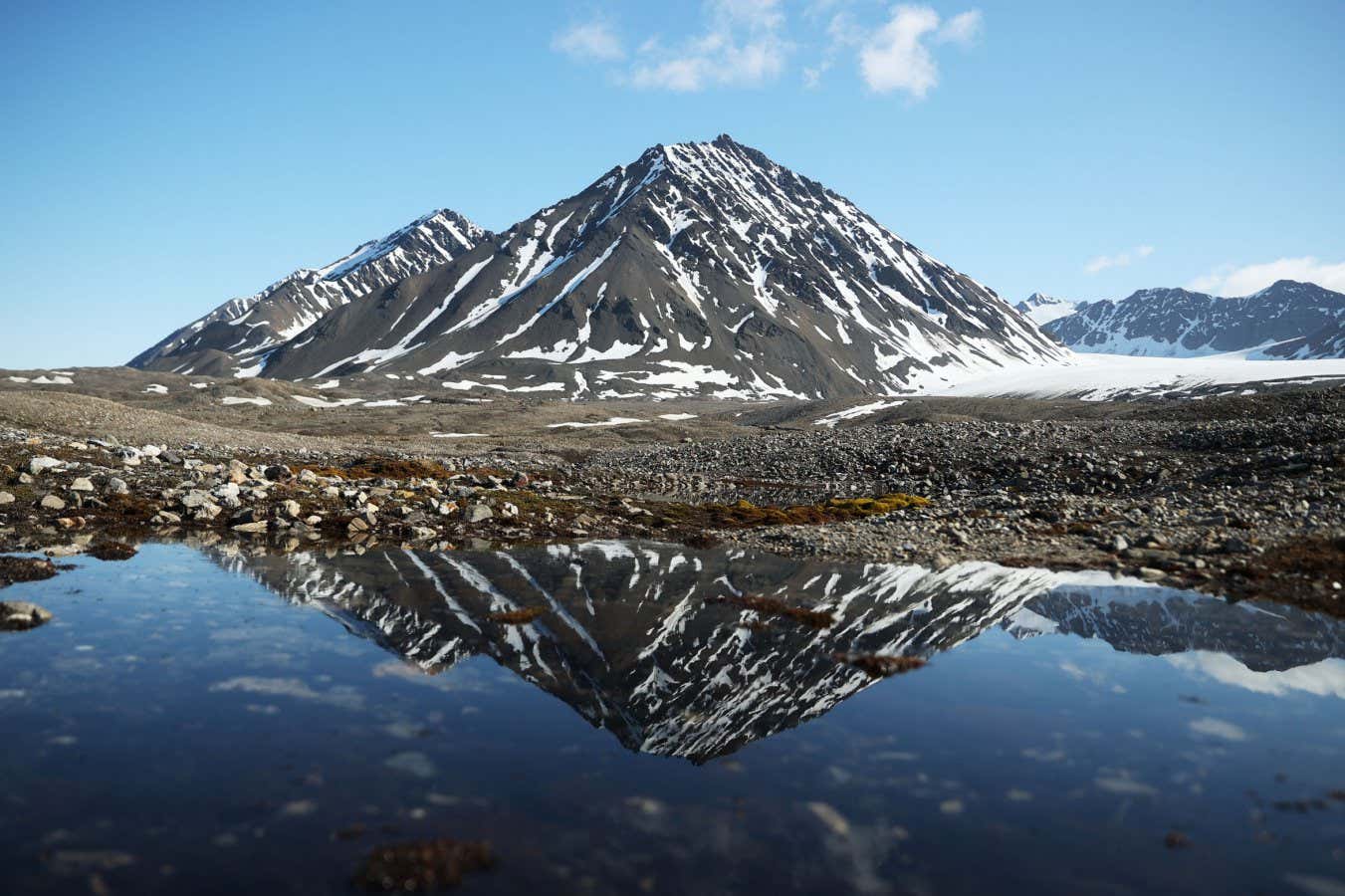
    Svalbard saw record-breaking high temperatures in the summer of 2024

    Xinhua/Shutterstock

    During the summer of 2024, six weeks of record-smashing heat led to a record-obliterating amount of ice melting on the islands of Svalbard in the Arctic. By the end of the summer, 1 per cent of all the land ice on the archipelago had been lost – enough to raise the global average sea level by 0.16 millimetres.

    “It was very shocking,” says Thomas Schuler at the University of Oslo in Norway. “It was not just a marginal record. The melt was almost twice as high as in the previous record.”

    More than half of Svalbard is covered in ice. Winter snowfall adds to the ice, while the flow of glaciers into the sea and surface melting during summer leads to ice loss.

    Schuler’s team has been using a combination of on-site measurements, satellite data and computer modelling to estimate how the total mass of ice on the archipelago is changing.

    Since 1991, less than 10 gigatonnes of ice has melted during each summer, on average. But four of the past five years have set new records for summer ice loss. Altogether, the team estimates that around 62 gigatonnes of ice were lost last summer, almost entirely due to surface melting rather than ice flow into the sea.

    Schuler and his colleagues also measured the land rising in response to ice loss by a record 16mm at one site during the summer of 2024, which is consistent with their estimate for the ice loss.

    The exceptional melting was due to record air temperatures, with a mean August temperature of 11°C (52°F) compared with around 7°C (45°F) in recent decades. This extreme event was, in turn, the result of warmer seas and a persistent weather pattern that brought warm southerly winds, on top of big jumps in global warming.

    While this kind of extreme summer heat is unlikely at present, climate models suggest it will become common as the planet continues warming. In fact, even in a low-emissions scenario, more than half the summers between now and 2100 could exceed this level.

    Schuler’s team hasn’t yet tried to estimate how much ice will be lost in the future in various emissions scenarios. Winter snowfall is expected to rise a little as the atmosphere becomes moister, but not by enough to compensate for much greater summer melting.

    Topics:


    Source link

    Share. Facebook Twitter Pinterest LinkedIn Tumblr Email Telegram Copy Link

    Related Posts

    Science

    The chips in your phone are probably broken – and that’s a good thing

    April 29, 2026
    Science

    Chanda Prescod-Weinstein connects physics, poetry and pop culture

    April 29, 2026
    Science

    City birds appear more afraid of women than men, and scientists have no idea why

    April 29, 2026
    Science

    NASA chief Jared Isaacman hints at campaign to make Pluto a planet again

    April 29, 2026
    Science

    Cancer is increasing in young people and we still don’t know why

    April 29, 2026
    Science

    People are betting on measles outbreaks – and that might be useful

    April 29, 2026
    Editors Picks

    Record marine heatwaves may signal a permanent shift in the oceans

    July 24, 2025

    North Korea denounces ‘muscle-flexing’ US-South Korean military exercises | Military News

    March 10, 2026

    Simon Cowell Under Pressure After Netflix Setback

    February 12, 2026

    ‘SNL’ Staffer Says Ryan Reynolds’ Joke About Justin Baldoni Was His ‘Idea’

    February 20, 2025

    Starbucks is asking workers to move to Nashville. It’s not going well

    April 23, 2026
    About Us
    About Us

    Welcome to Benjamin Franklin Institute, your premier destination for insightful, engaging, and diverse Political News and Opinions.

    The Benjamin Franklin Institute supports free speech, the U.S. Constitution and political candidates and organizations that promote and protect both of these important features of the American Experiment.

    We are passionate about delivering high-quality, accurate, and engaging content that resonates with our readers. Sign up for our text alerts and email newsletter to stay informed.

    Latest Posts

    Social media’s big tobacco moment is just a first step

    April 29, 2026

    The chips in your phone are probably broken – and that’s a good thing

    April 29, 2026

    North London Stabbing Is Being Treated as Terrorism, Police Say

    April 29, 2026

    Subscribe for Updates

    Stay informed by signing up for our free news alerts.

    Paid for by the Benjamin Franklin Institute. Not authorized by any candidate or candidate’s committee.
    • Privacy Policy
    • About us
    • Contact us

    Type above and press Enter to search. Press Esc to cancel.