
Close Menu
    Trending
    • Katie Holmes And Joshua Jackson Spark ‘Soul-Level’ Love Chatter
    • Singapore Airlines, Southwest Airlines partner to expand access to nearly 120 US destinations
    • Trump warns Netanyahu: ‘You’ll be on your own’ if attacks on Iran continue | US-Israel war on Iran News
    • Cristiano Ronaldo, ‘The Bosnian Diamond’ headline the World Cup 40-and-over club
    • How housing market inventory is shifting across every state
    • What is a ‘normal’ memory slowdown, and when should I worry?
    • Ariana Grande And Ethan Slater Are ‘Still Friends’ Following Split
    • US says BYD, Baidu, Alibaba and other tech giants are aiding China’s military
    Benjamin Franklin Institute
    Tuesday, June 9
    • Home
    • Politics
    • Business
    • Science
    • Technology
    • Arts & Entertainment
    • International
    Benjamin Franklin Institute
    Home»Science»A crucial methane-tracking satellite has died in orbit
    Science

    A crucial methane-tracking satellite has died in orbit

    Team_Benjamin Franklin InstituteBy Team_Benjamin Franklin InstituteJuly 1, 2025No Comments3 Mins Read
    Share Facebook Twitter Pinterest Copy Link LinkedIn Tumblr Email VKontakte Telegram
    Share
    Facebook Twitter Pinterest Email Copy Link


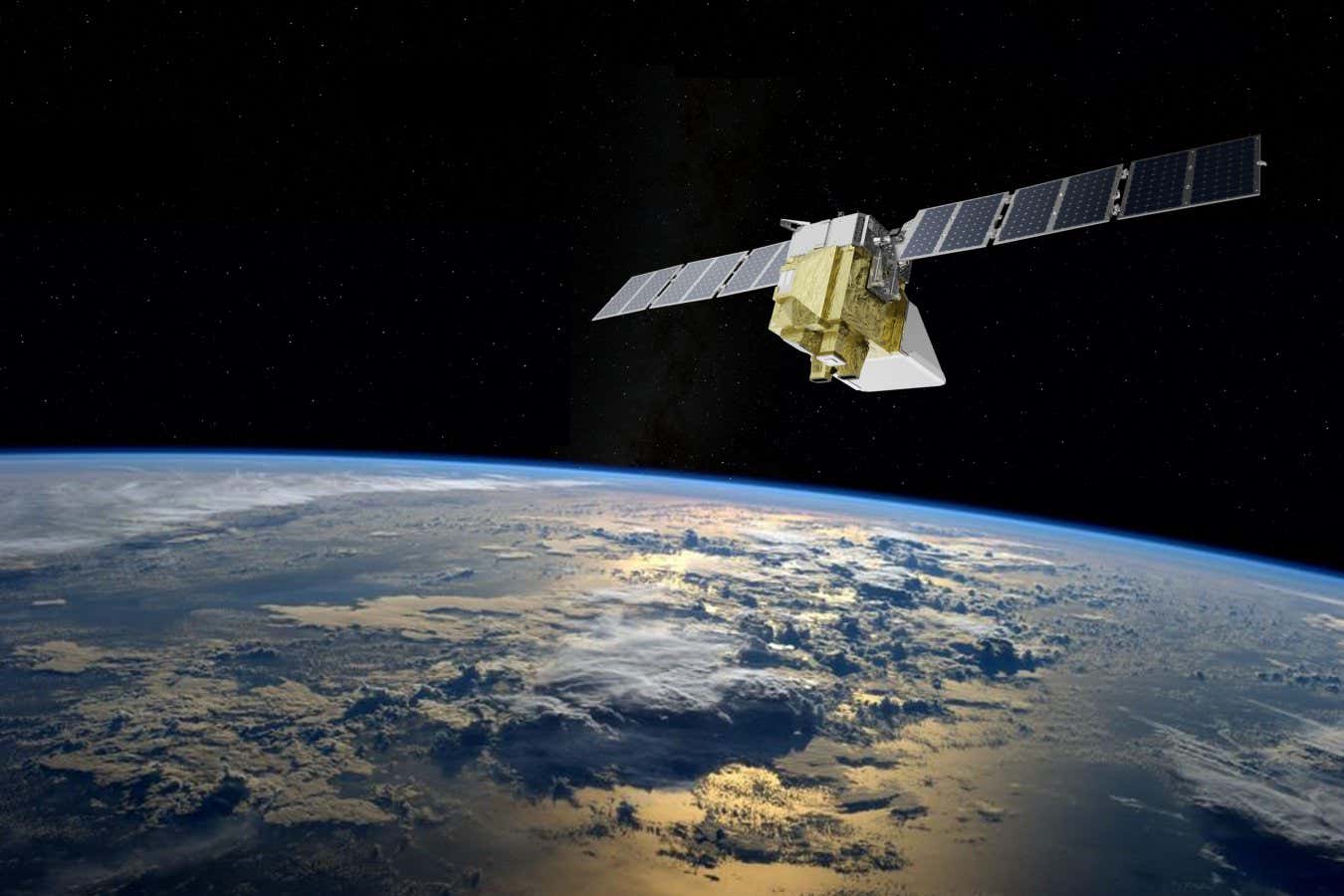
    An artist’s impression of the MethaneSAT satellite

    Environmental Defense Fund/NASA

    A satellite known as MethaneSAT, anticipated to transform our view of methane emissions, has lost power less than a year and a half after it was launched.

    MethaneSAT is “likely not recoverable”, according to a statement from the Environmental Defense Fund (EDF), the non-profit organisation that launched and operated the satellite. Its loss is a major blow to efforts to track and stop methane emissions, which are responsible for about a third of the human-caused rise in global temperature to date.

    When MethaneSAT launched in March 2024, it joined a growing constellation of satellites designed to detect invisible methane emissions from key sources like oil and gas wells, livestock, landfills and wetlands. While some satellites zoomed in on individual sources and others could look across whole regions, MethaneSAT was uniquely suited to detect methane at the middle scale, making it ideal for spotting emissions from oil and gas production.

    This view was intended to estimate methane emissions from regions known for fossil fuel production, like the Permian Basin in the south-western US. It would also help efforts to identify and cap the largest sources of the potent greenhouse gas.

    “It’s a significant loss,” says Jason McKeever at GHGSat, a Canadian company that had planned to use MethaneSAT’s data to make decisions about where to point its own satellites. “MethaneSAT was uniquely positioned. It was in a special in-between zone.”

    The satellite, which cost nearly $100 million to build and launch, started collecting data in June of last year and released its first detections of methane from oil and gas basins in November 2024. Researchers were working on ways to automate data processing so the satellite, which still orbits the planet 15 times per day, could deliver information on emissions in near real time.

    “We had just started a cadence of releasing data every two weeks,” says Jon Coifman at the Environmental Defense Fund. “The satellite had been producing excellent information.”

    According to the EDF’s statement, mission operations lost contact with the satellite on 20 June. “After pursuing all options to restore communications, we learned this morning that the satellite has lost power,” it said.

    The MethaneSAT team is still investigating exactly what went wrong. It will continue to share the data the satellite was able to collect before losing power, as well as the algorithms developed to analyse it.

    “We are looking at all sorts of options,” says Coifman. Launching another satellite is not off the table, he says.

    Topics:


    Source link

    Share. Facebook Twitter Pinterest LinkedIn Tumblr Email Telegram Copy Link

    Related Posts

    Science

    What is a ‘normal’ memory slowdown, and when should I worry?

    June 9, 2026
    Science

    Wildlife thrives in solar farm built on restored peatland

    June 8, 2026
    Science

    You don’t need to worry about recursive-self-improving AI – yet

    June 8, 2026
    Science

    Understanding anorexia’s grip on the brain could unlock new therapies

    June 8, 2026
    Science

    Why GLP-1 drugs might reduce cancer risk

    June 8, 2026
    Science

    Landmark pancreatic cancer treatment paves way for targeting other tricky tumors

    June 8, 2026
    Editors Picks

    Almost 800 Lufthansa flights cancelled as pilots, cabin crew walk out

    February 12, 2026

    Victoria Beckham Feels ‘Betrayed’ By Son Brooklyn’s Scathing Claims

    January 24, 2026

    Britney Spears’ Rehab Move Follows Sons’ Tough Stand

    April 14, 2026

    Trump orders federal agents to stay away from protests in Democrat cities | Donald Trump News

    February 1, 2026

    Mapping who controls what in Yemen in 2026 | Maps News

    January 14, 2026
    About Us
    About Us

    Welcome to Benjamin Franklin Institute, your premier destination for insightful, engaging, and diverse Political News and Opinions.

    The Benjamin Franklin Institute supports free speech, the U.S. Constitution and political candidates and organizations that promote and protect both of these important features of the American Experiment.

    We are passionate about delivering high-quality, accurate, and engaging content that resonates with our readers. Sign up for our text alerts and email newsletter to stay informed.

    Latest Posts

    Katie Holmes And Joshua Jackson Spark ‘Soul-Level’ Love Chatter

    June 9, 2026

    Singapore Airlines, Southwest Airlines partner to expand access to nearly 120 US destinations

    June 9, 2026

    Trump warns Netanyahu: ‘You’ll be on your own’ if attacks on Iran continue | US-Israel war on Iran News

    June 9, 2026

    Subscribe for Updates

    Stay informed by signing up for our free news alerts.

    Paid for by the Benjamin Franklin Institute. Not authorized by any candidate or candidate’s committee.
    • Privacy Policy
    • About us
    • Contact us

    Type above and press Enter to search. Press Esc to cancel.