

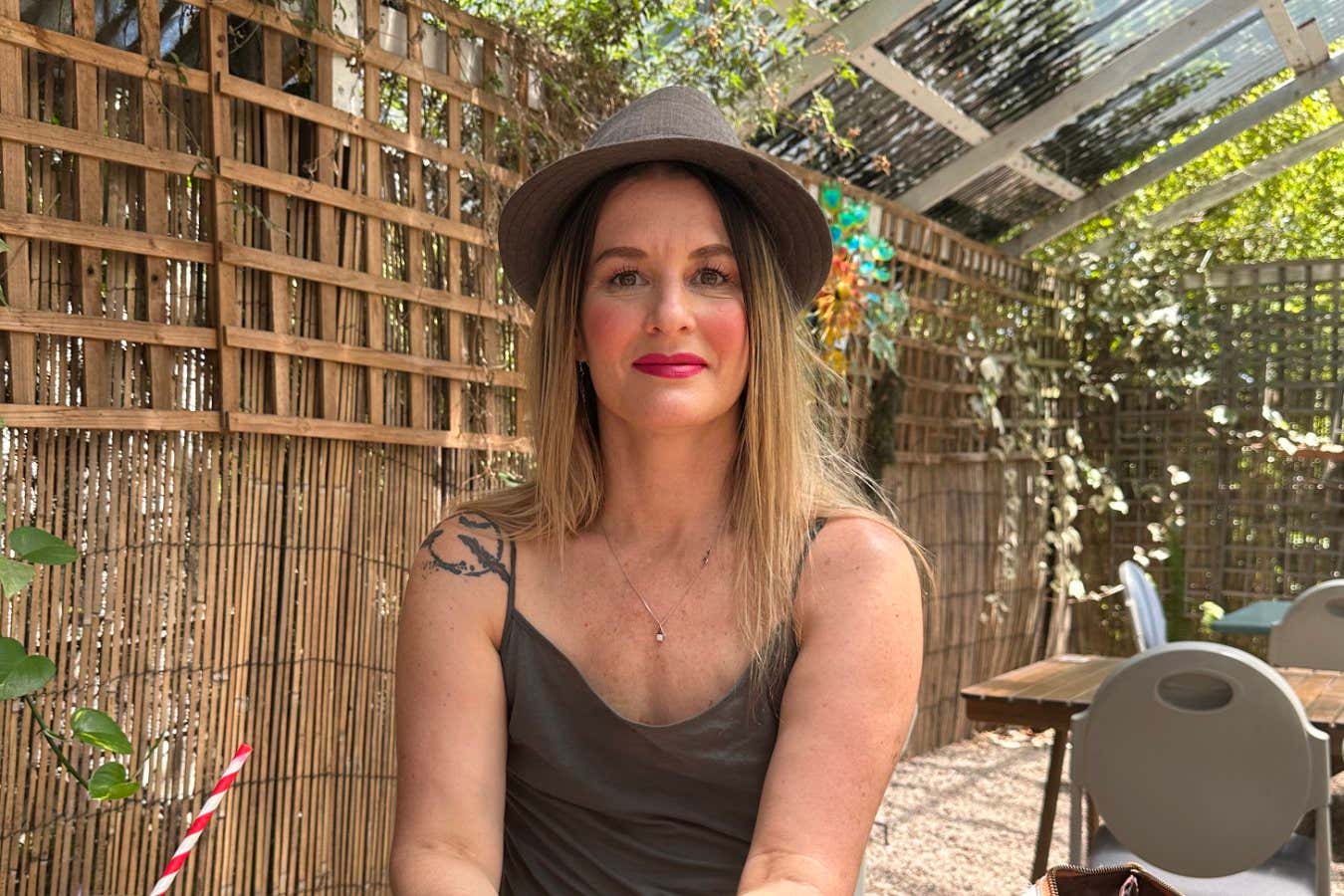
Tracy Hutchinson has a rare mutation of the TP53 gene
Tracy Hutchinson
I started to wonder if something funky was going on when multiple people in my family got cancer around the same time. In 1990, my older sister Rebecca was diagnosed with acute lymphoblastic leukaemia, when she was 21 and I was 14. While she was undergoing rigorous chemo, my mum was diagnosed with breast cancer.
Rebecca passed away in 1994 and then, a couple of years after that, my dad got bowel cancer. While he was undergoing treatment, my mum got cancer in her other breast. She survived that, but then she was diagnosed with oesophageal cancer in 2009. She had major surgery, but it came back and she died six weeks later.
In 2020, my other sister was diagnosed with fast-growing triple-negative breast cancer and I thought, oh my god, there’s something going on here. My sister was tested for the BRCA mutations, variants of the BRCA1 and BRCA2 genes that increase breast cancer risk, and it came back negative.
So then she was tested for a different mutation in a gene called TP53, which is much rarer but even worse. Women with this mutation have nearly a 100 per cent chance of developing cancer anywhere in the body in their lifetime, with a 50 per cent chance before the age of 30. It’s called Li-Fraumeni syndrome and it basically means your TP53 gene, which normally functions as a cancer-suppressing gene, is a dud.
When my sister was offered the test, I was like: “What’s Li-Fraumeni syndrome?” It’s not something you ever hear about. The test came back positive and she was extremely distraught. Since it can run in families, I was then offered the test too. I decided to do it because I didn’t want my sister to go through this journey on her own.
I had the test in 2022, when I was 47, and it came back positive. I actually felt at peace with it, which a lot of people find surprising, but it was because I finally felt like I had answers for all the troubles my family has been through. It’s a personal thing, though – my brother, for example, has chosen not to get tested.
After getting the diagnosis, my life changed forever. When you have Li-Fraumeni syndrome, there isn’t an hour where you don’t think about it. It’s always on your mind. Within months of finding out I had the gene, I had a double mastectomy as a preventative measure. They found two ductal carcinomas in situ, early forms of cancer, in my left breast after it was removed.
I live in Sydney, so I was able to join an Australian clinical trial that is investigating annual whole-body MRI as a way to spot tumours in any location in people with mutations in TP53 or other genes that can cause cancer in multiple organs. I had my first one in 2022 and I was very nervous because I didn’t know if they’d find anything. It was normal, but in the second year, they found a 9-millimetre meningioma – a tumour in the meninges, the layers of tissue covering the brain. Fortunately, it’s benign, but I was very freaked out about it. It was a bit of a gamechanger for me.
I have my annual whole-body MRI every November and my “scanxiety” starts building from around July. I start thinking, is this going to be the year when everything changes? But being part of the study also gives me a sense of reassurance, because it’s designed to pick up cancers at an early stage when they are hopefully still treatable. My sister, who survived her breast cancer, now has annual MRIs too.
In addition to whole-body MRI, I have yearly skin checks with a dermatologist and an annual blood test. Every two years, I also have an endoscopy and colonoscopy. They’ve found polyps, abnormal cell growths that can develop into cancer, in my bowel, which were removed, plus some atypical cells in my oesophagus, which they’re keeping an eye on. I’m also on constant alert for anything unusual in my body. I’ll have a sore shoulder and get nervous because I’ll wonder, is this going to be something?
My geneticist thinks my mum might have had a de novo mutation, a mutation that arises spontaneously in an individual rather than being inherited, in her TP53 gene, which was passed down to me and my sisters. Neither of us have children, so there isn’t a risk of us passing it on further.
My partner has been really supportive. After I found out I had the syndrome, he said: “You’ve just got to do what you’ve got to do.” When I had my double mastectomy, I didn’t go down the path of having a breast reconstruction and I was worried I looked like a freak, but he said: “Not at all. Your scars tell your battle.”
I try to stay positive because I figure that everyone has something they’re dealing with, be it a chronic disease or an injury or depression, and this is just my thing to bear. My sister-in-law, for example, recently had a stroke. We all have our things – some are visible and some are not – so we need to be compassionate towards each other. Life isn’t a white picket fence.
As told to Alice Klein
Topics: