
Close Menu
    Trending
    • New York Mets make needed change with Carlos Mendoza
    • Her debut novel was turned into a Prime Video series. Now, Carley Fortune is relishing in the romance renaissance
    • New Scientist Book Club: Read an extract from Slow Gods by Claire North
    • Map: 5.2-Magnitude Earthquake Shakes Nicaragua
    • China Moves On Taiwan – Ethnic Unity Law
    • Bella Hadid Breaks Down During Lyme Disease Flare Up
    • Iran insists on right to control shipping in Strait of Hormuz after ship hit near Oman
    • Climate change the culprit for Europe’s ‘most severe’ heatwave: Report | Climate News
    Benjamin Franklin Institute
    Friday, June 26
    • Home
    • Politics
    • Business
    • Science
    • Technology
    • Arts & Entertainment
    • International
    Benjamin Franklin Institute
    Home»Science»Phages could enable us to hijack vaccine immunity to kill cancer cells
    Science

    Phages could enable us to hijack vaccine immunity to kill cancer cells

    Team_Benjamin Franklin InstituteBy Team_Benjamin Franklin InstituteJune 26, 2026No Comments3 Mins Read
    Share Facebook Twitter Pinterest Copy Link LinkedIn Tumblr Email VKontakte Telegram
    Share
    Facebook Twitter Pinterest Email Copy Link


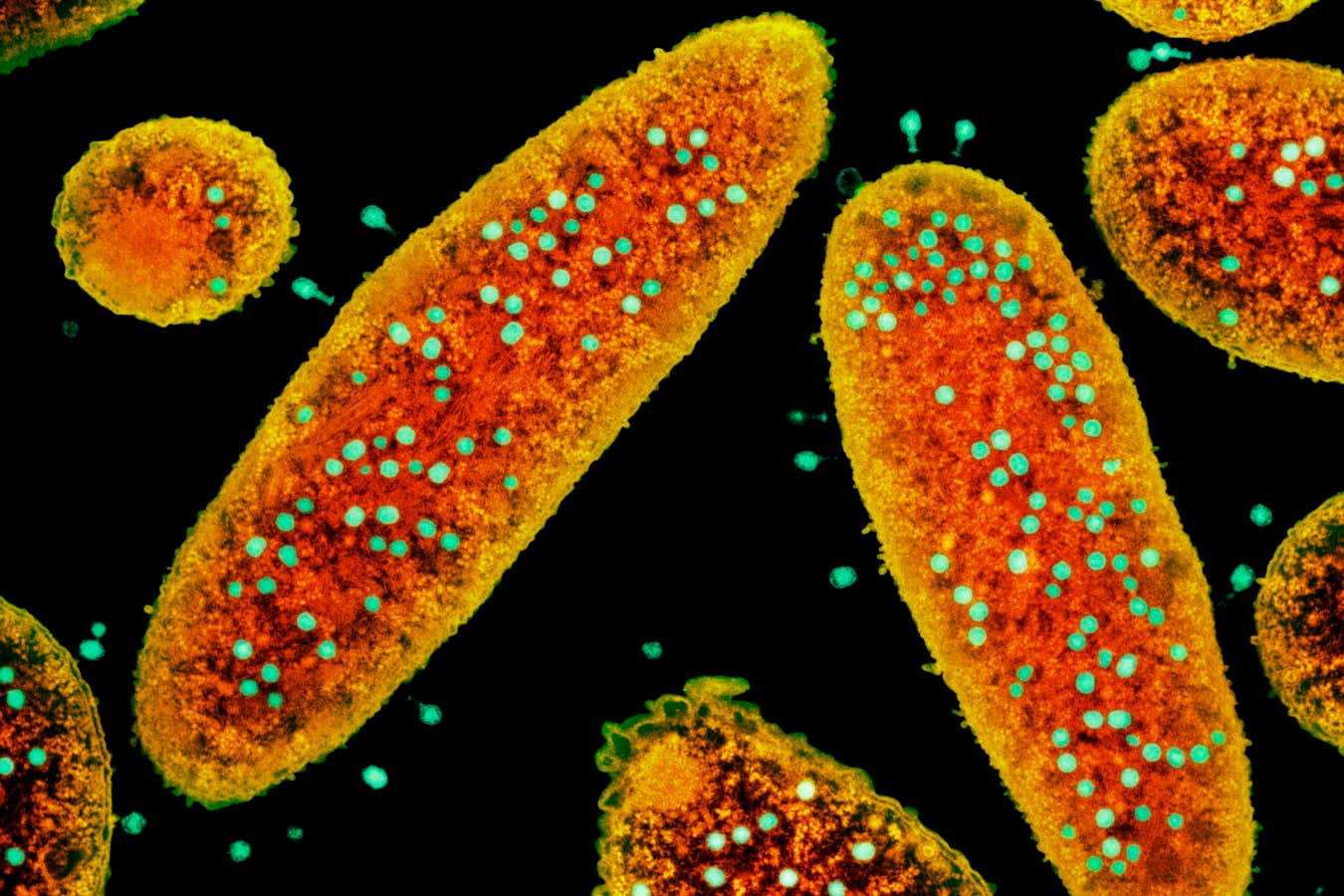
    Transmission electron micrograph of Escherichia coli cells infected by phages (green dots)

    M.MAEDER/DEPT. OF MICROBIOLOGY, BIOZENTRUM/ SCIENCE PHOTO LIBRARY

    Bacteria-killing viruses have destroyed cancer cells in mice by redirecting the immunity they built up from vaccinations to attack tumours. Vaccinating mice against malaria and then using a harmless phage, a virus that infects bacteria, to direct that immune response towards cancer cells resulted in the tumours being eradicated in nearly half of the animals.

    Immunotherapy, treatments that use our immune system to fight cancer, has transformed how we treat some forms of the condition, but many people still don’t benefit. One of the major challenges is helping the immune system to recognise tumours as a target.

    Looking for a way around this, Amin Hajitou at Imperial College London and his colleagues focused on a phage that usually infects E. coli. After attaching to these bacteria and injecting its genetic material, the phage hijacks their genetic machinery to produce thousands of new phages, then destroys the bacteria.

    The researchers genetically engineered this phage to recognise and bind to proteins called αvβ3 and αvβ5 integrins, which are abundant on many tumour cells and largely absent from healthy ones. They also modified its genetic cargo to deliver instructions for producing a malaria-specific antigen, a molecular signal the immune system recognises as foreign. “The phage acts like a targeted delivery vehicle,” says Hajitou.

    The team then tested this approach in 60 mice with cancerous tumours just beneath their skin. Fifteen of them were given a malaria vaccine and two weeks later, were injected with the phages in their tails, receiving six injections in total over the next two weeks. The rest acted as controls, with 15 receiving no intervention, 15 being given the malaria vaccine alone and 15 getting only the engineered phages.

    In 44 per cent of the treated mice, the tumours were eradicated and hadn’t returned a year later, when the study ended. Other treated mice lived longer than the control groups, which experienced no survival benefit.

    “These modified viruses can be administered systemically into the mouse and they then specifically find out the tumour cells and infect these,” says David Withers at the University of Oxford. “This really improves upon current approaches to manipulate tumours, such as oncolytic viruses [which infect and destroy cancer cells], which require injections directly into the cancer, thus limiting where you can treat and, in the case of metastatic disease [when cancer spreads], [it’s] an impossible task trying to target all of the cancer sites.”

    Adjusting the phage’s antigen-making instructions should mean that the approach also works when someone has been vaccinated against infections like seasonal flu or covid-19. “Other vaccines, stronger than malaria, should work even better,” says Hajitou. “The principle is to exploit pre-existing immune memory, [it’s] not something unique to malaria.”

    The researchers are in talks with the Medicines and Healthcare Products Regulatory Agency (MHRA) in the UK about assessing the approach in an early-stage trial in people, which they hope to begin next year.

    Topics:


    Source link

    Share. Facebook Twitter Pinterest LinkedIn Tumblr Email Telegram Copy Link

    Related Posts

    Science

    New Scientist Book Club: Read an extract from Slow Gods by Claire North

    June 26, 2026
    Science

    Lost books by ancient philosophers recovered from ‘unreadable’ scrolls

    June 26, 2026
    Science

    If you aren’t terrified by this heatwave, you should be

    June 26, 2026
    Science

    Hold the onions – and see if they make you cry

    June 26, 2026
    Science

    Can home batteries help save the climate and save you money?

    June 25, 2026
    Science

    Where, when and how to watch the 2026 solar eclipse

    June 25, 2026
    Editors Picks

    Trump cancels second wave of attacks on Venezuela after cooperation

    January 9, 2026

    WHO says suspected Ebola cases drop to 116 after hundreds ruled out

    June 2, 2026

    Meet your company’s new HR reps: AI agents

    March 20, 2026

    Major updates on Watt’s lung issue, status for Dolphins game revealed

    December 13, 2025

    Russia-US nuclear pact set to end in 2026 and we won’t see another

    January 3, 2026
    About Us
    About Us

    Welcome to Benjamin Franklin Institute, your premier destination for insightful, engaging, and diverse Political News and Opinions.

    The Benjamin Franklin Institute supports free speech, the U.S. Constitution and political candidates and organizations that promote and protect both of these important features of the American Experiment.

    We are passionate about delivering high-quality, accurate, and engaging content that resonates with our readers. Sign up for our text alerts and email newsletter to stay informed.

    Latest Posts

    New York Mets make needed change with Carlos Mendoza

    June 26, 2026

    Her debut novel was turned into a Prime Video series. Now, Carley Fortune is relishing in the romance renaissance

    June 26, 2026

    New Scientist Book Club: Read an extract from Slow Gods by Claire North

    June 26, 2026

    Subscribe for Updates

    Stay informed by signing up for our free news alerts.

    Paid for by the Benjamin Franklin Institute. Not authorized by any candidate or candidate’s committee.
    • Privacy Policy
    • About us
    • Contact us

    Type above and press Enter to search. Press Esc to cancel.