

Growing signs of a UK consumer slowdown are adding to pressure on Sir Keir Starmer’s government, as rising energy costs threaten a recovery in real wages.
Shares in retailers like Tesco and Marks and Spencer have dropped since the start of the Iran war as investors grow nervous that British consumers will pull back on spending to counter rising inflation.
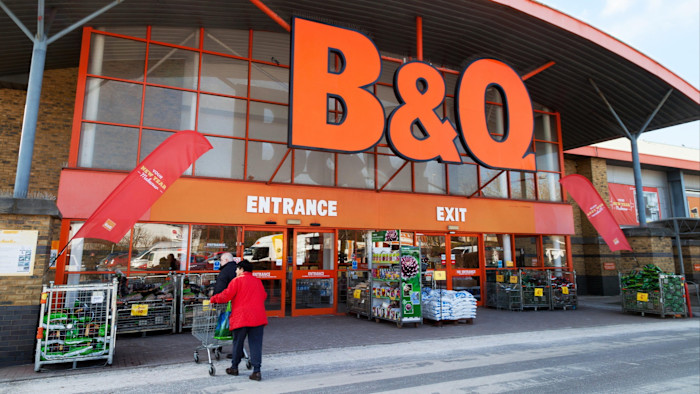
The concerns come on top of a weak spring period for retailers. Kingfisher, the company that owns DIY chain B&Q, warned on Tuesday of a “soft market backdrop” as first-quarter like-for-like sales in the UK fell 4.1 per cent. The wet March weather hit demand for outdoor furniture, barbecues and plants, it said.
Data from the British Retail Consortium, also out on Tuesday, showed that shop price inflation increased to 1.2 per cent year-on-year in May, up from growth of 1 per cent the previous month.
Helen Dickinson, chief executive of the BRC, said: “Furniture and health and beauty saw the sharpest increases, driven by rising raw material and shipping costs.”
She added that retailers continue to face higher energy bills and supply chain disruption linked to the conflict in Iran, and they “cannot absorb these costs indefinitely, which risks pushing prices higher in the months ahead”.
Inflation retreated to 2.8 per cent in April, according to official data, but economists widely expect it to accelerate again as the closure of the Strait of Hormuz impedes flows of oil and gas.
Economists have raised their inflation forecast for the final quarter of this year to 3.6 per cent, according to a Treasury survey published last week, up from 2.2 per cent expected in February.
At the same time, nominal annual wage growth, excluding bonuses, has retreated from 5.5 per cent in the three months to March 2025 to 3.4 per cent in the most recent period as the jobs market has softened.
Chancellor Rachel Reeves last week announced a package of measures aimed at alleviating some of the pressure on households including a delay to fuel duty increases and cuts in VAT for some family visitor attractions and children’s restaurant meals.
But the interventions, designed to be temporary and targeted, are likely to make only a modest impact on the rising cost of living.
The UK economy is “rapidly losing pressure”, said Kallum Pickering, chief economist at Peel Hunt. Confidence readings, he said, are “weak and consistent with a bleak near-term consumer outlook, as higher energy prices and tighter financial conditions put a renewed squeeze on household budgets”.
While households have relatively low levels of debt compared to income, Pickering said they are facing “a series of fairly significant overlapping headwinds”, which will hit spending, particularly on big-ticket items.
“Too much [political] uncertainty, higher interest rates, a shock to net wealth and a squeeze to real incomes: they are all basically happening,” said Pickering. Households could “muddle through” with each factor individually, but taken together, it means, “at the very least stagnation”.

About eight in 10 people said their cost of living had risen in April, according to a poll by the Office for National Statistics, the highest proportion since 2022.
Stuart Machin, chief executive of Marks and Spencer, told reporters last week that a survey of his customers revealed their greatest worries were political uncertainty in the UK and the impact of the war in Iran.
He said that customers had low confidence in the direction that the country was taking. “All I would recommend is hopefully we can get some stability in government, quick.”
GfK’s consumer confidence index, published on Friday, rose in May. But its measure of whether now is a good time to make major purchases fell 2 points to its lowest level since January 2025.

Real wages excluding bonuses fell 0.2 per cent year on year in March, the first fall since May 2023, according to figures from the Office for National Statistics.
The UK had seen consistent real wage growth since mid-2023 as inflation retreated from double-digit levels. Before the Iran war, inflation was set to go back to its 2 per cent target, allowing the Bank of England to cut interest rates.
Tera Allas, senior adviser to McKinsey & Company, said that given the loosening of the labour market and the prospects for rising inflation, the UK is set for negative income growth. “Inevitably with that growth outlook, and fragile labour markets, you will have people getting more cautious.”
The Treasury’s summary of independent forecasts showed that economists almost halved their UK private consumption growth for this year to 0.6 per cent in May, from 1 per cent expected in February.
So far the majority of Bank of England rate-setters have voted to keep official interest rates unchanged at 3.75 per cent given the weak prospects for the labour market and household spending.
But borrowing costs are nevertheless increasing given declines in government bond prices, which have driven up yields.

The average 2-year fixed residential mortgage rate was 5.73 per cent on Friday, up from 4.83 per cent before the start of the Iran war.
“The outlook for UK consumers will remain challenging this year as negative income growth and elevated interest rates will limit consumer spending,” said Tomasz Wieladek, chief European economist at investment company T Rowe Price.