
Close Menu
    Trending
    • Taylor Swift Wedding Rule Sparks Guest Backlash
    • Carney says Alberta ‘essential’ to Canada as separatist push advances
    • Premier League finale: Arsenal, relegation, Champions League, Salah and Pep | Football News
    • Cardinals, Jacoby Brissett are still ‘far apart’ in contract talks
    • The Real Reason AI Transformation Fails in Most Companies
    • Mercury may have gained all of its unexpected water in a single day
    • Europeans Remain Wary as Trump Promises to Deploy Troops to Poland
    • Market Talk – May 22, 2026
    Benjamin Franklin Institute
    Saturday, May 23
    • Home
    • Politics
    • Business
    • Science
    • Technology
    • Arts & Entertainment
    • International
    Benjamin Franklin Institute
    Home»Science»Political anger affects the body differently to other forms of anger
    Science

    Political anger affects the body differently to other forms of anger

    Team_Benjamin Franklin InstituteBy Team_Benjamin Franklin InstituteMay 22, 2026No Comments3 Mins Read
    Share Facebook Twitter Pinterest Copy Link LinkedIn Tumblr Email VKontakte Telegram
    Share
    Facebook Twitter Pinterest Email Copy Link


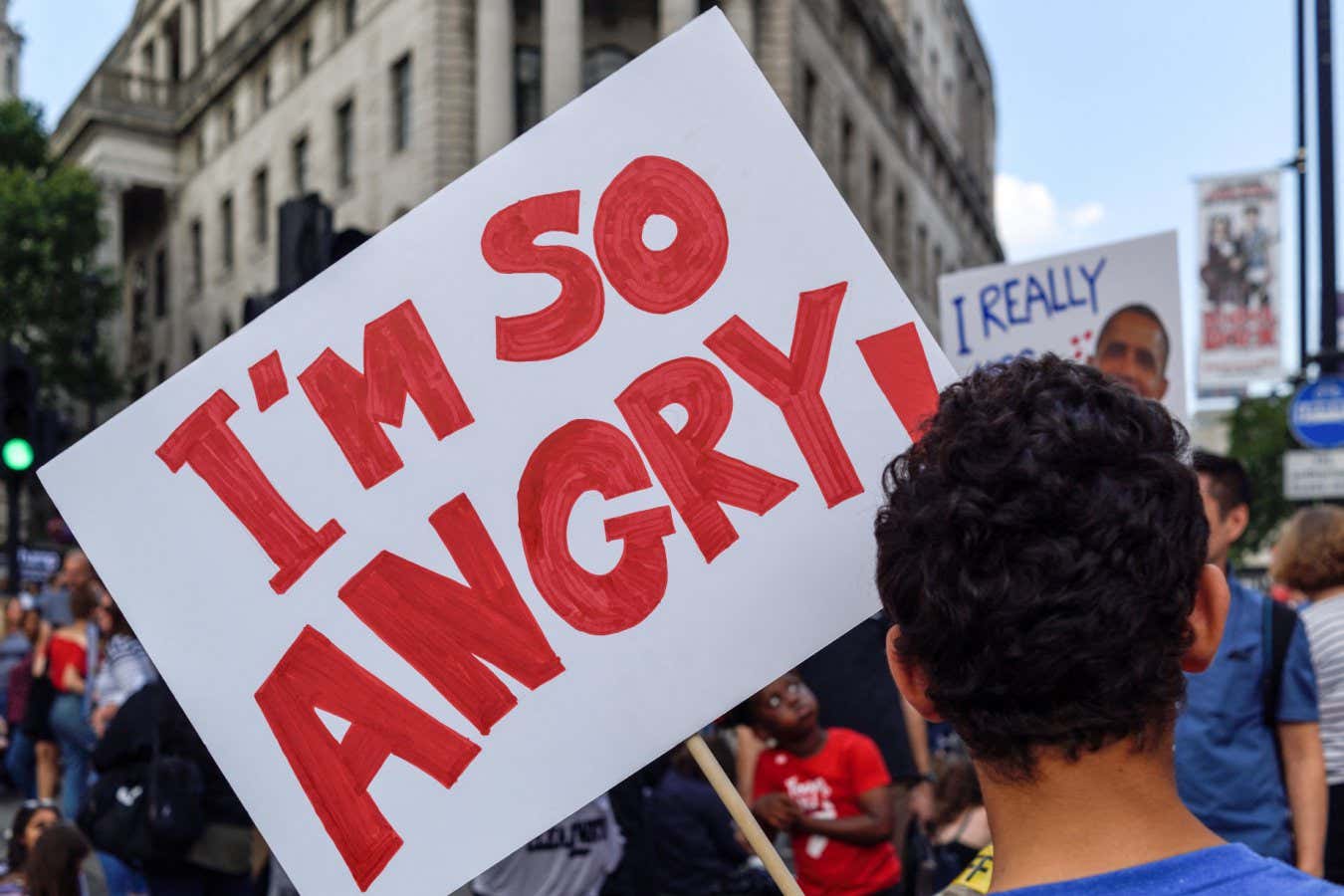
    The intensity of politically induced anger and disgust may be what spurs people to protest

    Ian Francis/Alamy

    If the emotional rollercoaster of global politics feels overwhelming, the findings of a new study might help to explain why. Emotions evoked by political issues seem to be felt differently in the body than when the same emotions are experienced in everyday life. Understanding how and why this happens may offer clues to how we can stay calm while remaining informed and engaged citizens.

    “Feeling more is probably a good thing for democracy,” says Manos Tsakiris at Royal Holloway, University of London. “Feeling better is about first figuring out what you feel, and then the challenge is learning how to respond rather than react.”

    Tsakiris and his colleagues asked nearly 1000 people to mark on a body-outline diagram where, and how intensely, they felt emotions including anger, disgust and hope. Then, they were asked to do the same, but while reading words associated with emotionally laden political issues, such as terrorism and crime.

    Their responses were used to create a digital heat map, which covered where in the body each emotion was felt, how intensely, and whether the sensation was linked to feeling spurred into action or demotivated and detached.

    Previous research suggests that many emotions are experienced similarly in the body in different people, and the patterns of activation or demotivation seem to be universal across cultures. Depression, for instance, almost universally shows widespread deactivation across the body, reflecting a lack of energy and motivation, while anger is felt as a high energy, activating sensation in the chest, head and arms.

    The new study largely reflected these past findings, except when some emotions were evoked by politics. “People usually feel that their whole body is deactivated when they’re depressed, but politically linked depression is more mobilising”, says Tsakiris, with more intense sensations experienced throughout the torso and limbs.

    Political disgust was also felt as a higher-energy sensation across the upper body, compared to non-political disgust which clusters around the gut. When compared with non-political emotions, “political disgust more closely resembles anger”, says Tsakiris.

    Why this occurs isn’t clear, but Tsakiris speculates it might be because political issues feel too big to tackle on our own, so we might feel motivated to join a wider cause to effect change. “The sense of agency that we have in politics is quite different,” he says. “We cannot probably effect a change on our own. It will be a collective effort.”

    By getting better acquainted with our emotions, we may be able to avoid getting trapped in a cycle of doom scrolling and despair, says Lisa Quadt at the Brighton and Sussex Medical School, UK. “We like to think of ourselves as rational beings, but that doesn’t consider how the body influences our decisions, behaviours and responses.”

    Quadt and her colleagues have previously shown that training people to listen to their heartbeat and other bodily sensations associated with strong emotions reduced overwhelm in autistic people with anxiety. Getting more in tune with how we feel, “might indeed help to become less overwhelmed by negative emotions and perhaps then enable action, rather than avoidance”, she says.

    Topics:


    Source link

    Share. Facebook Twitter Pinterest LinkedIn Tumblr Email Telegram Copy Link

    Related Posts

    Science

    Mercury may have gained all of its unexpected water in a single day

    May 22, 2026
    Science

    Australia is battling its largest diphtheria outbreak in living memory

    May 22, 2026
    Science

    How ageing on Earth mimics the effects of space travel

    May 22, 2026
    Science

    Putting CO2 into rocks and getting hydrogen out is climate double win

    May 22, 2026
    Science

    Shiver me timbers: Do we have to worry about space pirates now?

    May 22, 2026
    Science

    Bitter Honey review: New Scientist recommends a devastating account of farming honeybees

    May 22, 2026
    Editors Picks

    Successful Entrepreneurs Outsource These 5 Tasks — Do You?

    June 20, 2025

    Super-invasive termites could spread from Florida around the world

    June 4, 2025

    Palestine Action supporters arrested as London’s Met Police reverse policy | Israel-Palestine conflict News

    March 28, 2026

    Rubio set to warn of future military action if Venezuela’s new leaders stray from US goals

    January 28, 2026

    Russia’s FSB orders British diplomat’s expulsion, UK rejects ‘intimidation’ | News

    March 30, 2026
    About Us
    About Us

    Welcome to Benjamin Franklin Institute, your premier destination for insightful, engaging, and diverse Political News and Opinions.

    The Benjamin Franklin Institute supports free speech, the U.S. Constitution and political candidates and organizations that promote and protect both of these important features of the American Experiment.

    We are passionate about delivering high-quality, accurate, and engaging content that resonates with our readers. Sign up for our text alerts and email newsletter to stay informed.

    Latest Posts

    Taylor Swift Wedding Rule Sparks Guest Backlash

    May 23, 2026

    Carney says Alberta ‘essential’ to Canada as separatist push advances

    May 23, 2026

    Premier League finale: Arsenal, relegation, Champions League, Salah and Pep | Football News

    May 23, 2026

    Subscribe for Updates

    Stay informed by signing up for our free news alerts.

    Paid for by the Benjamin Franklin Institute. Not authorized by any candidate or candidate’s committee.
    • Privacy Policy
    • About us
    • Contact us

    Type above and press Enter to search. Press Esc to cancel.