

Iran has a drinking water crisis. And the war with the U.S. is making matters worse for Iran—and the entire Gulf region. That’s in part because of threats not only to water infrastructure, including dams and reservoirs, but also to desalination facilities, which millions in the broader region depend on for their drinking water.
For years, Iran’s reserves of potable water have been dwindling, thanks to a combination of climate change, mismanagement and infrastructure problems. But the war has also put desalination—something that most of Iran isn’t reliant on—in the spotlight.
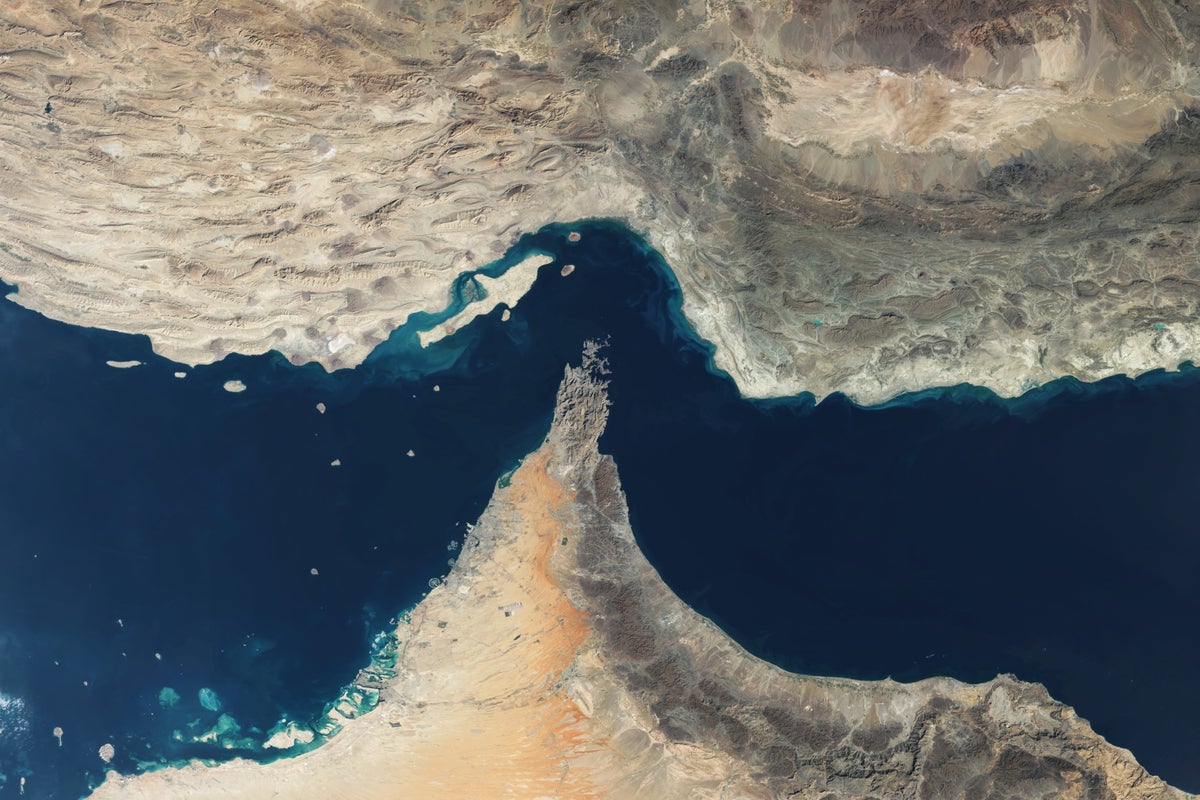
In March Iran accused the U.S. of an attack on an Iranian desalination plant on Qeshm Island in the Strait of Hormuz. The U.S. denied responsibility for the strike, and just a day later, officials in Bahrain, a key U.S. ally in the Middle East, accused Iran of damaging one of Bahrain’s desalination plants. By April, at least two desalination plants in Kuwait, another U.S. ally, had also been attacked.
On supporting science journalism
If you’re enjoying this article, consider supporting our award-winning journalism by subscribing. By purchasing a subscription you are helping to ensure the future of impactful stories about the discoveries and ideas shaping our world today.
Desalination plants are a critical resource—they convert seawater to drinking water. Around 70 to 90 percent of the population in most countries in the Persian Gulf region relies on desalination for drinking water, says Chris Low, director of the Middle East Center at the University of Utah and author of the forthcoming book Saltwater Kingdoms. Targeting desalination plants is likely a war crime under international law because they are civilian infrastructure, he adds.
Direct attacks aren’t the only threat to the region’s drinking water, however. Hits to energy infrastructure by U.S.-Israeli and Iranian forces have sent untold amounts of oil into the Persian Gulf—enough for the spills to be visible from space—which risks clogging up desalination pipes and fouling filters, Low says. Radioactive waste from damaged nuclear facilities could further contaminate the water, too.
Smaller countries in the region such as Qatar, Bahrain and Kuwait are “exquisitely vulnerable,” Low says. “They only have a few days to a week, let’s say, of reserve capacity. There’s not much slack in the system.”
To understand how the war is affecting the region’s drinking water, Scientific American spoke with Low about how the conflict could spiral into a “long-term ecological disaster.”
[An edited transcript of the interview follows.]
How many people are dependent on desalination in the Persian Gulf region?
If we think about the Gulf as a relatively cohesive region, [there are] 60-million-plus people who are dependent in some way, shape or form on desalination.
If you break out desalination dependency for drinking water by country, you get Qatar somewhere around 99 percent—it’s completely dependent. Kuwait and Bahrain: 90-plus percent. Oman: 86 percent. Saudi Arabia: 70 percent. United Arab Emirates, the number comes in at 42 percent.
If we were to turn off the tap of the Jebel Ali plant in Dubai, [UAE], Dubai would not fare well. If we were to turn off access to the Al Taweelah plant in Abu Dhabi—it’s deeply dependent.
All of those major population centers—those skyscraper, glittering cities, they all are attached to very significant desalination facilities.
What about Iran? Is it reliant upon desalination?
No—that’s a key difference. Its desalination capacity only accounts for three percent of its water needs.
If you looked outside my window [in Salt Lake City] and see snowcapped mountains, that looks like Tehran. It’s a very similar kind of landscape. Snowmelt, rivers, dams, lakes—these are things that are not present in the Gulf. Iran has a much different ecological landscape as opposed to Gulf nations.
Now, Iran, of course, is acutely vulnerable to water risks. In 2025 President [Masoud] Pezeshkian announced that Iran was considering moving its administrative capital from Tehran to the southern coast, the Makran region, in part because the water is running out.
Have desalination plants come under attack in previous conflicts?
In the 1980s, when Iran and Iraq were at war, there emerged something called the tanker war. They basically started to fire on oil and commercial vessels with flags related to the other country.
The second, and I think most severe, issue related to desalination was Saddam Hussein’s invasion of Kuwait in 1990–91. When Saddam Hussein and Iraq occupied Kuwait, and the U.S. and coalition forces came in, what Hussein did was basically unfurl a kind of program of ecological terror.
They sabotaged power plants, desalination plants. They set the oil wells—some 700-plus oil wells—on fire, and they intentionally spilled oil into the Gulf. They basically just wrecked Kuwait’s environment, not just in the short term but for many, many years into the future.
It took weeks, if not months, to get water supply back on. In the interim, you had water tankers and water trucks coming from Saudi Arabia, bottled water from as far away as Turkey, [and] U.S. and European support for mobile diesel units and generators.
Could one of the war’s actors try to strategically spill oil into the water?
I think that’s a little bit hard to parse. One of the things that Iran has, I think, realized in its strategic thinking is that it cannot defeat either Israel or the U.S. head-to-head. So part of the strategy seems to be to basically spread the pain, both diplomatically and economically, to this adjacent Arab Gulf region.
For example, Ras Laffan [Industrial City], Qatar’s liquefied natural gas [LNG] facility, accounts for 20 percent of LNG in the world. The estimate is that something like 17 percent of [Qatar’s LNG capacity] is damaged and potentially offline for two, three, five years. Iran has figured out that that’s a real pain point for the global community.
I think the oil spill part is slightly incidental. There’s a certain kind of recklessness on the part of the major belligerents—Israel, the U.S. and Iran—and the victims of that are going to be the Arab Gulf states, who are going to be left with this long-term ecological disaster.
How have the attacks on desalination plants in this war impacted civilians?
I’m constantly monitoring various ministries in these countries. So you get pretty immediate announcements and alerts coming from various ministries in Kuwait, for example. But details are not always forthcoming.
These are relatively authoritarian, secretive nations, for the most part, so sharing the exact nature and extent of the damage—and maybe for a strategic and war footing, they don’t need to show exactly what has happened. So it’s a little bit difficult to get a sense.
Anything else you think people should know?
The four attacks on Iran’s Bushehr nuclear power plant—this is a broader risk in terms of a regional catastrophe, but it’s also a risk for desalination.
[The plant] is at the northern end of the Gulf, near Kuwait and Iraq. If, for example, you breach containment, you lose your power and cooling, [then] you could have a Fukushima-style meltdown.
If we have cesium released into the atmosphere, into the water, this is a long-term problem for the entire region. One remarkable quote—[Qatar’s Prime Minister] Sheikh Mohammed bin Abdulrahman bin Jassim Al Thani said that Qatar would run out of water in three days in the event of a nuclear accident. So this is really scary stuff.