
Close Menu
    Trending
    • ‘I almost become paranoid’: Why anxiety is so much worse in the middle of the night
    • NASA chief Jared Isaacman hints at campaign to make Pluto a planet again
    • Energy War Breaks OPEC: UAE Walks Away As Oil Supply Collapses
    • Justin Baldoni Denies Role In Blake Lively’s Career Downfall
    • US, allies release joint statement supporting Panama’s sovereignty
    • US, Latin America countries criticise China’s retaliation over Panama Canal | Shipping News
    • The ‘Most 3’s in a playoff game by team’ quiz
    • Elon Musk’s xAI is suing to fight an AI discrimination law—and the Trump administration is backing it
    Benjamin Franklin Institute
    Wednesday, April 29
    • Home
    • Politics
    • Business
    • Science
    • Technology
    • Arts & Entertainment
    • International
    Benjamin Franklin Institute
    Home»Science»10,000 new planets found hidden in NASA telescope data
    Science

    10,000 new planets found hidden in NASA telescope data

    Team_Benjamin Franklin InstituteBy Team_Benjamin Franklin InstituteApril 27, 2026No Comments3 Mins Read
    Share Facebook Twitter Pinterest Copy Link LinkedIn Tumblr Email VKontakte Telegram
    Share
    Facebook Twitter Pinterest Email Copy Link


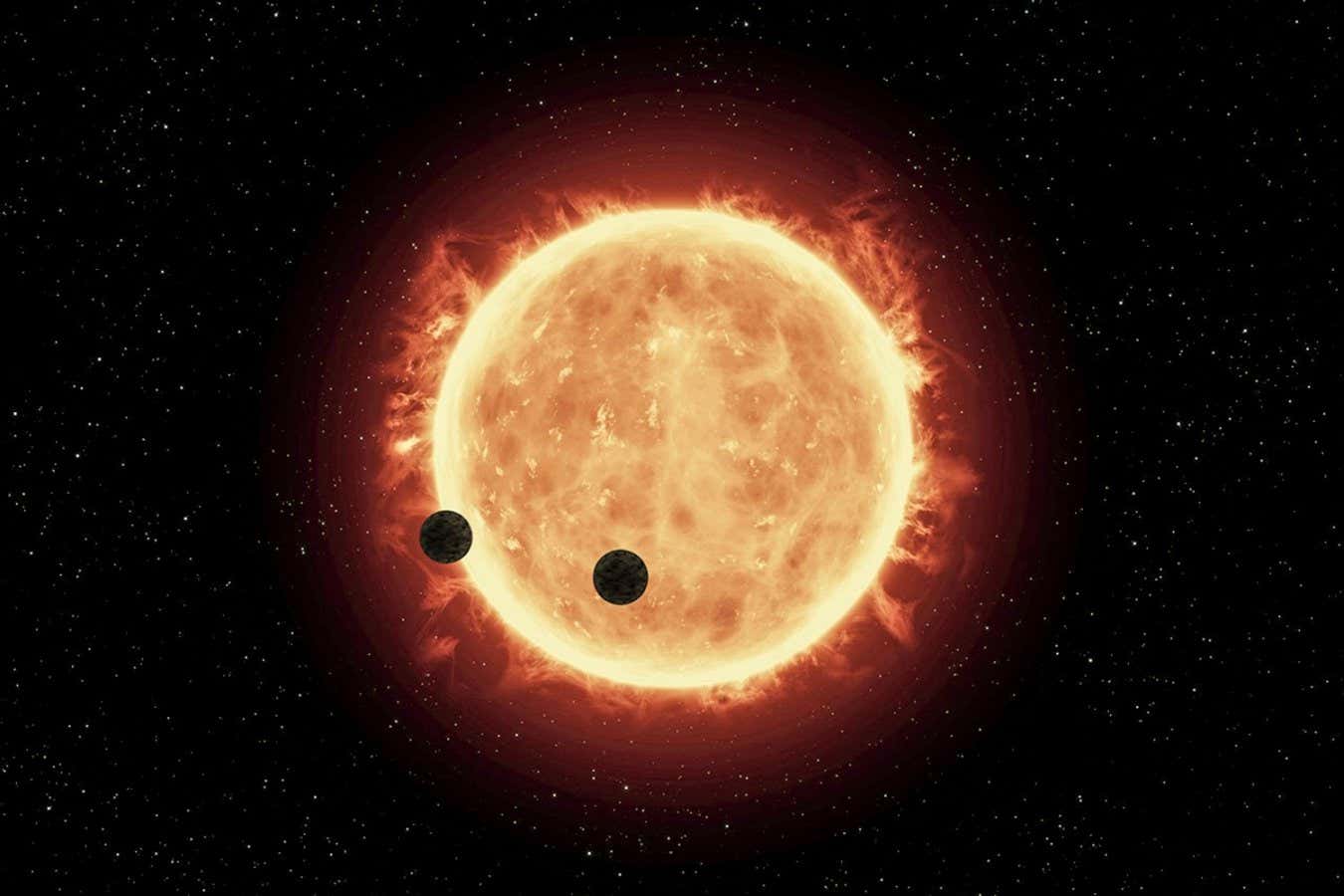
    An artist’s impression of a star with two planets transiting across it

    NASA, ESA, and G. Bacon (STScI)

    Astronomers have identified more than 10,000 candidate planets in data from a NASA telescope, the most ever found in a single haul.

    NASA’s Transiting Exoplanet Survey Satellite (TESS) was launched in 2018. It is tasked with looking at stars across the sky for planets in orbit, known as exoplanets. It identifies these exoplanets by looking for brief dips in the brightness of the light reaching Earth from each star – a sign that an exoplanet orbiting the star has passed in front of it.

    So far, the telescope has found more than 750 confirmed exoplanets, but it has thousands more candidates awaiting confirmation. There are other telescopes that have found exoplanets, and the total number of exoplanets confirmed by all telescopes now stands at more than 6000.

    Joshua Roth at Princeton University and his colleagues have now announced a much bigger number of possible planets by re-analysing the first year of TESS data. By combining images taken by the telescope, the researchers were able to look for planets around stars that are less bright, due to their smaller size or greater distance from Earth, than was previously possible. This revealed 11,554 candidate exoplanets, of which 10,091 have not been identified in previous exoplanet searches.

    “There have been predictions that there were thousands of planets still lurking in the TESS data,” says Roth. “It just hadn’t been searched yet.”

    The planets extend up to 6800 light-years from Earth towards the centre of our galaxy, double the distance TESS was previously able to search. More than 90 per cent of the new planets are hot Jupiters, gas giant worlds that orbit incredibly close to their star and in just a few days. TESS is particularly suited to finding such worlds. A much smaller fraction are Neptunes and super-Earths.

    However, not all of the candidates will turn out to be real planets, with each needing to be independently followed up by other telescopes. Some could be false positives, such as binary stars or other blips in the data. “TESS usually has a false positive rate of 50 per cent,” says Roth. “I would say a maximum of 5000 are real planets”, and possibly just 3000 are, he says.

    Even then, the trove would increase the number of known exoplanets in the universe by half. Jessie Christiansen, chief scientist of the NASA Exoplanet Science Institute, says that will be very useful for giving us better information about where and how exoplanets form. “I want as many exoplanets as possible so that I can start slicing and dicing things,” she says. “How are they different? What kinds of different Jupiters do different stars make? These are all questions you can ask when you have a big sample.”

    There are many more planets awaiting discovery in the TESS data, including about 8000 other candidate worlds identified in previous studies that still need to be examined. “We were always expecting that thousands would start flooding through at some point,” says Christiansen, with predictions suggesting TESS should find 12,000 to 15,000 confirmed planets in total. “I’ve been waiting for papers like this for a long time now.”

    Topics:


    Source link

    Share. Facebook Twitter Pinterest LinkedIn Tumblr Email Telegram Copy Link

    Related Posts

    Science

    NASA chief Jared Isaacman hints at campaign to make Pluto a planet again

    April 29, 2026
    Science

    Cancer is increasing in young people and we still don’t know why

    April 29, 2026
    Science

    People are betting on measles outbreaks – and that might be useful

    April 29, 2026
    Science

    Striking photo essay examines deadly spread of dengue fever in Nepal

    April 28, 2026
    Science

    Watch Astrobotic’s latest record-breaking ‘ring of fire’ rocket engine test

    April 28, 2026
    Science

    How I pay almost nothing to power my house and electric car

    April 28, 2026
    Editors Picks

    Villa come back at Chelsea, while Arsenal and Man City win again | Football News

    December 27, 2025

    Iran-US war: Four scenarios for what’s next as talks stumble | US-Israel war on Iran News

    April 21, 2026

    The animals revealing why human culture isn’t as special as we thought

    April 1, 2025

    Opinion | A.I. Agents: They’re Just Like Us

    February 25, 2026

    Minor’s Claims Drive New Twist In Joseph Duggar Case

    March 26, 2026
    About Us
    About Us

    Welcome to Benjamin Franklin Institute, your premier destination for insightful, engaging, and diverse Political News and Opinions.

    The Benjamin Franklin Institute supports free speech, the U.S. Constitution and political candidates and organizations that promote and protect both of these important features of the American Experiment.

    We are passionate about delivering high-quality, accurate, and engaging content that resonates with our readers. Sign up for our text alerts and email newsletter to stay informed.

    Latest Posts

    ‘I almost become paranoid’: Why anxiety is so much worse in the middle of the night

    April 29, 2026

    NASA chief Jared Isaacman hints at campaign to make Pluto a planet again

    April 29, 2026

    Energy War Breaks OPEC: UAE Walks Away As Oil Supply Collapses

    April 29, 2026

    Subscribe for Updates

    Stay informed by signing up for our free news alerts.

    Paid for by the Benjamin Franklin Institute. Not authorized by any candidate or candidate’s committee.
    • Privacy Policy
    • About us
    • Contact us

    Type above and press Enter to search. Press Esc to cancel.