
Close Menu
    Trending
    • What happens if you’re hit by a primordial black hole?
    • When is London Marathon 2026? Start time and how to watch race for FREE
    • Pentagon Requests $54 Billion For AI War
    • Clavicular Hit With New YouTube Crackdown
    • Beijing’s new supply chain rules deepen concerns for US firms in China
    • India denounces ‘hellhole’ remark shared by Trump | Donald Trump News
    • New photos of Mike Vrabel and Dianna Russini emerge
    • AI search demands a new audience playbook
    Benjamin Franklin Institute
    Friday, April 24
    • Home
    • Politics
    • Business
    • Science
    • Technology
    • Arts & Entertainment
    • International
    Benjamin Franklin Institute
    Home»Science»Titan’s strange plains may be explained by unusual weather
    Science

    Titan’s strange plains may be explained by unusual weather

    Team_Benjamin Franklin InstituteBy Team_Benjamin Franklin InstituteApril 21, 2026No Comments3 Mins Read
    Share Facebook Twitter Pinterest Copy Link LinkedIn Tumblr Email VKontakte Telegram
    Share
    Facebook Twitter Pinterest Email Copy Link


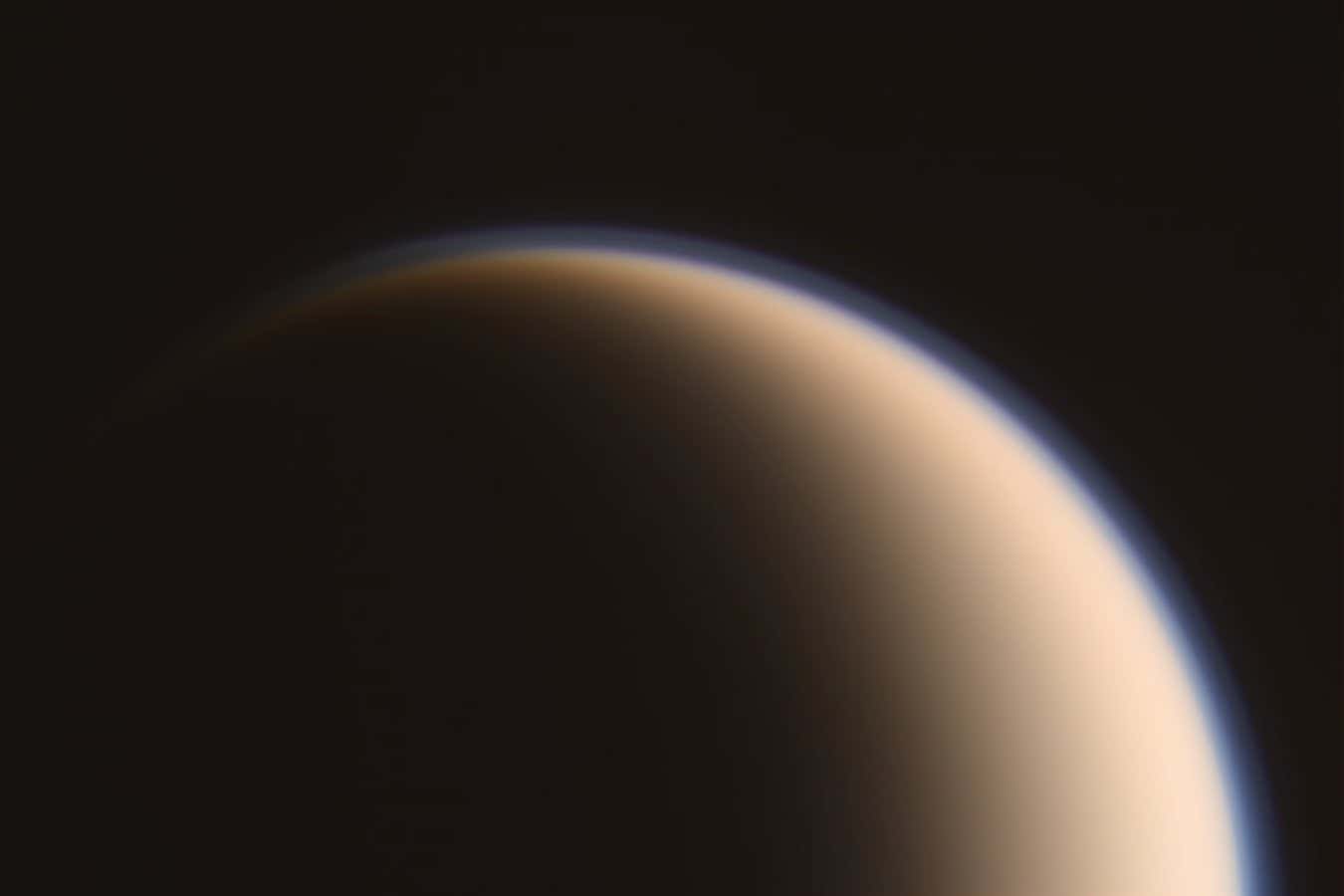
    An image of Titan taken by the Cassini spacecraft during a flyby

    NASA/JPL/SSI/Val Klavans

    Titan’s plains may be covered in up to a metre of fluffy, organic “snow”. About 65 per cent of the surface of Saturn’s huge moon is made up of strangely uniform and flat plains, and they seem to be coated in a porous, dry layer of particles that have fallen from the sky.

    The surface of Titan is difficult to study from afar because it is obscured by a thick, hazy atmosphere. The Cassini spacecraft, which orbited Saturn from 2004 to 2017, managed to take a closer look using radar. Now, Alexander Hayes at Cornell University in New York state and his colleagues have analysed the radar data in more detail than ever before.

    The way the radio waves from Cassini’s radar instrument bounced off Titan’s surface indicate that the surface isn’t as simple as those of most other rocky bodies in the solar system. “The canonical models that we use to try to understand Titan’s surface, which were developed for the moon and are used for the moon, Earth, Venus – they don’t work directly on Titan,” says Hayes. “Titan is a different beast in terms of the radar-scattering properties of the surface.”

    Instead of a simple rocky surface, the radar data was a better fit to a two-layer model, with a blanket of soft, low-density material covering a harder terrain. The blanket layer, ranging from centimetres to a metre in thickness, is probably made up of organic molecules from Titan’s hazy atmosphere, which researchers expect should float down to the surface like snow before getting compacted and solidified over time.

    Titan’s surface also experiences rain, wind and erosion, so it is important to understand how the blanket layer has built up slowly over time, shaped by these processes. “But this could give us a hint for how things work more broadly on Titan,” says Hayes.

    NASA’s Dragonfly mission, which is expected to launch in 2028 and arrive on Titan in 2034, should be able to measure these layers and help us figure out exactly how they formed. It is crucial not only for our understanding of Titan itself, but also for the design of any future spacecraft that will follow Dragonfly to visit this strange moon and attempt landing there.

    New Scientist. Science news and long reads from expert journalists, covering developments in science, technology, health and the environment on the website and the magazine.

    The history and future of space exploration: US

    Embark on an extraordinary journey through the heart of the US’s space and astronomy landmarks, designed for curious minds and lifelong learners.

    Topics:



    Source link

    Share. Facebook Twitter Pinterest LinkedIn Tumblr Email Telegram Copy Link

    Related Posts

    Science

    What happens if you’re hit by a primordial black hole?

    April 24, 2026
    Science

    How do earthquakes end? A seismic ‘stop sign’ could help predict earthquake risk

    April 24, 2026
    Science

    ‘Kraken’ fossils show enormous, intelligent octopuses were top predators in Cretaceous seas

    April 24, 2026
    Science

    Largest ever octopus was great white shark of invertebrate predators

    April 24, 2026
    Science

    Do you need to worry about Mythos, Anthropic’s computer-hacking AI?

    April 23, 2026
    Science

    How many dachshunds would it take to get to the moon?

    April 23, 2026
    Editors Picks

    Harry And Meghan Get Candid About Fame’s Dark Side

    April 17, 2026

    How to See the First Fiery Meteor Shower of 2026

    January 4, 2026

    US House passes spending bill ending government shutdown

    February 3, 2026

    Vikings are signing a six-time All-Pro in free agency

    March 18, 2026

    Tech Life – Putting polluters in court

    March 31, 2026
    About Us
    About Us

    Welcome to Benjamin Franklin Institute, your premier destination for insightful, engaging, and diverse Political News and Opinions.

    The Benjamin Franklin Institute supports free speech, the U.S. Constitution and political candidates and organizations that promote and protect both of these important features of the American Experiment.

    We are passionate about delivering high-quality, accurate, and engaging content that resonates with our readers. Sign up for our text alerts and email newsletter to stay informed.

    Latest Posts

    What happens if you’re hit by a primordial black hole?

    April 24, 2026

    When is London Marathon 2026? Start time and how to watch race for FREE

    April 24, 2026

    Pentagon Requests $54 Billion For AI War

    April 24, 2026

    Subscribe for Updates

    Stay informed by signing up for our free news alerts.

    Paid for by the Benjamin Franklin Institute. Not authorized by any candidate or candidate’s committee.
    • Privacy Policy
    • About us
    • Contact us

    Type above and press Enter to search. Press Esc to cancel.