

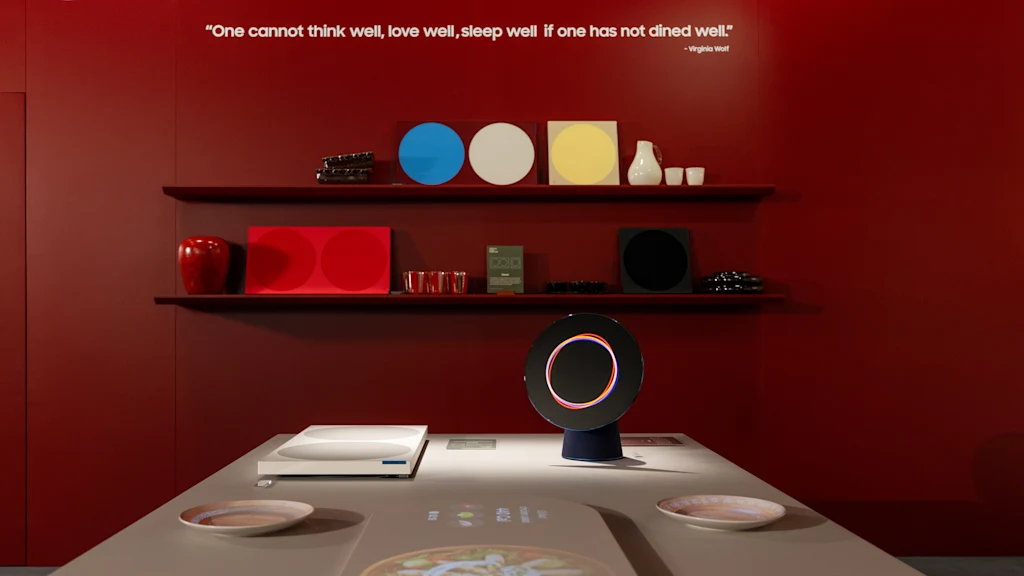
A Samsung Galaxy Tri-Fold smartphone sits beside something we haven’t seen before. It’s a round screen with a swiveling head. Called Project Luna, it has the mechanical charm of Luxo Jr., and a beep not so different from Wall-E.
“The guests are here,” whispers a voice. Moments later, we hear an orchestra begin to play. Project Luna and the Galaxy become the conductors of a wide array of Samsung products and concepts, all of which share the same, pulsating orb graphic animation that lands somewhere between a face, mouth, eye, and the light ring of 2001: A Space Odyssey’s HAL.
This is how Samsung is saying hello to its visitors at Milan Design Week for its exhibition Design Is an Act of Love. It’s also a glimpse of what’s to come from Samsung’s design. The installation marks the largest design statement from Samsung since it hired its first foreign chief design officer, Mauro Porcini, last year.
“The idea is to give a vibe, a feeling of the kind of [design] language we want to use,” says Porcini, who cautions that Project Luna and many other products in the show are concepts—albeit believable ones. “These are all things that could really happen in the near future.”
The show demonstrates Samsung’s thesis on the coming UX of AI: that while phones will represent personal AI, we’ll increasingly see communal AI spread across our homes. For Samsung, that can mean an AI will be ready to pop onto your TV or your refrigerator, almost jumping frame to frame like Harry Potter wizards can dash between old oil paintings.
Well, I should say it demonstrates one piece of Samsung’s thesis on AI. Because over a 90-minute conversation from Seoul, as Porcini describes his first year on the job, he keeps unpacking more about his dreams for both the Korean giant and for the technology industry at large.
“The key message to everybody—to all the brand people, business people, creators, and designers of the world—is we need humanity more than ever to direct AI in the right direction, both creatively and then ethically,” he says. “[This technology] will happen no matter what. What we need to talk about is the moral compass.”
Samsung’s every-room AI
For the installation in Milan, Porcini arranged existing Samsung products—like Music Studio speakers and Frame TVs—alongside several concepts for more AI-native products. They appear in the home, in the bedroom and kitchen, in seamless coexistence.
The star of the show is the aforementioned Project Luna—which looks strikingly similar to a robot called Jibo that was developed out of MIT in the 2010s. The role of Project Luna is to be a dedicated AI companion for your home that can fill the gaps when there are no other AI devices around. Samsung also teased other devices that share its AI sensibility. One product is a simple square speaker. An exposed vinyl record spins right out its side. It’s a neat analog product, but when needed, the quiet device can come to life with a glowing UI—complete with AI and a dynamic EQ.

Samsung has been thoroughly roasted for launching refrigerators with screens (and ads) on them. I gather that Porcini is trying to walk a more careful line in screen-i-fying everything, even as AI teases new utility. This Milan space features a refrigerator with a traditional front that only gets a display from a projector. The same is true to a projector that shines onto the kitchen table. Whenever there’s no light, you have a completely typical, less garish object.
The sheer abundance of AI across the Samsung ecosystem supports Porcini’s thesis that AI “is going to be a commodity.” We’ll all be drowning in it. So it’s the design of the experience around AI that matters, and that design has to offer someone measurable value to stand out in a sea of opportunistic sameness.
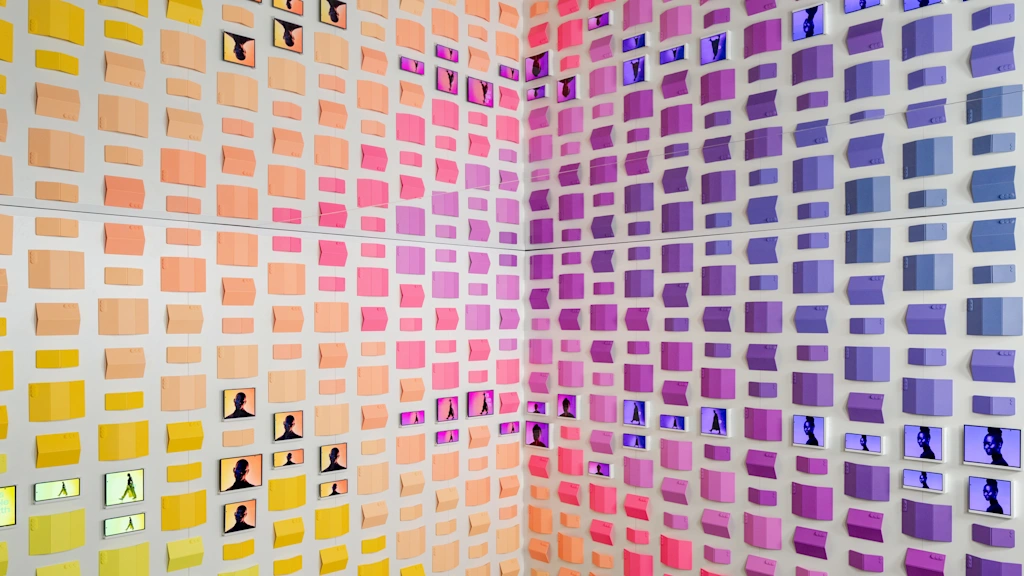
Porcini believes the differentiator for Samsung is that its AI needs to serve humanity by specifically amplifying our emotional intelligence and human imagination. From there, he says Samsung itself can use AI to specifically help us “live longer” (improving health and wellness), “live better” (offer more free time), “live loud” (increase expression through a variety of digital interfaces), and “live on” (preserving our knowledge and memories).
“Our goal is to tame technology at the service of humanity,” says Porcini. “It’s not about the advancement of technology. Who cares? Technology exists exclusively to be at the service of helping people.”
Why Samsung won’t embrace one design language to rule them all
One of Porcini’s other big anchors for Samsung design is that form and function follow meaning. He notes we already see this in how each of us arranges the apps and photos on our phones—we reshape these interfaces to be more relevant to ourselves.

Now, he wants Samsung to support these behaviors more. And he believes if the company is to be human-centered, it paradoxically needs to protect or regiment its brand a little less.
“If I talk about human centricity, should I force my aesthetic upon people because they need to recognize my brand or my product, or should I create something that makes sense for them?” Porcini muses.
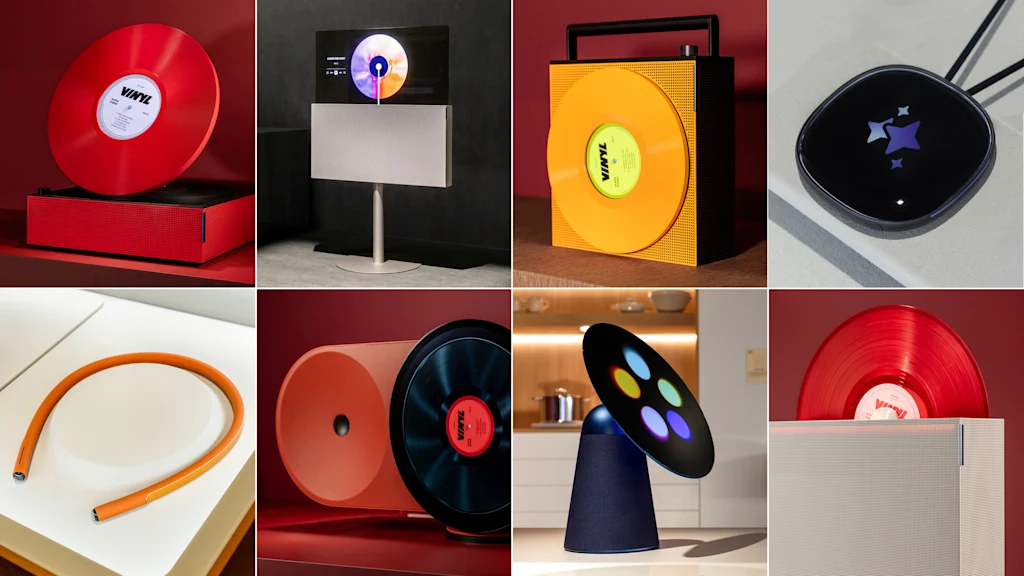
Freedom of expression is part of being human, he argues. And so rather than embrace one Samsung design language to rule them all, he’s okay with a diversity of styles. In fact, he wants to see the company tune down the minimalism a bit, and get back to bold product designs like the freestanding Serif TV—a product he argues shouldn’t be a premium lifestyle product, but available for anyone who wants a TV.
Without respecting one singular design language, Porcini wants to see an “explosion” of expressive new products arrive out of Samsung each year that challenge traditional forms in technology. Over time, we might get more and more unique Samsung things that mix and match in a bohemian way—and ultimately, it can be that AI layer that ties them together, as opposed to another coordinating bezel.
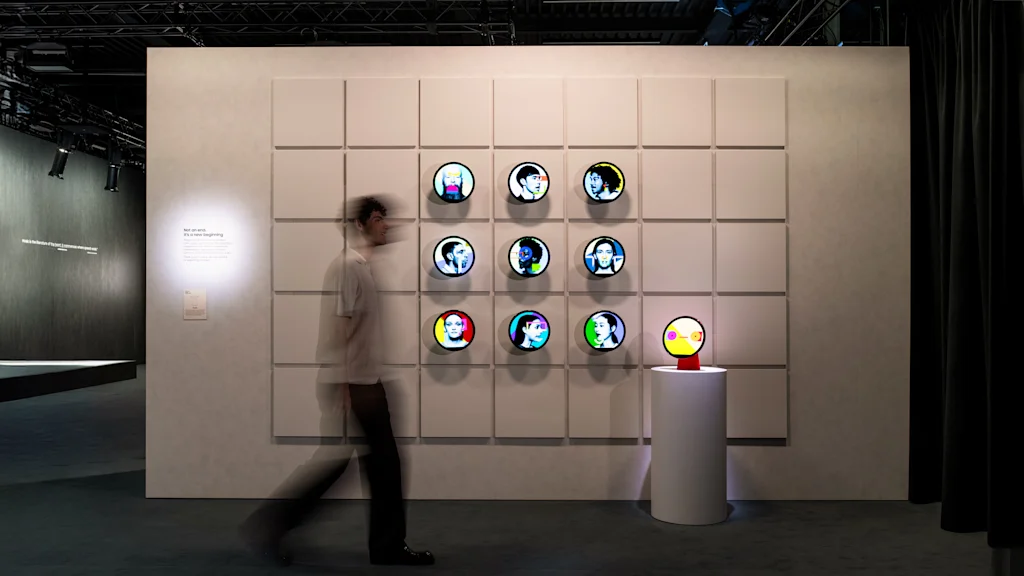
“We want to be surprised by the design of the next TV, and we want to feel that kind of emotion,” he says. “We want to put it in the physical environment, [then] align it to this idea of AI that needs to be tamed by humanity.”
While the philosophy may seem heady, the opportunity for Samsung in AI is very real given that the company that commands so much of both the personal and home electronic market. Samsung owns roughly a fifth of global smartphone shipments, a quarter of home appliances, and a third of televisions.
We’ve already let Samsung into our lives. If it really can articulate a more supportive, ethical approach to AI, we have a lot more reason to keep it there. But as Samsung has already faced a lawsuit and backlash about how it collects user data on TVs, it’s certain that if it doesn’t nail everything from its policy to its interface, that Harry Potter wizard popping between portraits could feel less like a magical friend than like an unwanted, surveillant house guest.