

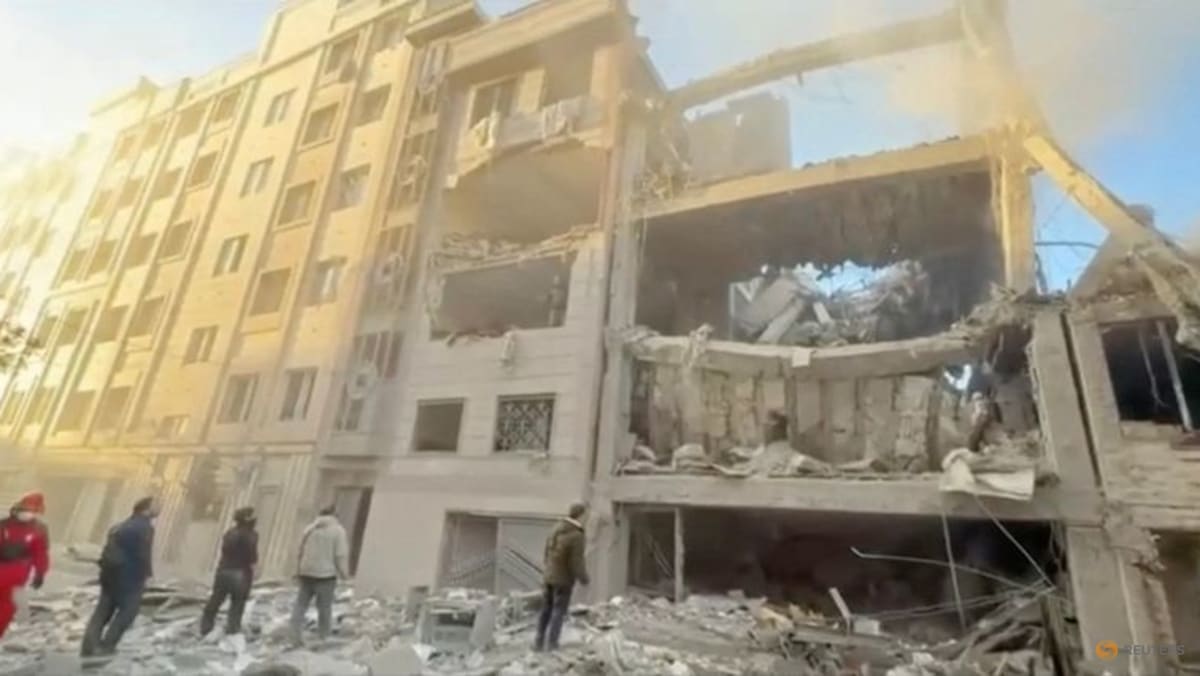
For its part, Iran has continued to strike targets around the Gulf, increasing the already high cost of the war on the region and the global economy.
As well as Friday’s attack on the water plant, Kuwait Petroleum Corporation said its Mina al-Ahmadi refinery had been hit by drones. Fires were ignited at operating units, but no injuries were reported.
Other attacks were also reported to have been intercepted in Saudi Arabia and Abu Dhabi. Missile debris landed near the Israeli port of Haifa, site of a major oil refinery.
IRAN WAR CAUSES GLOBAL ECONOMIC UPHEAVAL
Global financial markets have whipsawed in response to expectations of a possible end to the war and the reopening of the Strait of Hormuz, which only isolated vessels have been able to transit since the start of the war.
In normal times, the Strait is the conduit for around a fifth of the world’s oil and natural gas. Its closure has also squeezed shipments of fertiliser, threatening a humanitarian crisis in developing countries in Asia and Africa.
On Friday, a container ship belonging to the French shipping group CMA CGM passed through, MarineTraffic vessel tracking data showed, a sign that Iran may not consider France a hostile nation. A liquefied natural gas container ship belonging to Japan’s Mitsui OSK Lines also transited the Strait.
While most markets in Asia were closed for Easter, Japan’s Nikkei share average rallied to trim its losses for the week following global efforts to restore Gulf oil shipments.
Oil markets were closed after benchmark US crude prices gained 11 per cent on Thursday after a televised speech by Trump that offered no clear sign of an imminent end to the war.
On Thursday, Britain chaired a virtual meeting of some 40 countries to explore ways to restore freedom of navigation, but it did not produce any specific agreement. Tehran has offered a competing vision for future control of the strait, and said it was drafting a protocol with neighbouring Oman that would require ships to obtain permits and licences – something other countries would be unlikely to agree to. “International law doesn’t recognise pay-to-pass schemes,” European Union foreign policy chief Kaja Kallas wrote on social media.
The UN Security Council is set to vote on Saturday on a Bahraini resolution to protect commercial shipping in and around the strait, diplomats said, but veto-wielding China made clear its opposition to authorising armed intervention.
Any military action would be “legitimising the unlawful and indiscriminate use of force, which would inevitably lead to further escalation of the situation and lead to serious consequences”, Chinese envoy Fu Cong told the Security Council on Thursday.