
Close Menu
    Trending
    • May 2026 Live Webinar Series
    • Damson Idris Says Messi Made Him Quit Soccer
    • Netanyahu says he was successfully treated for prostate cancer
    • Negotiations that enable Israel’s land-grabs | Israel-Palestine conflict
    • True-or-false for Round 1 of 2026 NFL Draft: Will Cowboys regret their trade?
    • Opinion | Stewart Brand, Silicon Valley’s Favorite Prophet, on Life’s Most Important Principle
    • Struggling to scale your company? Here are five things that could be holding you back
    • What happens if you’re hit by a primordial black hole?
    Benjamin Franklin Institute
    Friday, April 24
    • Home
    • Politics
    • Business
    • Science
    • Technology
    • Arts & Entertainment
    • International
    Benjamin Franklin Institute
    Home»Science»We’ve spotted a huge asteroid spinning impossibly fast
    Science

    We’ve spotted a huge asteroid spinning impossibly fast

    Team_Benjamin Franklin InstituteBy Team_Benjamin Franklin InstituteMarch 20, 2026No Comments3 Mins Read
    Share Facebook Twitter Pinterest Copy Link LinkedIn Tumblr Email VKontakte Telegram
    Share
    Facebook Twitter Pinterest Email Copy Link


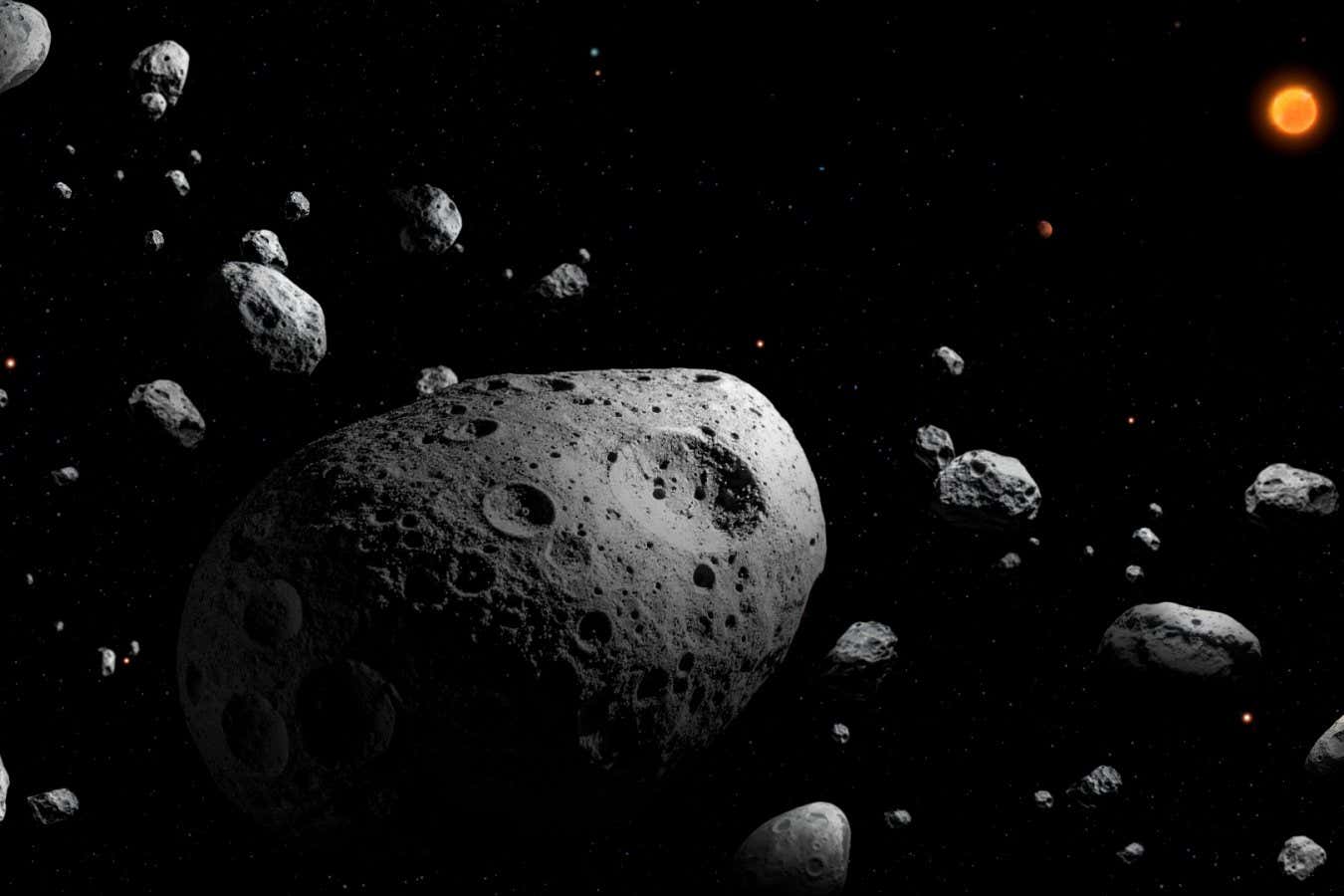
    Artist’s depiction of the asteroid 2025 MN45

    NSF–DOE Vera C. Rubin Observatory/NOIRLab/SLAC​/AURA/P. Marenfeld

    The Vera C. Rubin Observatory in Chile has spotted the fastest-rotating large asteroid ever seen. Despite measuring more than half a kilometre across, this asteroid spins about once every 1.9 minutes – a speed once thought to be impossible.

    Dmitrii Vavilov at the University of Washington in Seattle and his colleagues found this asteroid, along with several other surprisingly speedy rotators, in the data from Rubin’s first nine nights of observations in late April and early May 2025. Vavilov presented the results at the Lunar and Planetary Science Conference in Texas on 17 March.

    In that observation period, the researchers identified 76 asteroids for which they could reliably calculate rotational periods, with 19 of those being so-called super-fast rotators, spinning once every 2.2 hours or faster. That figure is the limit of how fast a “rubble pile” asteroid, made up of many smaller rocks loosely held together by gravity, can spin without falling apart.

    The vast majority of asteroids are thought to be rubble piles, so the researchers didn’t expect to find many rotating faster than once every 2.2 hours. The fastest of the super-fast rotators spins once every 13 minutes or so. In their first set of analyses, the researchers didn’t even look for anything with a spin period of less than about 5 minutes, Vavilov said during his presentation. “We thought that was crazy that they could rotate any faster,” he said.

    When they went back and looked for even faster rotators, they found three spinning so rapidly that they are considered ultra-fast rotators, with periods of about 3.8 minutes, 1.92 minutes and 1.88 minutes, respectively. The fastest, called 2025 MN45, has a diameter of about 710 metres and spins faster than any asteroid more than 500m across ever seen before.

    Its astonishing speed means this asteroid can’t possibly be a rubble pile. It must be made of much stronger mettle than most space rocks. “2.2 hours is supposed to be the limit for this asteroid, and yet it’s rotating in less than 2 minutes,” said Vavilov. “Even clay would not be enough to hold this asteroid together, so it’s probably one big rock or even solid metal.”

    The Vera C. Rubin Observatory is expected to spot many more rotating asteroids over the course of its planned 10-year survey of the southern sky, enabling astronomers to explore the surprising diversity of these strange boulders in space.

    Topics:


    Source link

    Share. Facebook Twitter Pinterest LinkedIn Tumblr Email Telegram Copy Link

    Related Posts

    Science

    What happens if you’re hit by a primordial black hole?

    April 24, 2026
    Science

    How do earthquakes end? A seismic ‘stop sign’ could help predict earthquake risk

    April 24, 2026
    Science

    ‘Kraken’ fossils show enormous, intelligent octopuses were top predators in Cretaceous seas

    April 24, 2026
    Science

    Largest ever octopus was great white shark of invertebrate predators

    April 24, 2026
    Science

    Do you need to worry about Mythos, Anthropic’s computer-hacking AI?

    April 23, 2026
    Science

    How many dachshunds would it take to get to the moon?

    April 23, 2026
    Editors Picks

    Are these 3 challenges getting in the way of growing your business?

    January 19, 2026

    Kandi Burruss Stuns Fans With Vocal Performance Amid Divorce

    December 11, 2025

    Songbirds reveal the dark side of making new brain cells as adults

    April 19, 2026

    Cuba hit by second nationwide blackout in a week

    March 22, 2026

    Wells Fargo Reflect Card Review

    March 4, 2025
    About Us
    About Us

    Welcome to Benjamin Franklin Institute, your premier destination for insightful, engaging, and diverse Political News and Opinions.

    The Benjamin Franklin Institute supports free speech, the U.S. Constitution and political candidates and organizations that promote and protect both of these important features of the American Experiment.

    We are passionate about delivering high-quality, accurate, and engaging content that resonates with our readers. Sign up for our text alerts and email newsletter to stay informed.

    Latest Posts

    May 2026 Live Webinar Series

    April 24, 2026

    Damson Idris Says Messi Made Him Quit Soccer

    April 24, 2026

    Netanyahu says he was successfully treated for prostate cancer

    April 24, 2026

    Subscribe for Updates

    Stay informed by signing up for our free news alerts.

    Paid for by the Benjamin Franklin Institute. Not authorized by any candidate or candidate’s committee.
    • Privacy Policy
    • About us
    • Contact us

    Type above and press Enter to search. Press Esc to cancel.