
Close Menu
    Trending
    • Negotiations that enable Israel’s land-grabs | Israel-Palestine conflict
    • True-or-false for Round 1 of 2026 NFL Draft: Will Cowboys regret their trade?
    • Opinion | Stewart Brand, Silicon Valley’s Favorite Prophet, on Life’s Most Important Principle
    • Struggling to scale your company? Here are five things that could be holding you back
    • What happens if you’re hit by a primordial black hole?
    • When is London Marathon 2026? Start time and how to watch race for FREE
    • Pentagon Requests $54 Billion For AI War
    • Clavicular Hit With New YouTube Crackdown
    Benjamin Franklin Institute
    Friday, April 24
    • Home
    • Politics
    • Business
    • Science
    • Technology
    • Arts & Entertainment
    • International
    Benjamin Franklin Institute
    Home»Science»3I/ATLAS: Interstellar comet has water unlike any in our solar system
    Science

    3I/ATLAS: Interstellar comet has water unlike any in our solar system

    Team_Benjamin Franklin InstituteBy Team_Benjamin Franklin InstituteMarch 17, 2026No Comments3 Mins Read
    Share Facebook Twitter Pinterest Copy Link LinkedIn Tumblr Email VKontakte Telegram
    Share
    Facebook Twitter Pinterest Email Copy Link


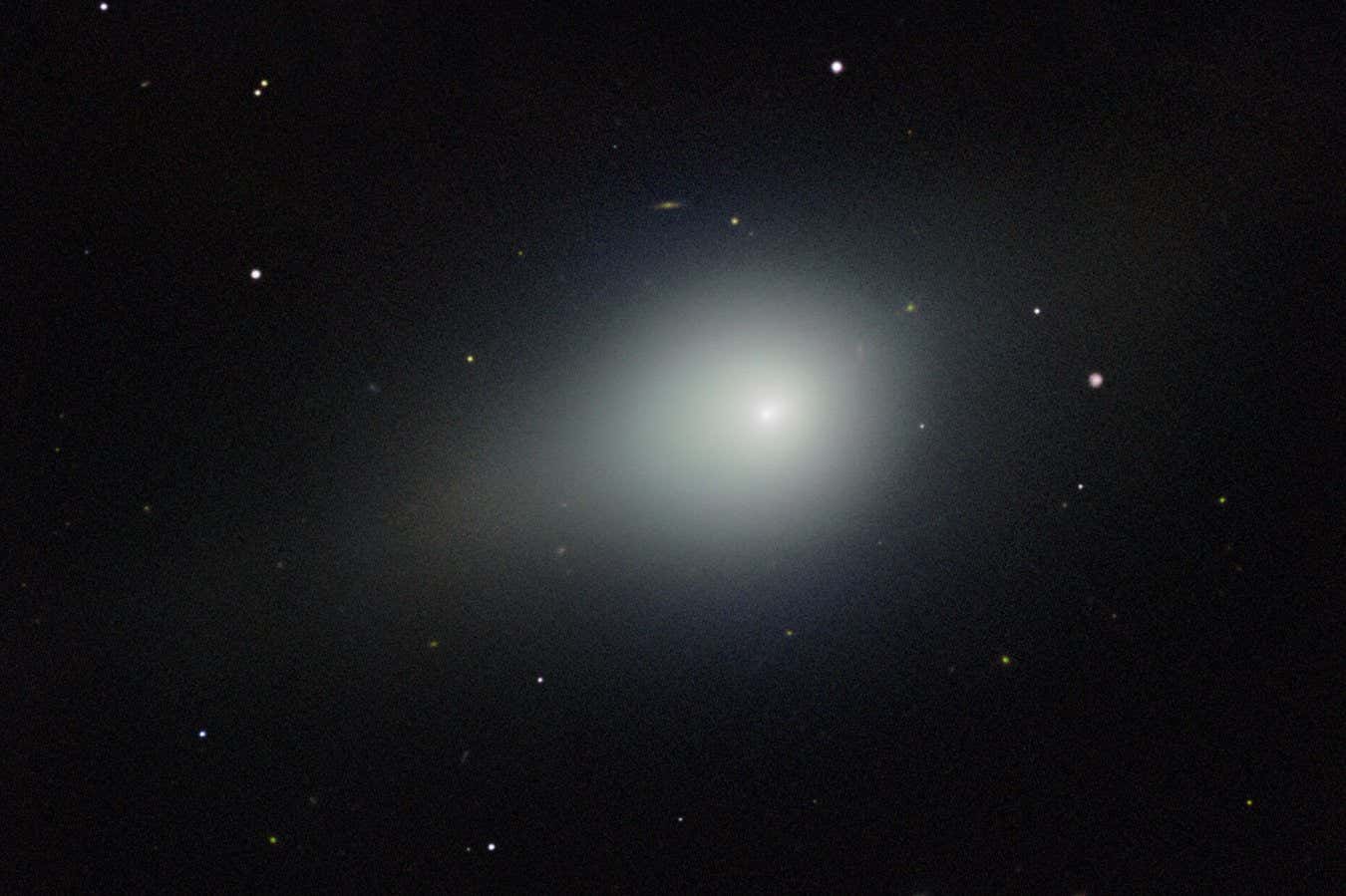
    3I/ATLAS is pretty strange

    International Gemini Observatory/NOIRLab/NSF/AURA/B. Bolin

    The interstellar comet 3I/ATLAS contains water and carbon molecules at levels never before seen in our solar system. This suggests that it formed around an alien star radically different from and much older than the sun.

    Astronomers have been tracking 3I/ATLAS since it entered our solar system last year – and it is weird. It appears to be packed with far more carbon dioxide and water than almost any other comet we have seen, and early estimates put its age at 8 billion years – almost twice as old as the sun.

    Now, Martin Cordiner at NASA’s Goddard Space Flight Center in Maryland and his colleagues have found that its levels of deuterium – a form of hydrogen with an extra neutron – are at least 10 times higher than in any comet we have seen before.

    Jodrell Bank with Lovell telescope

    Mysteries of the universe: Cheshire, England

    Spend a weekend with some of the brightest minds in science, as you explore the mysteries of the universe in an exciting programme that includes an excursion to see the iconic Lovell Telescope.

    Deuterium naturally exists in small amounts in Earth’s oceans, but the levels in 3I/ATLAS are more than 40 times higher. “3I/ATLAS continues to astonish us with what it reveals about the similarities and differences of its host system compared with our own solar system,” says Cordiner. He and the team used the James Webb Space Telescope to make the observations.

    “It’s really exceptional,” says Paul Hartogh at the Max Planck Institute for Solar System Research in Germany. “This deuterium-to-hydrogen ratio in water is extremely unusual, and nobody would have expected this.”

    Such high levels of deuterium are typically seen in only the coldest regions of the Milky Way, says Ewine van Dishoeck at Leiden Observatory in the Netherlands. “That means it’s probably in the very outer part of the disc around whatever star it was circling, and that makes it also easier to kick it out,” says Dishoeck.

    Cordiner and his colleagues also found relatively low levels of carbon-13 – a form of carbon with an extra neutron that is typically produced after stars have exploded in a supernova. Low levels of carbon-13, which have also been found in young star-forming clouds, point to 3I/ATLAS forming at a time in the galaxy’s history when there weren’t as many polluting supernovae. This suggests the comet must have been formed around a star system around 10 billion to 12 billion years old, more than twice as old as the sun, says Cordiner.

    However, Dishoeck says that the precision we have for the carbon levels means we can’t be certain about its age.

    Topics:


    Source link

    Share. Facebook Twitter Pinterest LinkedIn Tumblr Email Telegram Copy Link

    Related Posts

    Science

    What happens if you’re hit by a primordial black hole?

    April 24, 2026
    Science

    How do earthquakes end? A seismic ‘stop sign’ could help predict earthquake risk

    April 24, 2026
    Science

    ‘Kraken’ fossils show enormous, intelligent octopuses were top predators in Cretaceous seas

    April 24, 2026
    Science

    Largest ever octopus was great white shark of invertebrate predators

    April 24, 2026
    Science

    Do you need to worry about Mythos, Anthropic’s computer-hacking AI?

    April 23, 2026
    Science

    How many dachshunds would it take to get to the moon?

    April 23, 2026
    Editors Picks

    Tim Friede: I have been bitten by more than 200 snakes – on purpose

    April 3, 2026

    Trump To End Civilization? It Maybe The West’s!

    April 7, 2026

    Opinion | ‘We Are Going to Deeply Regret This War’

    March 28, 2026

    Gabrielle Union Draws Line in the Sand Over Stepdaughter Zaya

    May 25, 2025

    Canva’s new AI tool will break your design process (in a good way)

    March 11, 2026
    About Us
    About Us

    Welcome to Benjamin Franklin Institute, your premier destination for insightful, engaging, and diverse Political News and Opinions.

    The Benjamin Franklin Institute supports free speech, the U.S. Constitution and political candidates and organizations that promote and protect both of these important features of the American Experiment.

    We are passionate about delivering high-quality, accurate, and engaging content that resonates with our readers. Sign up for our text alerts and email newsletter to stay informed.

    Latest Posts

    Negotiations that enable Israel’s land-grabs | Israel-Palestine conflict

    April 24, 2026

    True-or-false for Round 1 of 2026 NFL Draft: Will Cowboys regret their trade?

    April 24, 2026

    Opinion | Stewart Brand, Silicon Valley’s Favorite Prophet, on Life’s Most Important Principle

    April 24, 2026

    Subscribe for Updates

    Stay informed by signing up for our free news alerts.

    Paid for by the Benjamin Franklin Institute. Not authorized by any candidate or candidate’s committee.
    • Privacy Policy
    • About us
    • Contact us

    Type above and press Enter to search. Press Esc to cancel.