

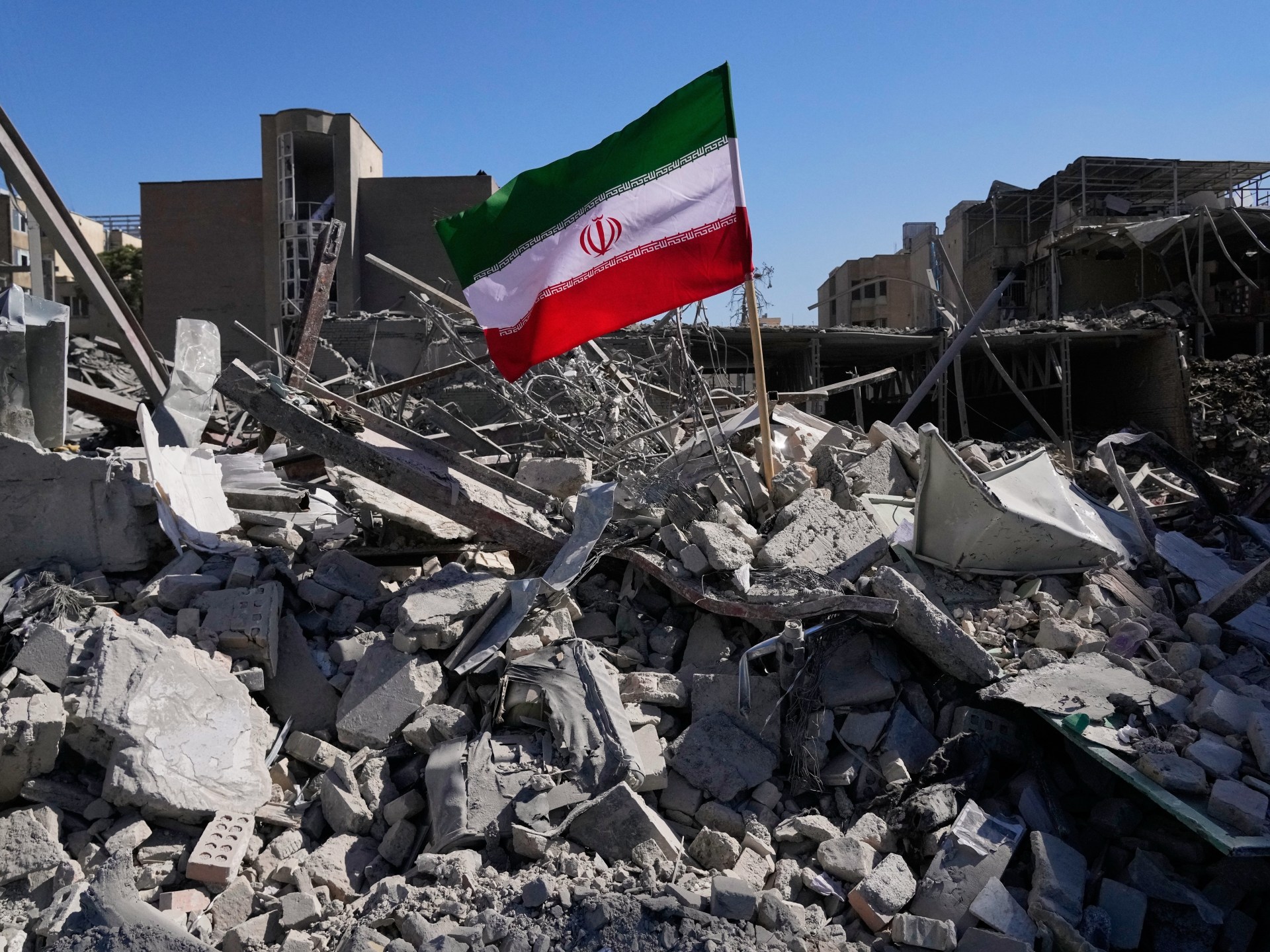
For years, Iran’s leaders believed time was on their side.
After the United States withdrew from the 2015 nuclear agreement, known as the Joint Comprehensive Plan of Action (JCPOA), Tehran effectively adopted what later came to be described as a “strategic patience” approach. Rather than immediately counter-escalating, Iran chose to endure economic pressure while waiting to see whether diplomacy could be revived.
The logic behind the strategy was simple: eventually, Washington would recognise that confrontation with Iran was against its own interests.
Today, that assumption lies shattered.
The collapse of diplomacy and the outbreak of war have forced Iran’s leadership to confront a painful reality: their belief that the US would ultimately act rationally may have been a profound miscalculation.
If Iran survives the current conflict, the lessons Iranian leaders draw from this moment may motivate them to pursue a nuclear deterrent.
The strategy of waiting
After the first Trump administration withdrew from the JCPOA and launched its “maximum pressure” campaign in 2018, Tehran initially avoided major counter-escalation. For nearly a year, it largely remained within the deal’s limits, hoping the other signatories, particularly Europeans, could preserve the agreement and deliver on the promised economic benefits despite US sanctions.
When that failed, Tehran began gradually increasing its nuclear activities by expanding enrichment and reducing compliance step by step while still avoiding a decisive break.
The pace accelerated after Iran’s conservative-dominated parliament passed a law mandating a significant increase in nuclear activities, in the wake of the assassination of top nuclear scientist Mohsen Fakhrizadeh. The shift was reinforced further by the 2021 election of conservative President Ebrahim Raisi.
The ultimate goal was to rebuild negotiating leverage, as Tehran believed that broader geopolitical and regional trends were gradually shifting in its favour. From its perspective, China’s rise, Russia’s growing assertiveness, and widening fractures within the Western alliance suggested that Washington’s ability to isolate Iran indefinitely might weaken over time.
At the same time, Iran pursued a strategy of reducing tensions with its neighbours, seeking improved relations with Gulf states that had previously supported the US “maximum pressure” campaign. By the early 2020s, many Gulf Cooperation Council countries had begun prioritising engagement and de-escalation with Iran, culminating in moves such as the 2023 Saudi-Iran rapprochement brokered by China.
Against this backdrop, even as tensions rose, Tehran continued to pursue diplomacy. Years of negotiations with the Biden administration aimed at restoring the JCPOA ultimately produced no agreement. Subsequent diplomatic efforts under Trump’s second presidency also collapsed.
Underlying this approach was a fundamental assumption: that the US ultimately preferred stability to war. Iranian officials believed Washington would eventually conclude that diplomacy, rather than endless pressure or a major war, was the most realistic and least costly path forward.
The joint US-Israeli assault on Iran has now exposed how deeply flawed that assumption was.
The return of deterrence
While Tehran based its strategy on mistaken beliefs about the rationality of US foreign policy, Washington, too, is misreading the situation.
For years, advocates of the maximum pressure campaign argued that sustained economic and military pressure would eventually fracture Iran internally. Some predicted that war would trigger widespread unrest and even the collapse of the regime.
So far, none of those predictions has materialised.
Despite the enormous strain on Iranian society, there have been no signs of regime disintegration. Instead, Iran’s political base — and in many cases broader segments of society — has rallied in the face of external attack.
Furthermore, Iran spent years reinforcing its deterrence capabilities. This involved expanding and diversifying its ballistic missile, cruise missile and drone programmes and developing multiple delivery systems designed to penetrate sophisticated air defences. Iranian planners also drew lessons from the direct exchanges with Israel in 2024 and the June 2025 war, improving targeting accuracy and coordination across different weapons systems.
The focus shifted towards preparing for a prolonged war of attrition: firing fewer but more precise strikes over time while attempting to degrade enemy radar and air defence systems.
We now see the results of this work. Iran has been able to inflict significant damage on its adversaries. Retaliatory attacks have killed seven Americans and 11 Israelis, placing a growing strain on US and Israeli missile defence systems, as interceptors are steadily depleted.
Iranian missile and drone strikes have hit targets across the region, including high-value military infrastructure such as radar installations. The closure of the Strait of Hormuz has sent global energy markets into turmoil.
Apart from the immense cost of war, the US decision to launch the attack on Iran may have another unintended consequence: a radical shift in Iranian strategy.
For decades, Supreme Leader Ali Khamenei maintained a longstanding religious prohibition on nuclear weapons. His assassination on the first day of the war may now motivate the new civilian and military leadership of the country to rethink its nuclear strategy.
There may now be fewer ideological reservations about pursuing nuclear weapons. The logic is simple: if diplomacy cannot deliver sanctions relief or permanently remove the threat of war, nuclear deterrence may appear to be the only viable alternative.
Iran’s actions in this conflict suggest that many leaders now see patience and diplomacy as strategic mistakes. These include the unprecedented scale of Iranian missile and drone attacks across the region, the targeting of US partners and critical infrastructure, and political decisions at home that signal a harder line, most notably the appointment of Mojtaba Khamenei as supreme leader.
The choice of Khamenei’s son breaks a longstanding taboo in a system founded on the rejection of hereditary rule and reflects a leadership increasingly prepared to abandon previous restraints.
If a more zero-sum logic of deterrence takes hold across the region, replacing dialogue as the organising principle of security, the Middle East may enter a far more dangerous era in which nuclear weapons are viewed as the ultimate form of deterrence and nuclear proliferation can no longer be stopped.
The views expressed in this article are the author’s own and do not necessarily reflect Al Jazeera’s editorial stance.