
Close Menu
    Trending
    • ‘They Left Failed States, But Want To Reenact The Disaster They Fled From’ (VIDEO) * The Gateway Pundit * by Mike LaChance
    • Insider Claims Blake Lively ‘Knows Everything’ About Taylor Swift
    • ICC prosecutor Karim Khan removed over ‘serious misconduct’
    • ‘The show must go on’: Trump returns to rescheduled White House press gala | Donald Trump News
    • Layne Riggs dominates NASCAR Truck Series race at IRP
    • Why Wall Street Trusts Some CEOs and Doubts Others With the Same Balance Sheet
    • SpaceX launches Starship on successful test flight
    • Warning shot or publicity stunt – how worried should we be about the OpenAI hack?
    Benjamin Franklin Institute
    Saturday, July 25
    • Home
    • Politics
    • Business
    • Science
    • Technology
    • Arts & Entertainment
    • International
    Benjamin Franklin Institute
    Home»Science»How to see six planets in the sky at once in rare celestial alignment
    Science

    How to see six planets in the sky at once in rare celestial alignment

    Team_Benjamin Franklin InstituteBy Team_Benjamin Franklin InstituteFebruary 26, 2026No Comments3 Mins Read
    Share Facebook Twitter Pinterest Copy Link LinkedIn Tumblr Email VKontakte Telegram
    Share
    Facebook Twitter Pinterest Email Copy Link


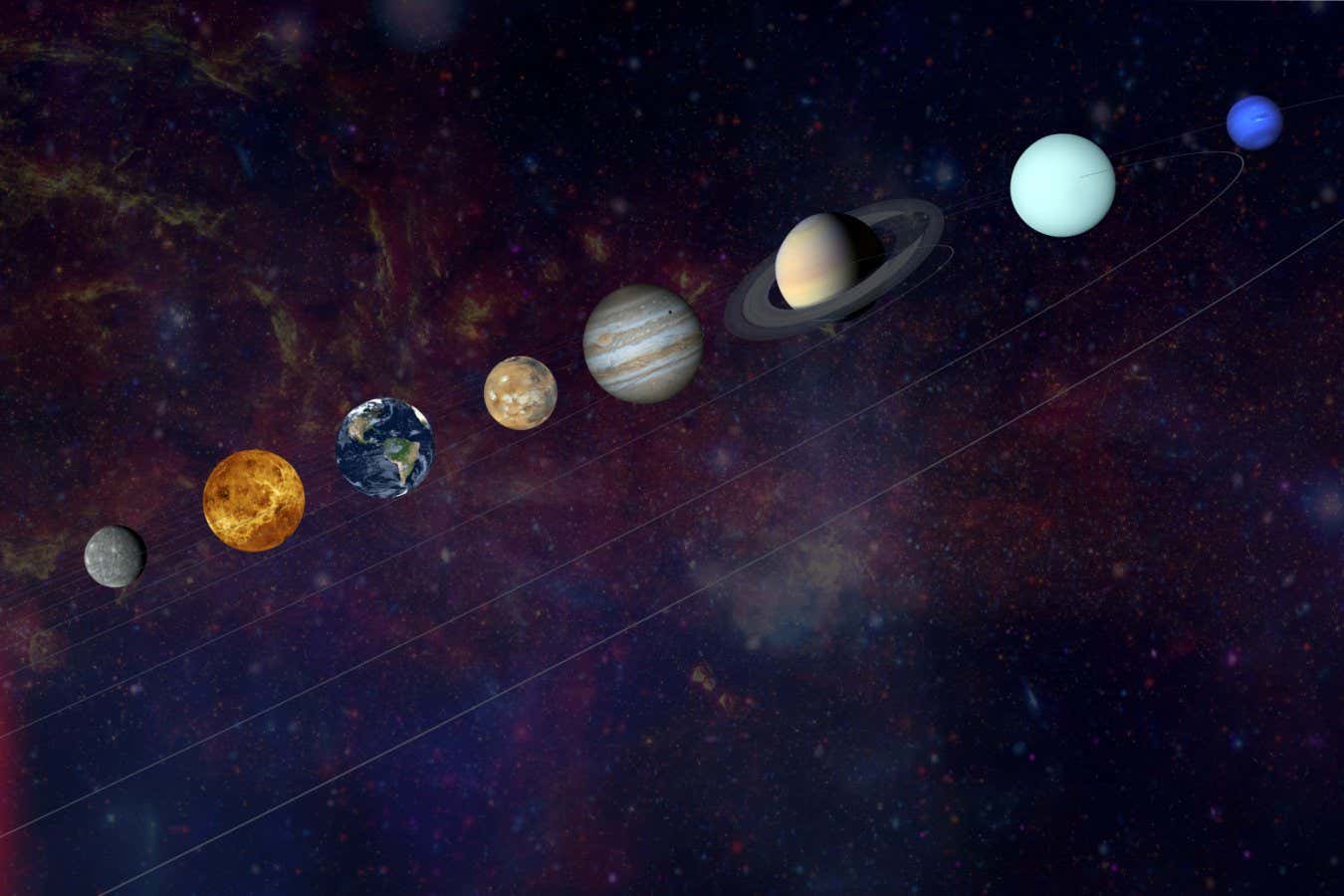
    Every few years, the planets appear in a line

    Getty Images

    Nearly all of the planets in the solar system are about to march through the night sky in a single-file line. This planetary alignment, sometimes called a planet parade, will include all of the solar system’s planets except Mars, as it is currently on the opposite side of the sun from Earth and therefore not visible.

    Alignments like this only occur every few years, when all the planets’ orbits happen to carry them to the same side of the sun at the same time. All of their orbits are different lengths – Mercury takes 88 Earth days to circle the sun while Neptune takes about 165 Earth years – so planetary alignments are a lucky coincidence of geometry and orbital dynamics.

    Sometimes they happen relatively close together – February 2025 saw a so-called “great alignment”, where all seven planets were visible at once – and sometimes years go by without a single one.

    During a planetary alignment, the planets trace a line across the sky along what’s called the ecliptic. This is the same line that the sun follows across the sky during the day, although the tilts of the planets’ orbits make it so that they don’t line up perfectly. From beyond the solar system, the planets would not appear in a line – that is an optical illusion due to the fact that all of the planets orbit in the same plane.

    The alignment will be visible across a range of dates depending on where you are in the world, but 28 February and 1 March will be the best days to see it in most places. Find a spot with a clear view of the western sky and as little light pollution as possible and look out for the parade.

    The best time to see the planet parade on 28 February will be less than an hour or so after sunset: Mercury’s orbit close to the sun means that it will sink below the horizon shortly after the sun does. Right after sunset, both Mercury and Venus will be visible low on the western horizon. Saturn and Neptune will be just above them, then Uranus, and finally Jupiter relatively close to the nearly-full moon.

    While Mercury, Venus, Saturn and Jupiter should be visible to the naked eye, binoculars will be necessary to spot Uranus, and a telescope to see Neptune, because they are so far away.

    Topics:


    Source link

    Share. Facebook Twitter Pinterest LinkedIn Tumblr Email Telegram Copy Link

    Related Posts

    Science

    SpaceX launches Starship on successful test flight

    July 25, 2026
    Science

    NHTSA considers new car door safety rules after fatal Tesla crashes

    July 24, 2026
    Science

    Fungus made fashion—researchers turn living organisms into textiles

    July 24, 2026
    Science

    How a 99-year-old mathematician unraveled a century-old braid mystery

    July 24, 2026
    Science

    Is it possible to regain a sense of smell? These scientists are working on it

    July 24, 2026
    Science

    Why don’t insects live in the ocean?

    July 24, 2026
    Editors Picks

    Spain eliminates France with style to seal its spot in the World Cup final

    July 15, 2026

    Trump U-turn: Is Venezuelan oil really available to Cuba again? | Energy News

    February 26, 2026

    Commentary: Despite its best efforts, Iran won’t be able to toll the Strait of Hormuz

    June 29, 2026

    Quantum computers that recycle their qubits can limit errors

    November 19, 2025

    John Stamos On Why He Was Forced to Drop Out of Grinch Role

    December 27, 2024
    About Us
    About Us

    Welcome to Benjamin Franklin Institute, your premier destination for insightful, engaging, and diverse Political News and Opinions.

    The Benjamin Franklin Institute supports free speech, the U.S. Constitution and political candidates and organizations that promote and protect both of these important features of the American Experiment.

    We are passionate about delivering high-quality, accurate, and engaging content that resonates with our readers. Sign up for our text alerts and email newsletter to stay informed.

    Latest Posts

    ‘They Left Failed States, But Want To Reenact The Disaster They Fled From’ (VIDEO) * The Gateway Pundit * by Mike LaChance

    July 25, 2026

    Insider Claims Blake Lively ‘Knows Everything’ About Taylor Swift

    July 25, 2026

    ICC prosecutor Karim Khan removed over ‘serious misconduct’

    July 25, 2026

    Subscribe for Updates

    Stay informed by signing up for our free news alerts.

    Paid for by the Benjamin Franklin Institute. Not authorized by any candidate or candidate’s committee.
    • Privacy Policy
    • About us
    • Contact us

    Type above and press Enter to search. Press Esc to cancel.