

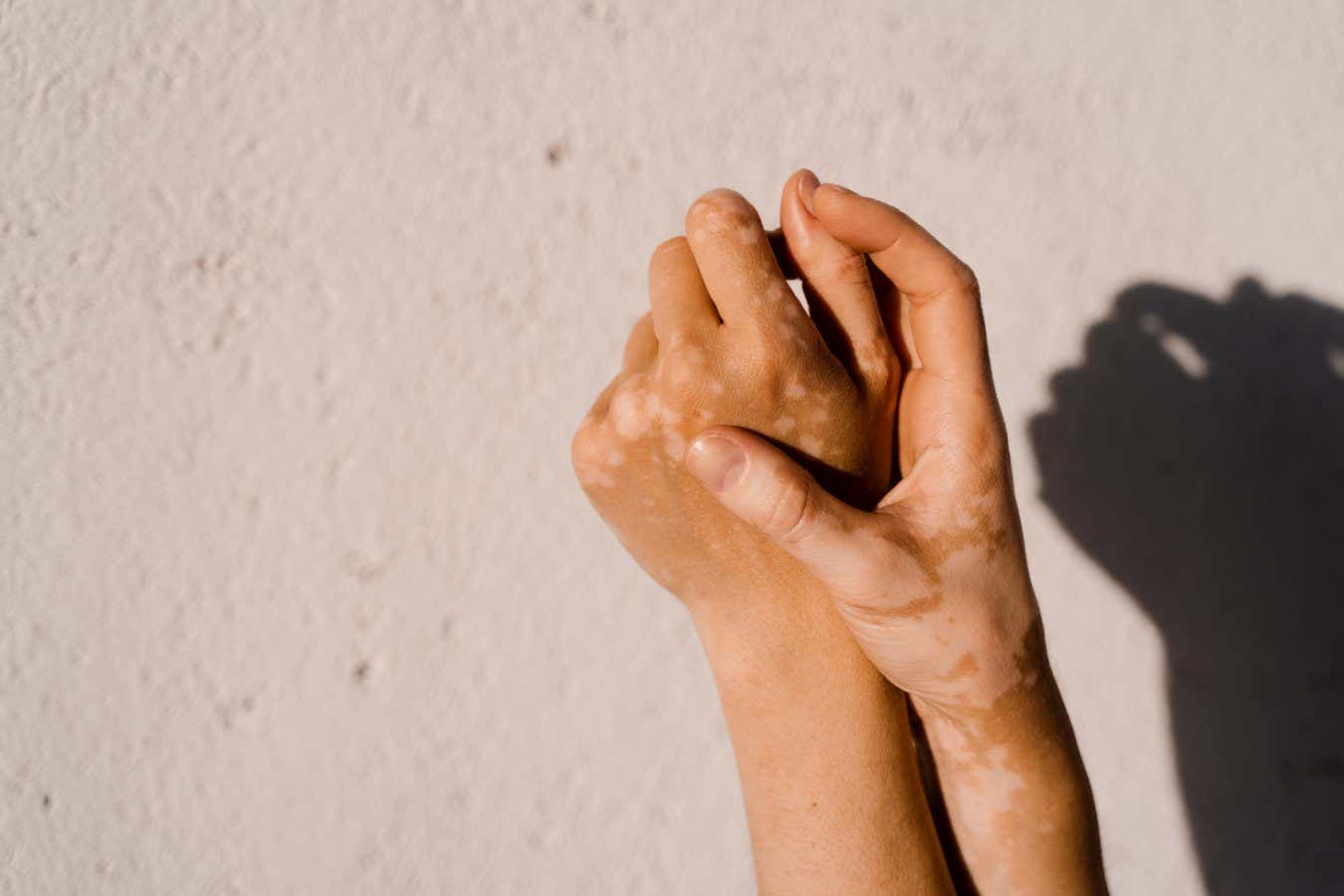
Vitiligo involves paler, less-pigmented skin patches
Getty Images
A first-of-its-kind cream that targets the underlying cause of vitiligo will be made available on the National Health Service in England. In clinical trials, the cream significantly increased pigmentation in the white skin patches caused by the condition, but the treatment has previously been described as controversial, as vitiligo isn’t painful or dangerous.
“Usually, people [with vitiligo] are asymptomatic in terms of physical symptoms, but it can cause a lot of emotional hardship,” says David Rosmarin at Indiana University, who led two trials of the new ruxolitinib cream treatment.
The cream, which is already available in the US, is sold under the name Opzelura. It treats non-segmental vitiligo, which occurs when symmetrical white patches appear on both sides of the body. This is thought to be caused by the immune system attacking melanocytes, the cells that make the pigment melanin, which gives skin colour.
The treatment is the first drug to be robustly tested that acts directly on the pathway that causes vitiligo, says Emma Rush at Vitiligo Support UK. “That’s why this [recommendation] is such a landmark,” she says.
Ruxolitinib works by inhibiting two enzymes that cause immune cells to destroy melanocytes. Existing treatments, like steroid creams, can restore some pigment, but suppress immune function more broadly.
Two trials, published in 2022, found that the drug increased pigmentation and reduced the noticeability of vitiligo patches compared with a placebo cream. This occurred regardless of people’s skin tones (vitiligo is more noticeable on darker skin), and was maintained for at least a year in more than a third of those who came off the drug after the trial.
The National Institute for Health and Care Excellence (NICE) weighed up these results in the past, but judged ruxolitinib to not be cost effective for use on the NHS. Now, it says the cream should be made available to people aged 12 and older with non-segmental vitiligo when other topical treatments haven’t worked or are unsuitable.
Vitiligo, which affects about 1 per cent of the global population, varies in severity. Some people have just a few small patches, while for others they can be large, red, inflamed or discoloured.
“Patients and clinicians sometimes think we shouldn’t treat vitiligo, [because] it doesn’t kill you [and] it’s not painful,” says Viktoria Eleftheriadou at the British Association of Dermatologists. But vitiligo can have serious complications, such as a higher risk of depression and anxiety.
Natalie Ambersley – a vitiligo ambassador for the charity Changing Faces, which supports people with physical differences – says that people shouldn’t feel judged for treating the condition, but adds that after spending years using existing treatments, she won’t be seeking out ruxolitinib. “I’ve learned to accept my skin,” she says. “We’re [all] unique and we can embrace what we look like.”
“It’s great that there are people who love the skin they’re in, but that’s not for everyone,” says Rush.
An oral version of ruxolitinib, which is used to treat some cancers and rheumatoid arthritis, has been linked to severe side effects, including lymphoma, heart problems and serious infections. But these have not been reported with the topical version. In the two vitiligo trials, ruxolitinib caused only mild side effects, including acne and itchiness. “There is super minimal systemic absorption,” says Eleftheriadou.
Ruxolitinib is also thought to be safer than steroid creams, which can cause skin thinning with long-term use. People with severe vitiligo may also be offered ultraviolet therapy, but this isn’t widely accessible.
Topics: