

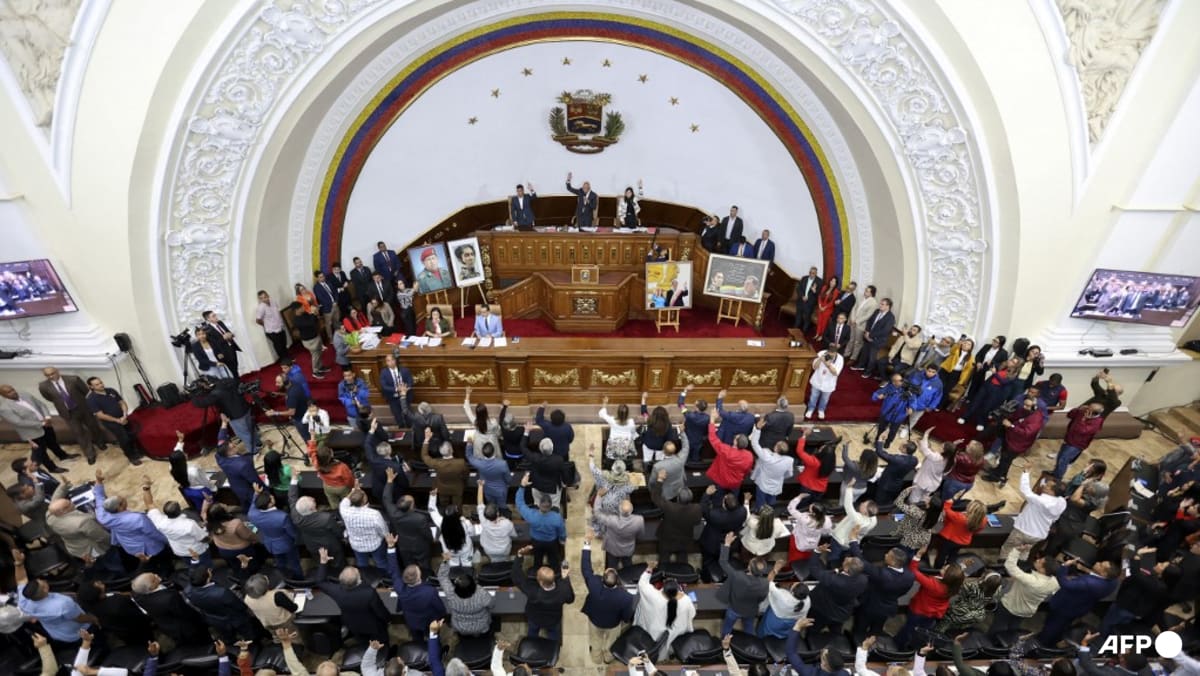
Opposition MP Tomas Guanipa, who has one brother in prison and another under house arrest, said the bill could mark a “new, historic chapter” for Venezuela, where people would no longer be “afraid to speak their minds for fear of being imprisoned.”
Maduro’s son, congressman Nicolas Maduro Guerra, added his voice to those calling for unity, saying “Venezuela cannot endure any more acts of revenge.”
Lawmakers will take up the bill again on Tuesday for final reading.
CRIMES AGAINST HUMANITY
The draft law covers events such as the failed 2002 coup against Chavez, various cycles of protests between 2004 and 2024, and criticism posted on social media or messaging services.
Crucially, it does not grant amnesty for “serious violations of human rights, crimes against humanity, war crimes, intentional homicide, corruption, and drug trafficking,” which cannot be pardoned under the Constitution.
The bill does however cover unspecified “offences” committed by judges, prosecutors and other officials.
The announcement last week of a general amnesty triggered scenes of rejoicing across Venezuela, fueling hopes for the speedy release of hundreds of political prisoners still behind bars a month after Maduro’s ouster.
The director of the country’s leading human rights NGO, Foro Penal, welcomed the draft law as a major step toward reconciling a deeply divided country.
“Amnesty is the framework that will ensure … that the past does not serve to halt or derail transition processes,” Alfredo Romero told AFP.
Some Venezuelans have expressed hopes of seeing all of Maduro’s inner circle brought to justice.
But Romero warned: “A reconciliation, a transition, cannot be a process of persecution against those who previously held power.”