
Close Menu
    Trending
    • The Kentucky Derby is Saturday. Here’s how to watch
    • We may finally have a cure for many different autoimmune conditions
    • Market Talk – May 1, 2026
    • Richard Simmons’ Housekeeper Breaks Silence On Final Moments
    • Lebanon says 12 killed in Israeli strikes on southern town
    • Trump expands red snapper fishing as critics warn of overfishing | Donald Trump News
    • Tony Stewart reveals meeting with NASCAR execs that kickstarted his retirement
    • Most products work, few work well
    Benjamin Franklin Institute
    Saturday, May 2
    • Home
    • Politics
    • Business
    • Science
    • Technology
    • Arts & Entertainment
    • International
    Benjamin Franklin Institute
    Home»Science»CRISPR can rewrite our genetic code: Best ideas of the century
    Science

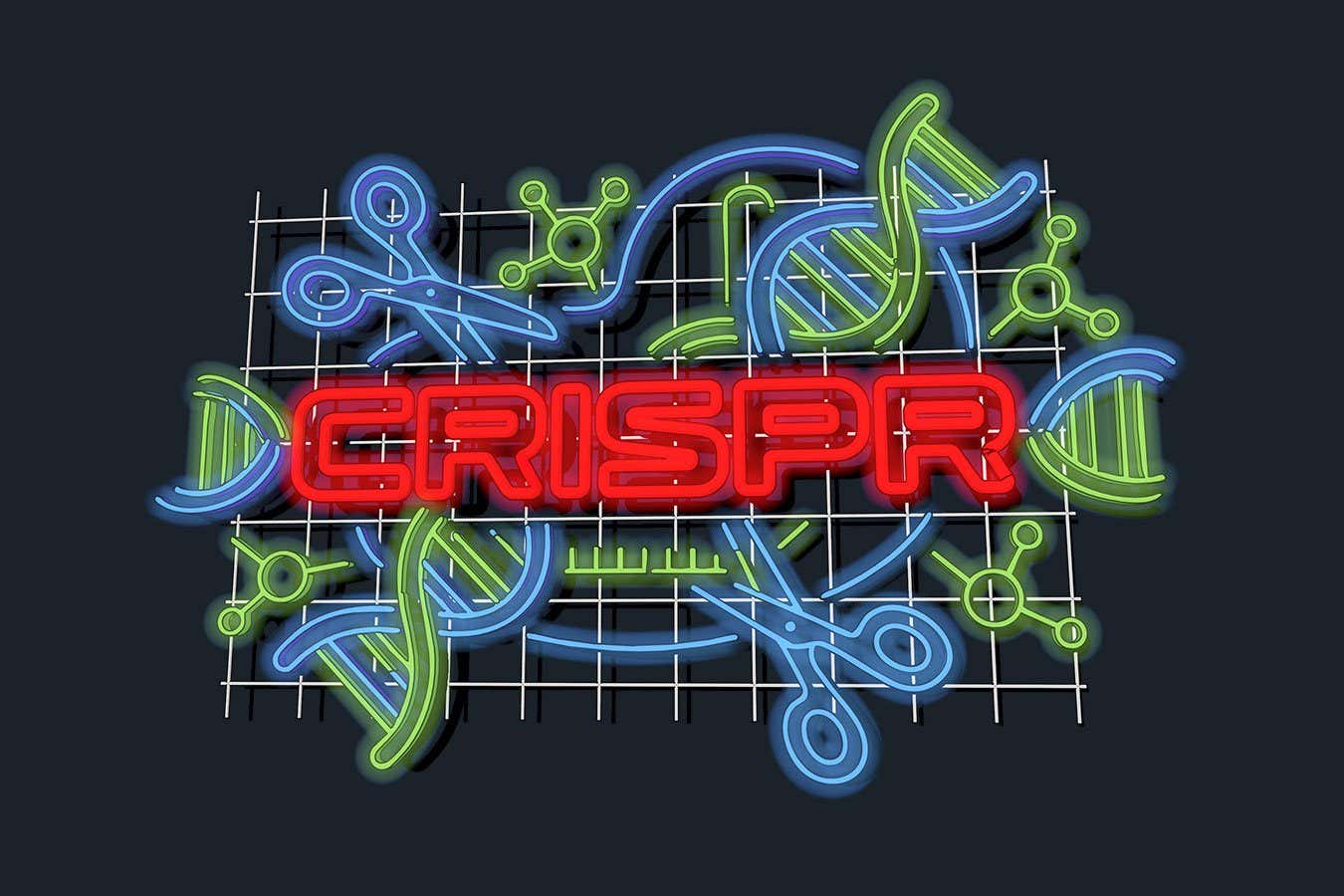
    CRISPR can rewrite our genetic code: Best ideas of the century

    Team_Benjamin Franklin InstituteBy Team_Benjamin Franklin InstituteFebruary 2, 2026No Comments3 Mins Read
    Share Facebook Twitter Pinterest Copy Link LinkedIn Tumblr Email VKontakte Telegram
    Share
    Facebook Twitter Pinterest Email Copy Link


    “The pain was like being struck by lightning and hit by a freight train all at the same time,” Victoria Gray told New Scientist in 2023. “Now everything is different for me.”

    Gray used to experience severe episodes of sickle cell disease, but in 2019 she was effectively cured by a revolutionary technique that enables changes to be made to specific bits of our DNA: CRISPR gene editing. In 2023, that experimental treatment became the first approved CRISPR therapy.

    There are hundreds of clinical trials of CRISPR-based treatments now under way, and this is just the start. CRISPR could help treat all kinds of diseases, not just genetic conditions. For instance, a single dose of CRISPR could reduce your risk of heart attacks and strokes by permanently lowering your cholesterol levels.

    And while it isn’t yet safe enough to attempt, it does seem likely that in the future, CRISPR will be routinely used to alter our children’s genomes to reduce their risk of common diseases.

    CRISPR is also starting to transform farming by making it much easier to develop crops and livestock that are disease-resistant, adapted to warmer conditions or better for eating.

    Given all this, there is no doubt that CRISPR is one of the very best ideas of the 21st century. Its power lies in its ability to correct “spelling mistakes” in DNA. There are two parts to this: first, you have to get your gene-editing tool to the right place in the genome, like moving your cursor to the right spot in a long document on a computer. Next, you make the change.

    Microbes use this mechanism in their battle with other microbes and, prior to 2012, biologists had discovered many natural gene-editing proteins. However, each one targeted just one location, or sequence, in the genome. To edit a different spot, the only option was to redesign the part of the protein that binds to DNA to target another sequence, a laborious process that took years.

    But it turns out that bacteria have evolved a big family of gene-editing proteins that don’t bind to DNA directly. Instead, they hook up with a piece of RNA – a cousin of DNA – and search for sequences that match the RNA. And making RNA takes days, not years.

    In 2012, Jennifer Doudna at the University of California, Berkeley, and her colleague Emmanuelle Charpentier at the Max Planck Institute for Infection Biology in Berlin showed how one of these gene-editing proteins, called CRISPR Cas9, could be made to target any desired sequence by adding the right form of “guide RNA”.

    There are now thousands of variants of CRISPR being used for many purposes, but all rely on guide-RNA targeting. It is a world-changing technology, for which Doudna and Charpentier were awarded a Nobel prize in 2020.

    Topics:


    Source link

    Share. Facebook Twitter Pinterest LinkedIn Tumblr Email Telegram Copy Link

    Related Posts

    Science

    We may finally have a cure for many different autoimmune conditions

    May 2, 2026
    Science

    2026 will be the hottest year on record, leading scientist predicts

    May 1, 2026
    Science

    NHS England rushes to hide software over AI hacking fears

    May 1, 2026
    Science

    Oak trees use delaying tactics to thwart hungry caterpillars

    May 1, 2026
    Science

    Your oral microbiome could affect your weight, liver and diabetes risk

    May 1, 2026
    Science

    The best new science fiction books of May 2026 include a new Murderbot and books from Alan Moore and Ann Leckie

    May 1, 2026
    Editors Picks

    Paul George’s return shows silver lining to suspension

    March 26, 2026

    Tina Knowles Says White Couple Cut Her In Line In ‘Racially Charged’ Incident

    November 21, 2025

    At least eight people die in record-breaking heatwave across Europe | Climate Crisis News

    July 2, 2025

    Timothée Chalamet’s Love Life Sparks Shock Fan Exit

    April 30, 2026

    How rethinking your relationship with time could give you more of it

    January 11, 2026
    About Us
    About Us

    Welcome to Benjamin Franklin Institute, your premier destination for insightful, engaging, and diverse Political News and Opinions.

    The Benjamin Franklin Institute supports free speech, the U.S. Constitution and political candidates and organizations that promote and protect both of these important features of the American Experiment.

    We are passionate about delivering high-quality, accurate, and engaging content that resonates with our readers. Sign up for our text alerts and email newsletter to stay informed.

    Latest Posts

    The Kentucky Derby is Saturday. Here’s how to watch

    May 2, 2026

    We may finally have a cure for many different autoimmune conditions

    May 2, 2026

    Market Talk – May 1, 2026

    May 1, 2026

    Subscribe for Updates

    Stay informed by signing up for our free news alerts.

    Paid for by the Benjamin Franklin Institute. Not authorized by any candidate or candidate’s committee.
    • Privacy Policy
    • About us
    • Contact us

    Type above and press Enter to search. Press Esc to cancel.