
Close Menu
    Trending
    • Dodgers’ Edwin Diaz shares major injury update
    • Opinion | What Body Cam Footage Reveals About ICE’s Tactics
    • We obtained nearly 1,000 complaints about SpaceX’s Starlink. Here’s what they reveal
    • City birds appear more afraid of women than men, and scientists have no idea why
    • Google Partners With The Pentagon To Sell Your Data
    • ‘Friends’ Star Confirms Astronomical Residual Earnings
    • Panama Canal reaffirms ‘neutrality’ amid Mideast war
    • How the Iran war is hitting the UK | US-Israel war on Iran News
    Benjamin Franklin Institute
    Wednesday, April 29
    • Home
    • Politics
    • Business
    • Science
    • Technology
    • Arts & Entertainment
    • International
    Benjamin Franklin Institute
    Home»Science»How to spot the lunar X and V
    Science

    How to spot the lunar X and V

    Team_Benjamin Franklin InstituteBy Team_Benjamin Franklin InstituteJanuary 25, 2026No Comments3 Mins Read
    Share Facebook Twitter Pinterest Copy Link LinkedIn Tumblr Email VKontakte Telegram
    Share
    Facebook Twitter Pinterest Email Copy Link


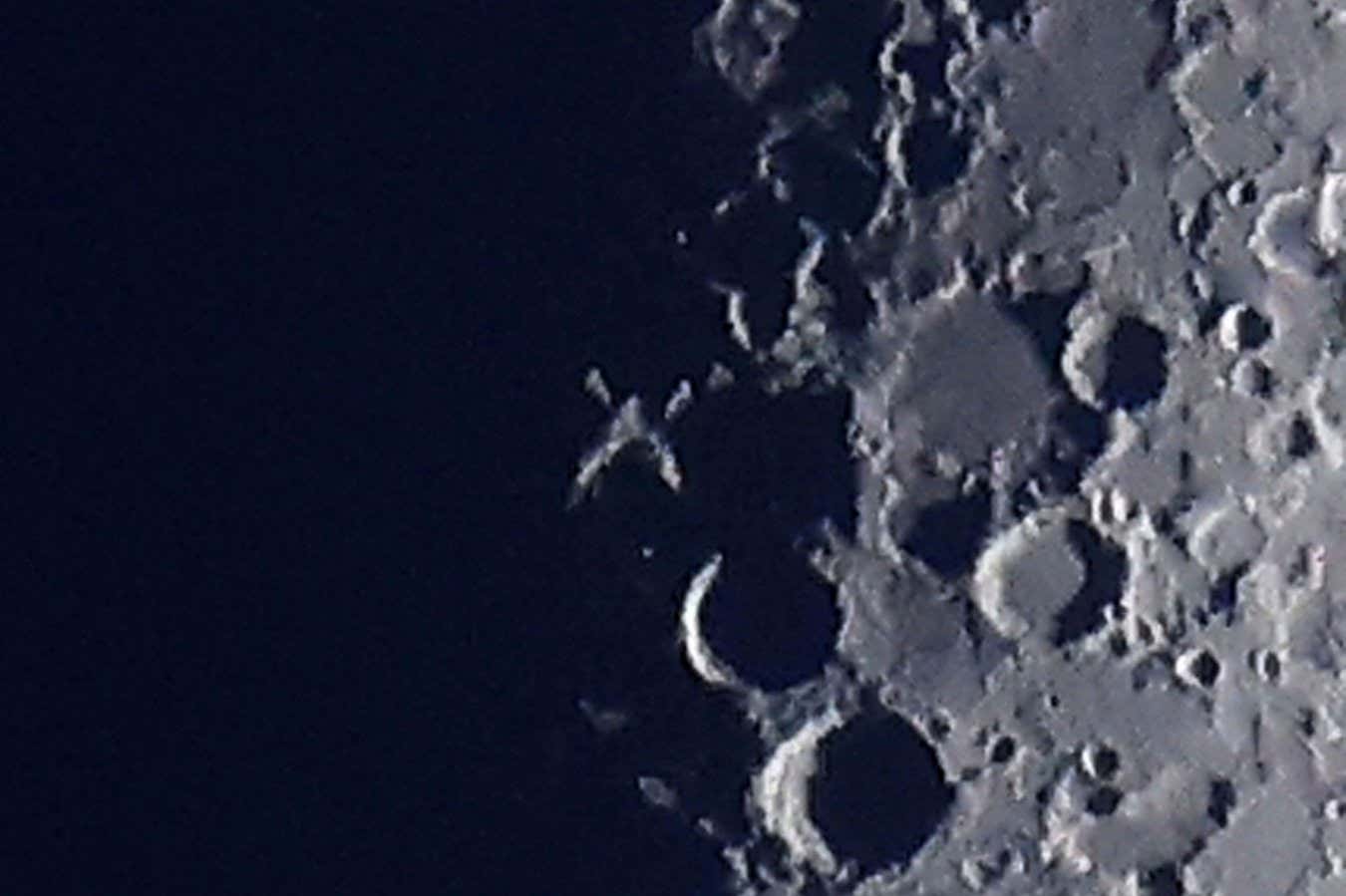
    The lunar X, seen from Tokyo in February 2025

    The Yomiuri Shimbun via AP Images/Alamy

    The first time I took a photograph of the moon through my telescope was almost a decade ago. It was a very amateur set-up. I held up my phone camera to the eyepiece and after capturing a dozen fuzzy images, my shaky hands managed to stay steady for long enough that I got a clear picture of the moon’s surface. I was so proud of the photo that I posted it online.

    I hadn’t realised it back then, but I was photographing the moon during a very specific 4-to-6-hour window that comes around each month. It wasn’t until someone replied to my post that I realised, by sheer chance, I had captured two fleeting features on the lunar surface known as the lunar X and V.

    These marks on the surface of the moon are optical illusions, created by the way sunlight hits the rims of specific craters. And they are only visible during the moon’s first quarter phase, when the line between light and shade – known as the terminator – sits at exactly the right spot.

    The lunar X (pictured) is, as you might imagine, a bright X shape that appears because light falls on the rims of three craters named La Caille, Blanchinus and Purbach. The V is also bright and comes about because of the way light hits a crated called Ukert and other smaller craters nearby.

    To see the lunar X and V, you will need access to a telescope. Other than that, timing is everything. The time to look will always vary depending on where you are in the world – as will the moon’s visibility.

    The next first quarter of the moon will be on 26 January at around 5am GMT, but if you live in the UK, the moon will be below the horizon then, so don’t set your alarms. A good place to look from on the night of 25 January into the next morning will be New York, where the first quarter will be around midnight. This means the X and V will be visible from around 10pm to 2am. In other parts of the world, it will be daylight, so the moon won’t be visible. From Sydney, for example, the January first quarter will be at around 3pm.

    If you hope to see the lunar X and V, your best bet is to find a first quarter moon that falls within a good window for observing the moon from where you live – in other words, when it’s dark and the moon is high in the sky. You can use software such as Stellarium to check whether the moon will be visible at a specific time and date, and where it will be in the sky.

    The next first quarters are on 24 February, 25 March and 24/25 April. If you live in the UK, like me, 25 March is a good one to aim for, since it falls at around 7pm local time.

    Knowing how many factors must align for the lunar X and V to be visible, I feel incredibly lucky that the first time I managed to take a photo of the moon’s surface, these two tricks of light happened to be on display.


    These articles are posted each week at
    newscientist.com/maker

    Abigail Beall is the specials editor at New Scientist and author of The Art of Urban Astronomy. Follow her @abbybeall

    Topics:


    Source link

    Share. Facebook Twitter Pinterest LinkedIn Tumblr Email Telegram Copy Link

    Related Posts

    Science

    City birds appear more afraid of women than men, and scientists have no idea why

    April 29, 2026
    Science

    NASA chief Jared Isaacman hints at campaign to make Pluto a planet again

    April 29, 2026
    Science

    Cancer is increasing in young people and we still don’t know why

    April 29, 2026
    Science

    People are betting on measles outbreaks – and that might be useful

    April 29, 2026
    Science

    Striking photo essay examines deadly spread of dengue fever in Nepal

    April 28, 2026
    Science

    Watch Astrobotic’s latest record-breaking ‘ring of fire’ rocket engine test

    April 28, 2026
    Editors Picks

    Five employees of Canadian mine found dead in Mexico, authorities say | Mining News

    February 10, 2026

    Mastercard CEO Michael Miebach explains the future of global spending

    January 19, 2026

    Beyond the Quantum review: A remarkable book on quantum mechanics reveals a really big idea

    January 31, 2026

    ‘Alarming’ medicine shortages in Gaza amid Israeli restrictions | Israel-Palestine conflict News

    December 22, 2025

    Grammy winners 2026: Bad Bunny, Kendrick Lamar and ICE criticism | Arts and Culture News

    February 2, 2026
    About Us
    About Us

    Welcome to Benjamin Franklin Institute, your premier destination for insightful, engaging, and diverse Political News and Opinions.

    The Benjamin Franklin Institute supports free speech, the U.S. Constitution and political candidates and organizations that promote and protect both of these important features of the American Experiment.

    We are passionate about delivering high-quality, accurate, and engaging content that resonates with our readers. Sign up for our text alerts and email newsletter to stay informed.

    Latest Posts

    Dodgers’ Edwin Diaz shares major injury update

    April 29, 2026

    Opinion | What Body Cam Footage Reveals About ICE’s Tactics

    April 29, 2026

    We obtained nearly 1,000 complaints about SpaceX’s Starlink. Here’s what they reveal

    April 29, 2026

    Subscribe for Updates

    Stay informed by signing up for our free news alerts.

    Paid for by the Benjamin Franklin Institute. Not authorized by any candidate or candidate’s committee.
    • Privacy Policy
    • About us
    • Contact us

    Type above and press Enter to search. Press Esc to cancel.