
Close Menu
    Trending
    • Most Leaders Misunderstand Authenticity — and It’s Costing Them Credibility With Key Stakeholders
    • Greatest science books: After news about Oliver Sacks’s “lies”, we reread The Man Who Mistook His Wife for a Hat
    • Did Miley Cyrus’s Mom Just Reveal Secret Wedding?
    • Commentary: From Iran to Ukraine, lasting ceasefires remain elusive
    • Gas explosion at Chinese coal mine kills at least 90 | Mining News
    • NBA insider names five potential landing spots for LeBron James
    • Black Rifle Coffee Co-Founder’s New Memorial Day Music Video
    • How a visit to Stonehenge reminded me of deep time
    Benjamin Franklin Institute
    Saturday, May 23
    • Home
    • Politics
    • Business
    • Science
    • Technology
    • Arts & Entertainment
    • International
    Benjamin Franklin Institute
    Home»Science»Sunscreens made from ground-up wood reach an SPF of over 180
    Science

    Sunscreens made from ground-up wood reach an SPF of over 180

    Team_Benjamin Franklin InstituteBy Team_Benjamin Franklin InstituteJanuary 20, 2026No Comments3 Mins Read
    Share Facebook Twitter Pinterest Copy Link LinkedIn Tumblr Email VKontakte Telegram
    Share
    Facebook Twitter Pinterest Email Copy Link


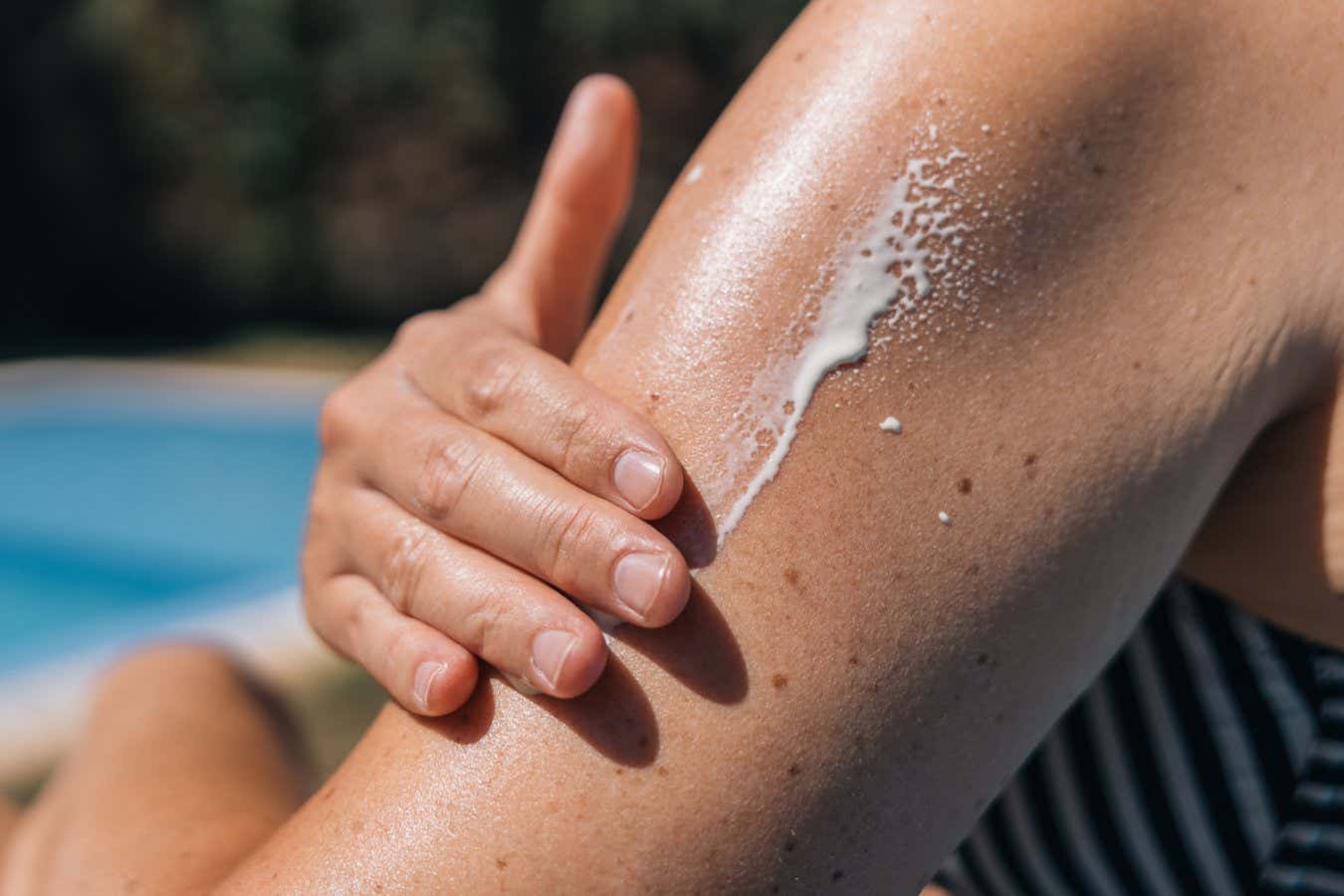
    The hunt for more natural sunscreens is on

    Amparo Garcia/Shutterstock

    Sunscreens enhanced with lignin, a component of wood, can have sun protection factors (SPFs) that exceed 180. They also seem to last longer and penetrate less into the skin than existing products, potentially making them safer.

    Sunscreens are an important defence against skin cancer, but, in recent years, there has been growing unease and confusion regarding their safety. A recent US survey found that 14 per cent of young adults think that daily sunscreen use is more harmful than direct sun exposure.

    This has arisen since the US Food and Drug Administration (FDA) published research showing that several common sunscreen ingredients can get through the skin into the bloodstream. This doesn’t necessarily mean they are harmful, and long-term studies haven’t found risks associated with daily sunscreen use, but the FDA has called for more research to investigate.

    In the meantime, scientists are searching for natural alternatives to existing sunscreen chemicals that may be safer for human health, while also being less harmful to coral and other marine life when they wash off into the oceans.

    One of the most promising sun-protective substances from nature is lignin, which glues plant cell walls together and gives tree trunks strength. It also protects plants from ultraviolet (UV) radiation from the sun.

    A major challenge to utilising lignin has been extracting it from wood. Traditional methods have used harsh chemicals that turn lignin from a light colour to almost black, making it unsuitable for use in sunscreens.

    Now, two groups at South China University of Technology have found ways to extract lignin from wood without darkening it and then used it to make sunscreens.

    One group, led by Jun Li, extracted pale yellow lignin from poplar wood by milling and sieving it into a fine powder. Lignin was then dislodged from the powder using ultrasonic waves. The other group, led by Yong Qian, extracted pale pink lignin from birch wood using a similarly mild procedure.

    Both groups then processed the lignin to turn it into nanoparticles, which they mixed with plain white creams to make sunscreens.

    Subsequent testing showed that the pale yellow lignin sunscreen had an SPF of 20, while the pale pink one had an SPF of 19, making them both moderately effective. They were also broad-spectrum, meaning they protected against the two types of UV radiation that damage the skin, UVA and UVB. When rubbed on the skin, they blended with light skin tones and had a pleasantly smooth feel.

    Since these lignin sunscreens aren’t as protective as many sunscreens on the market, which have SPF values of 50+, Qian and his colleagues tried combining them with existing ingredients. When the team encapsulated two common sunscreen ingredients, avobenzone and octinoxate, inside lignin nanoparticles, their SPF jumped up to more than 180. It should be noted, however, that sunscreens can’t be marketed as more than SPF 50+ because SPF values above 50 don’t provide much more protection, because of the way the scale works.

    Putting existing sunscreens inside lignin nanoparticles also made them more resistant to breakdown, allowing them to last longer in the sun. It also stopped them from penetrating the skin, potentially making them safer.

    Qian says he and his colleagues are now further testing one of their lignin nanoparticle sunscreens on people. So far, “it is safe and has good sunscreen performance,” he says.

    Aside from lignin, other sun-protective substances from nature that are being investigated include components of seaweed, ferns, squid and human hair.

    Topics:


    Source link

    Share. Facebook Twitter Pinterest LinkedIn Tumblr Email Telegram Copy Link

    Related Posts

    Science

    Greatest science books: After news about Oliver Sacks’s “lies”, we reread The Man Who Mistook His Wife for a Hat

    May 23, 2026
    Science

    How a visit to Stonehenge reminded me of deep time

    May 23, 2026
    Science

    Experimental mRNA vaccine may protect against multiple Ebola viruses

    May 23, 2026
    Science

    Mercury may have gained all of its unexpected water in a single day

    May 22, 2026
    Science

    Political anger affects the body differently to other forms of anger

    May 22, 2026
    Science

    Australia is battling its largest diphtheria outbreak in living memory

    May 22, 2026
    Editors Picks

    Crystal-based cooling could make fridges more sustainable

    January 3, 2025

    Timothée Chalamet’s Bizarre Remark About His Butt In ‘Marty Supreme’

    December 26, 2025

    Jonah Hill Revisits Kanye West’s ‘Bizarre’ Past With Love

    April 7, 2026

    What San Francisco’s AI billboards say about the state of the industry

    April 17, 2026

    Axolotls can regenerate their thymus, a complex immune system organ

    February 15, 2026
    About Us
    About Us

    Welcome to Benjamin Franklin Institute, your premier destination for insightful, engaging, and diverse Political News and Opinions.

    The Benjamin Franklin Institute supports free speech, the U.S. Constitution and political candidates and organizations that promote and protect both of these important features of the American Experiment.

    We are passionate about delivering high-quality, accurate, and engaging content that resonates with our readers. Sign up for our text alerts and email newsletter to stay informed.

    Latest Posts

    Most Leaders Misunderstand Authenticity — and It’s Costing Them Credibility With Key Stakeholders

    May 23, 2026

    Greatest science books: After news about Oliver Sacks’s “lies”, we reread The Man Who Mistook His Wife for a Hat

    May 23, 2026

    Did Miley Cyrus’s Mom Just Reveal Secret Wedding?

    May 23, 2026

    Subscribe for Updates

    Stay informed by signing up for our free news alerts.

    Paid for by the Benjamin Franklin Institute. Not authorized by any candidate or candidate’s committee.
    • Privacy Policy
    • About us
    • Contact us

    Type above and press Enter to search. Press Esc to cancel.