
Close Menu
    Trending
    • Violence Breaks Out in Australia Over Indigenous Girl’s Killing
    • Kim Zolciak Loses Custody Again Amid Divorce Fight
    • Trump says ‘not satisfied’ with new Iran proposal
    • US warns shippers against paying Strait of Hormuz tolls, ‘donations’ | US-Israel war on Iran News
    • Mets confirm Carlos Mendoza plan amid dreadful start to season
    • Raising Cane’s is opening new locations this month and your city might be on the list
    • NHS England rushes to hide software over AI hacking fears
    • Chris Brown Ex Maid Fights To Show Bloody Pics In Court
    Benjamin Franklin Institute
    Friday, May 1
    • Home
    • Politics
    • Business
    • Science
    • Technology
    • Arts & Entertainment
    • International
    Benjamin Franklin Institute
    Home»Science»T. rex took 40 years to become fully grown
    Science

    T. rex took 40 years to become fully grown

    Team_Benjamin Franklin InstituteBy Team_Benjamin Franklin InstituteJanuary 14, 2026No Comments3 Mins Read
    Share Facebook Twitter Pinterest Copy Link LinkedIn Tumblr Email VKontakte Telegram
    Share
    Facebook Twitter Pinterest Email Copy Link


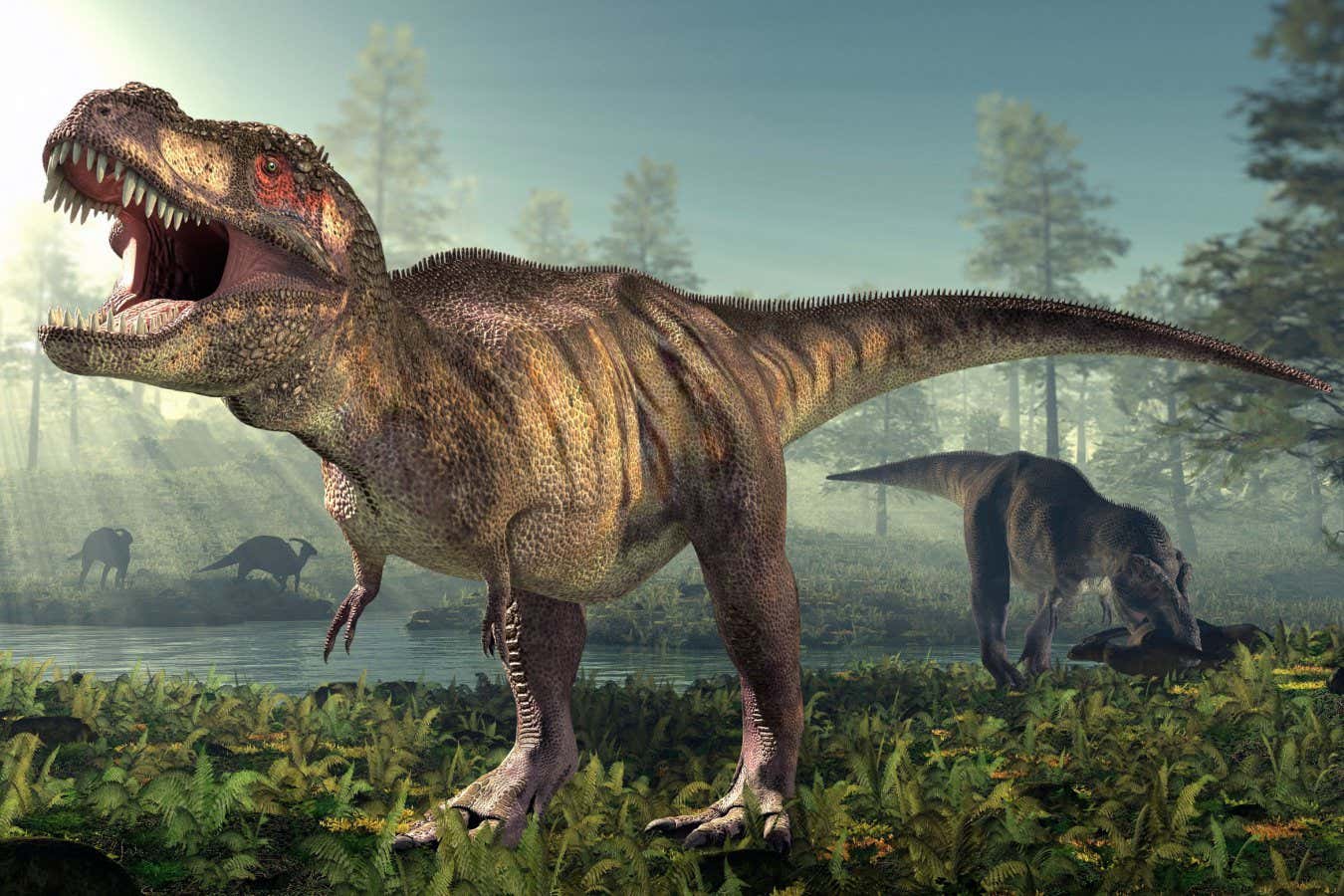
    Tyrannosaurus rex was a late bloomer

    Science Photo Library / Alamy

    The largest-ever analysis of Tyrannosaurus rex fossils suggests the giant and fierce Cretaceous predator was a late bloomer, taking 35 to 40 years to reach maturity.

    The findings also further the debate about whether there were several T. rex species instead of just one and whether smaller specimens, once thought to be juveniles, are in fact a more diminutive species called Nanotyrannus.

    Based on studies done two decades ago, it had been thought that T. rex reached its maximum weight of 8 tonnes in around two decades and that the animals probably only lived until they were 30 years old.

    “The last big T. rex growth studies were done in the early 2000s, based on, at most, seven specimens,” says Holly Ballard at Oklahoma State University. “This wasn’t the fault of the researchers, this is just what was available at the time.”

    This time, Ballard and her colleagues were able to sample the thigh and shin bones of 17 individuals, ranging in age from juvenile to fully-grown adults, making it the largest collection of growth data ever assembled on T. rex.

    The scientists studied bone tissue microstructure, including growth rings that form annually like those in a tree trunk. However, the earliest growth rings are destroyed as the bone marrow cavity gets larger, so the team needed access to as many specimens as possible with overlapping growth stages.

    “That’s why our sample size and age spread is so important and what makes it different from earlier studies,” says Ballard.

    The analysis reveals that T. rex grew more slowly than previously thought and that its growth rate was variable depending on environmental conditions.

    However, it isn’t possible to determine the maximum age of T. rex because once the animals reached maturity, they ceased laying down growth rings. “We can say the most successful T. rex lived to about 40, but there were very few that made it to that age – only two specimens in our sample had reached adult size,” says Ballard.

    Another two of the specimens grew more slowly than the others, opening the possibility that they may be other species, such as Nanotyrannus, or part of a “Tyrannosaurus complex”, says Ballard. “We propose, based on their growth differences, they are either a different species, or perhaps they are sick or injured T. rex, or perhaps dwarfed for some environmental reason.”

    Lindsay Zanno at the North Carolina Museum of Natural Sciences says it is the most thorough examination of Tyrannosaurus growth yet conducted. Her study of a dinosaur fossil from Montana, published last year, concluded that the specimen was a small tyrannosaur that was fully grown at about 20 years old, tentatively named Nanotyrannus lancensis.

    “It’s exciting to finally have a growth curve for Tyrannosaurus that we can feel confident in,” says Zanno. “It’s also thrilling to see yet another study validate our work on Nanotyrannus in just the past few months.”

    Thomas Carr at Carthage College in Wisconsin is cautious about whether T. rex should be split into different species, but he anticipates that the study will have broad ramifications for dinosaur researchers.

    “I expect that the estimates of growth curves of other dinosaurs will now have to be revisited,” says Carr. “Overall, we’ll see a shift in our understanding of dinosaur development across the board.”

    New Scientist. Science news and long reads from expert journalists, covering developments in science, technology, health and the environment on the website and the magazine.

    Dinosaur hunting in the Gobi desert, Mongolia

    Embark on an exhilarating and one-of-a-kind expedition to uncover dinosaur remains in the vast wilderness of the Gobi desert, one of the world’s most famous palaeontological hotspots.

    Topics:


    Source link

    Share. Facebook Twitter Pinterest LinkedIn Tumblr Email Telegram Copy Link

    Related Posts

    Science

    NHS England rushes to hide software over AI hacking fears

    May 1, 2026
    Science

    Oak trees use delaying tactics to thwart hungry caterpillars

    May 1, 2026
    Science

    Your oral microbiome could affect your weight, liver and diabetes risk

    May 1, 2026
    Science

    The best new science fiction books of May 2026 include a new Murderbot and books from Alan Moore and Ann Leckie

    May 1, 2026
    Science

    Weird ‘transdimensional’ state of matter is neither 2D nor 3D

    May 1, 2026
    Science

    ‘Green’ cryptocurrency uses 18 times more energy than makers claim

    April 30, 2026
    Editors Picks

    Four new astronauts arrive at the International Space Station to replace NASA’s evacuated crew

    February 15, 2026

    Invences Provides Smart Telecom Networks to Small Firms

    March 30, 2026

    Do you have these 5 emotional intelligence traits that are key for building trust?

    January 17, 2026

    Anthropic is refusing to bend on AI safeguards as dispute with Pentagon nears deadline

    February 27, 2026

    Fatal ICE shooting of Minneapolis activist sets stage for national protests

    January 10, 2026
    About Us
    About Us

    Welcome to Benjamin Franklin Institute, your premier destination for insightful, engaging, and diverse Political News and Opinions.

    The Benjamin Franklin Institute supports free speech, the U.S. Constitution and political candidates and organizations that promote and protect both of these important features of the American Experiment.

    We are passionate about delivering high-quality, accurate, and engaging content that resonates with our readers. Sign up for our text alerts and email newsletter to stay informed.

    Latest Posts

    Violence Breaks Out in Australia Over Indigenous Girl’s Killing

    May 1, 2026

    Kim Zolciak Loses Custody Again Amid Divorce Fight

    May 1, 2026

    Trump says ‘not satisfied’ with new Iran proposal

    May 1, 2026

    Subscribe for Updates

    Stay informed by signing up for our free news alerts.

    Paid for by the Benjamin Franklin Institute. Not authorized by any candidate or candidate’s committee.
    • Privacy Policy
    • About us
    • Contact us

    Type above and press Enter to search. Press Esc to cancel.