
Close Menu
    Trending
    • I Thought Leading Meant Having All the Answers. I Was Wrong.
    • Mesmerizing NASA time-lapse reveals Mars’s craters, polar ice caps and deserts
    • Tech Life – Smell the future
    • Market Talk – July 21, 2026
    • The People Who Burned Cities to Beat Trump are Back and They’re FURIOUS * The Gateway Pundit * by Promoted Post
    • MrBeast Secretly Marries Thea Booysen On Private Island
    • Canada evaluating ‘all options’ after fresh US tariffs threat
    • US judge blocks Trump bid to strip work permits from immigrants | Courts News
    Benjamin Franklin Institute
    Tuesday, July 21
    • Home
    • Politics
    • Business
    • Science
    • Technology
    • Arts & Entertainment
    • International
    Benjamin Franklin Institute
    Home»Science»The world will soon be losing 3000 glaciers every year
    Science

    The world will soon be losing 3000 glaciers every year

    Team_Benjamin Franklin InstituteBy Team_Benjamin Franklin InstituteDecember 15, 2025No Comments3 Mins Read
    Share Facebook Twitter Pinterest Copy Link LinkedIn Tumblr Email VKontakte Telegram
    Share
    Facebook Twitter Pinterest Email Copy Link


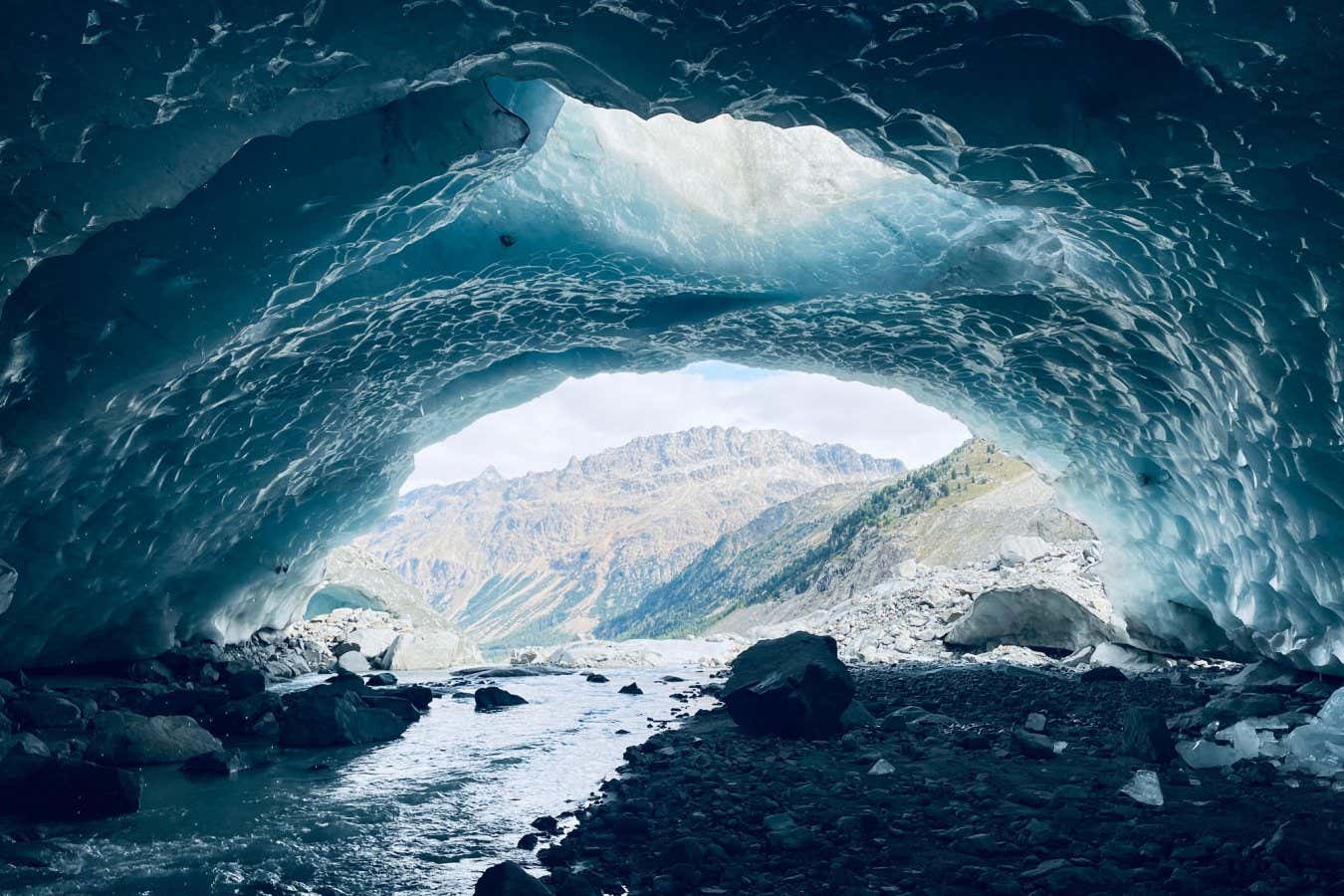
    Meltwater runs through a glacier cave at the front of Morteratsch glacier in Switzerland

    Lander Van Tricht

    About 1000 glaciers are now being lost every year and this rate could climb to 3000 per year as soon as 2040, even if countries meet their targets to cut carbon emissions.

    At least 4000 glaciers have melted away in the past two decades. Lander Van Tricht at ETH Zurich in Switzerland and his colleagues used climate models to predict what will happen to the world’s 211,000 glaciers in the coming century under different global warming scenarios.

    Current climate goals put the world on track for 2.7°C of warming above pre-industrial temperatures this century. This would mean 79 per cent of the world’s glaciers will disappear by 2100. If humanity limits global warming to 2°C, however, 63 per cent of glaciers will disappear.

    “We’re going to lose many of our glaciers, but we have the ability to preserve a lot of them as well,” says David Rounce at Carnegie Mellon University in Pittsburgh, Pennsylvania, who worked on the study.

    If countries don’t meet their targets and the world warms by 4°C, 91 per cent of glaciers will be lost.

    Glacier melt is projected to boost sea levels by 25 centimetres this century. It will also undercut the summer melt that many regions rely on for irrigation. Two billion people live in drainage basins fed by mountain snow and ice, many near rivers originating from Himalayan glaciers.

    Melting ice also means that floods caused by a sudden release of water from a glacial lake are becoming more frequent, like the one that killed 55 people in India in 2023.

    Previous research found that half of all glaciers would melt away this century even if humanity restricted warming to 1.5°C, the most ambitious Paris Agreement goal. This study upgrades those estimates, finding that 55 per cent would be lost with this amount of warming.

    It also projects the rate of glacier loss by year and by region. This rate will peak around mid-century, then slow once smaller mountain glaciers are gone and bigger ones are left, such as in the Arctic and Antarctica.

    “The larger ones, it just takes a lot of time to melt the ice, [so] they will disappear later,” says Van Tricht.

    Under current climate targets, western Canada and the contiguous US will lose almost all glaciers by 2100. In a blow to tourism, Glacier National Park in Montana will be largely bereft of glaciers, although some could remain as miniature glaciers or ice patches, according to upcoming research from the United States Geological Survey.

    The Alps will also be almost bare. Communities are already holding funerals for glaciers, and the Global Glacier Casualty List website is collecting their stories. Matthias Huss at ETH Zurich, who worked on the study, and 250 other people climbed to the remains of Pizol glacier in 2019.

    They came to say goodbye, but also to tell the public “we are attached to our glaciers,” says Huss. “If they are gone, it matters to us.”

    Topics:


    Source link

    Share. Facebook Twitter Pinterest LinkedIn Tumblr Email Telegram Copy Link

    Related Posts

    Science

    Mesmerizing NASA time-lapse reveals Mars’s craters, polar ice caps and deserts

    July 21, 2026
    Science

    How a Futurama plotline led to a totally new math proof

    July 21, 2026
    Science

    Rare double supernova discovered hiding in Jellyfish Nebula

    July 21, 2026
    Science

    This tiny, forgotten organ could help us live longer, healthier

    July 21, 2026
    Science

    A single aspen clone in Utah called Pando covers 106 acres, weighs about 6,000 tonnes, and shares one root system that makes it a single organism roughly 14,000 years old, quietly dying now from mule deer eating every young shoot before it can grow

    July 21, 2026
    Science

    A bitter irony sits in the credits of The Wolf of Wall Street: prosecutors say this film about financial fraud was itself part-funded with money looted from Malaysia’s 1MDB fund — fraud, in effect, bankrolling its own movie

    July 21, 2026
    Editors Picks

    PSG beat Arsenal to win back-to-back Champions League titles after shootout | Football News

    May 31, 2026

    Cannibalism may explain why some orcas stay in family groups

    February 24, 2026

    Cannes Debut, amfAR Gala With BFF Tara Reid & Hot New Single

    June 10, 2026

    Ines de Ramon Wins Big But Brad Pitt Says ‘No’ Again

    June 25, 2026

    Top Goldman Sachs lawyer Kathy Ruemmler resigns over Epstein ties | Business and Economy News

    February 13, 2026
    About Us
    About Us

    Welcome to Benjamin Franklin Institute, your premier destination for insightful, engaging, and diverse Political News and Opinions.

    The Benjamin Franklin Institute supports free speech, the U.S. Constitution and political candidates and organizations that promote and protect both of these important features of the American Experiment.

    We are passionate about delivering high-quality, accurate, and engaging content that resonates with our readers. Sign up for our text alerts and email newsletter to stay informed.

    Latest Posts

    I Thought Leading Meant Having All the Answers. I Was Wrong.

    July 21, 2026

    Mesmerizing NASA time-lapse reveals Mars’s craters, polar ice caps and deserts

    July 21, 2026

    Tech Life – Smell the future

    July 21, 2026

    Subscribe for Updates

    Stay informed by signing up for our free news alerts.

    Paid for by the Benjamin Franklin Institute. Not authorized by any candidate or candidate’s committee.
    • Privacy Policy
    • About us
    • Contact us

    Type above and press Enter to search. Press Esc to cancel.