
Close Menu
    Trending
    • Netanyahu says he was successfully treated for prostate cancer
    • Negotiations that enable Israel’s land-grabs | Israel-Palestine conflict
    • True-or-false for Round 1 of 2026 NFL Draft: Will Cowboys regret their trade?
    • Opinion | Stewart Brand, Silicon Valley’s Favorite Prophet, on Life’s Most Important Principle
    • Struggling to scale your company? Here are five things that could be holding you back
    • What happens if you’re hit by a primordial black hole?
    • When is London Marathon 2026? Start time and how to watch race for FREE
    • Pentagon Requests $54 Billion For AI War
    Benjamin Franklin Institute
    Friday, April 24
    • Home
    • Politics
    • Business
    • Science
    • Technology
    • Arts & Entertainment
    • International
    Benjamin Franklin Institute
    Home»Science»Genetic trick to make mosquitoes malaria resistant passes key test
    Science

    Genetic trick to make mosquitoes malaria resistant passes key test

    Team_Benjamin Franklin InstituteBy Team_Benjamin Franklin InstituteDecember 13, 2025No Comments3 Mins Read
    Share Facebook Twitter Pinterest Copy Link LinkedIn Tumblr Email VKontakte Telegram
    Share
    Facebook Twitter Pinterest Email Copy Link


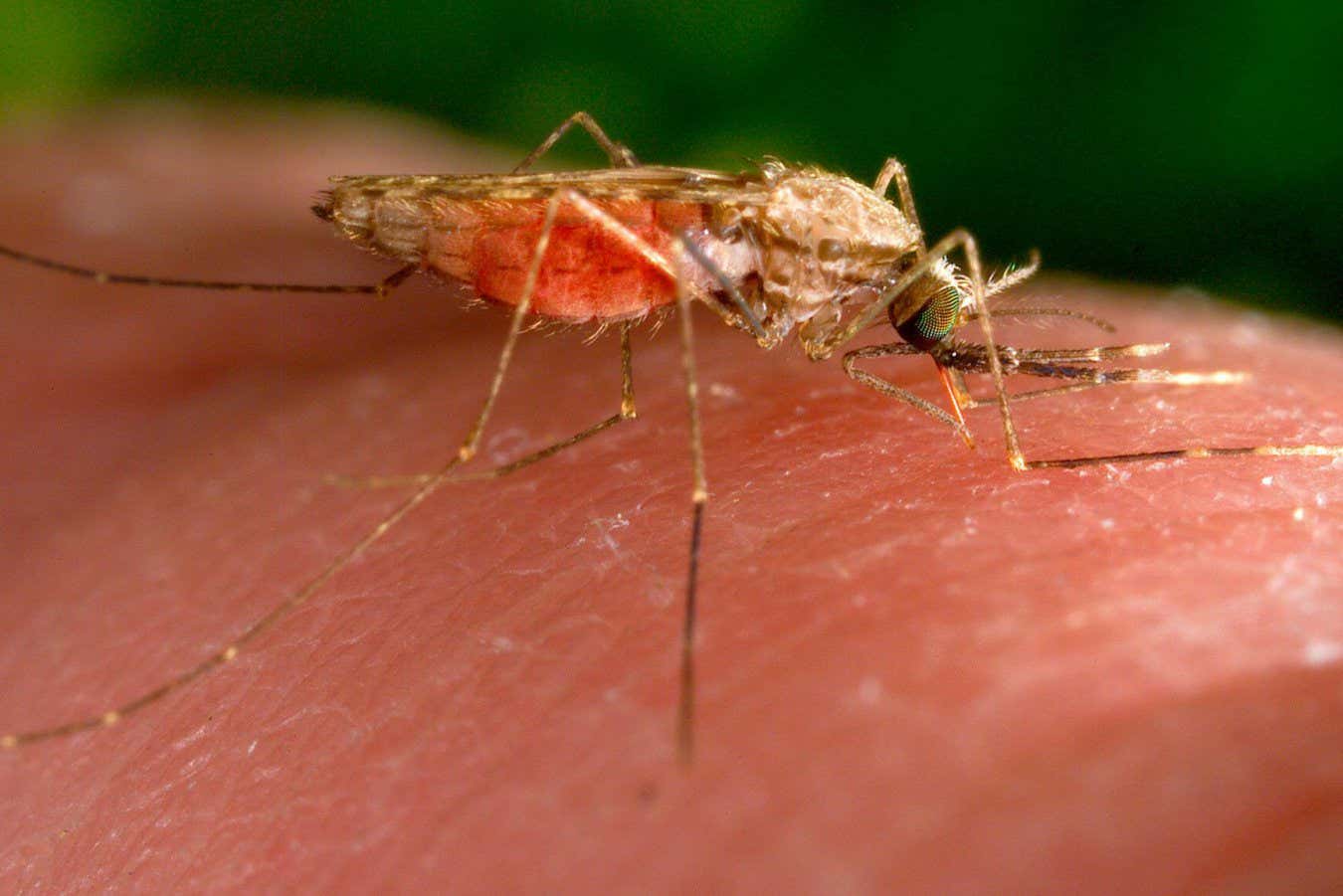
    Scientists tested the approach on Anopheles gambiae mosquitoes, which are endemic to Tanzania, where they transmit malaria

    James Gathany/CDC via AP/Alamy

    A genetic technology known as a gene drive could help prevent malaria by spreading genes in wild mosquitoes that stop them transmitting the parasite. Tests in a lab in Tanzania have now confirmed that one potential gene drive should achieve this if it were released in the country.

    “It would be a game-changing technology, that’s for sure,” says George Christophides at Imperial College London.

    A specific piece of DNA in the genome of an animal is normally passed on to only half its offspring, because a parent’s DNA is divided in half among egg or sperm. Gene drives increase this proportion, meaning a bit of DNA can spread rapidly through a population even if it provides no evolutionary benefit.

    There are many natural gene drives that work via all kinds of mechanisms – perhaps even in some human populations – and in 2013, biologists developed artificial gene drives using CRISPR gene-editing technology, which works by copying pieces of DNA from one chromosome to another.

    The idea is to use these drives to spread bits of DNA that block malaria transmission – but which bits? Christophides reported in 2022 that the development of malaria parasites inside mosquitoes can be greatly reduced by two tiny proteins, one derived from honeybees and the other from the African clawed frog. The added genes for these antimalarial proteins can be linked to the gene for an enzyme that helps mosquitoes digest blood, so the antimalarial proteins are made after a mosquito feeds and get secreted into its gut.

    But these tests were done using lab strains of mosquitoes and malarial parasites collected decades ago, so it wasn’t clear if this approach would work in Africa today.

    Now, researchers including Christophides and Dickson Lwetoijera at the Ifakara Health Institute in Tanzania have modified local Anopheles gambiae mosquitoes to produce the components of a gene drive based on this approach. The components were kept separate, meaning the gene drive cannot spread, and the mosquitoes were housed in a secure facility.

    Tests show robust inhibition of malaria parasites taken from infected children, and also effective copying of the genes for the antimalarial proteins. “So we are now able to say that this technology could work in the field,” says Christophides.

    The next step will be to release mosquitoes that produce the antimalarial proteins on an island in Lake Victoria, to see how they behave in the wild. The team is engaging with local communities there as well as carrying out risk assessments, says Lwetoijera. “To date, the political and public support has remained positive.”

    The hope is that the gene drive could help eliminate malaria from areas where A. gambiae is the only species spreading malaria, says Christophides. “A gene drive may turn the tide,” he says.

    Several other groups are also working on gene drives for controlling malaria, and the technology is also being developed for controlling various pests.

    Genetically modified mosquitoes are already being released to control wild mosquito populations in some countries, but these approaches rely on continually releasing very large numbers of the insects.

    Topics:


    Source link

    Share. Facebook Twitter Pinterest LinkedIn Tumblr Email Telegram Copy Link

    Related Posts

    Science

    What happens if you’re hit by a primordial black hole?

    April 24, 2026
    Science

    How do earthquakes end? A seismic ‘stop sign’ could help predict earthquake risk

    April 24, 2026
    Science

    ‘Kraken’ fossils show enormous, intelligent octopuses were top predators in Cretaceous seas

    April 24, 2026
    Science

    Largest ever octopus was great white shark of invertebrate predators

    April 24, 2026
    Science

    Do you need to worry about Mythos, Anthropic’s computer-hacking AI?

    April 23, 2026
    Science

    How many dachshunds would it take to get to the moon?

    April 23, 2026
    Editors Picks

    Opinion | China Will Be Thrilled if Trump Kills America’s Green Economy

    January 23, 2025

    New Amanda Knox Documentary Shows A Different Side To Her

    January 25, 2026

    Supposedly distinct psychiatric conditions may have same root causes

    December 11, 2025

    Victoria Beckham Facing Her ‘Worst Nightmare’ Amid Rift With Son Brooklyn

    May 7, 2025

    US still pushing for big territorial concessions from Ukraine: Zelenskyy

    December 12, 2025
    About Us
    About Us

    Welcome to Benjamin Franklin Institute, your premier destination for insightful, engaging, and diverse Political News and Opinions.

    The Benjamin Franklin Institute supports free speech, the U.S. Constitution and political candidates and organizations that promote and protect both of these important features of the American Experiment.

    We are passionate about delivering high-quality, accurate, and engaging content that resonates with our readers. Sign up for our text alerts and email newsletter to stay informed.

    Latest Posts

    Netanyahu says he was successfully treated for prostate cancer

    April 24, 2026

    Negotiations that enable Israel’s land-grabs | Israel-Palestine conflict

    April 24, 2026

    True-or-false for Round 1 of 2026 NFL Draft: Will Cowboys regret their trade?

    April 24, 2026

    Subscribe for Updates

    Stay informed by signing up for our free news alerts.

    Paid for by the Benjamin Franklin Institute. Not authorized by any candidate or candidate’s committee.
    • Privacy Policy
    • About us
    • Contact us

    Type above and press Enter to search. Press Esc to cancel.