

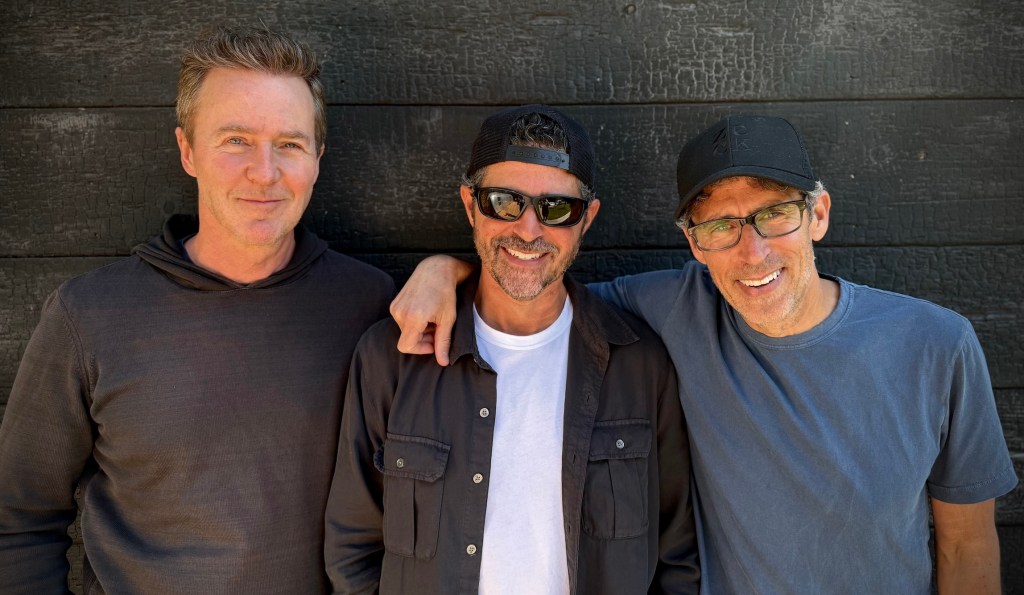
Robert Wolfe describes his company Zeck in one brutally efficient line: “We’re reimagining the entire miserable, archaic board meeting process.” After building and selling two companies with his brother Jeffrey Wolfe — outdoor retailer Moosejaw to Walmart and charitable giving platform Crowdrise to GoFundMe, where the brothers partnered with investor/actor Edward Norton — Wolfe realized his personal experiences with boardroom pain weren’t unique. “We thought we were the only ones who were having this challenge,” he told Entrepreneur, “and it wasn’t until after our companies were acquired that we realized this angst we were having was universal.”
The problem: Traditional board decks are 300-page PDFs that no one can easily read on their phone, are filled with backward-looking reporting and inspire very little strategic conversation. “For all participants, it was a valueless process,” Wolfe says of his earlier companies’ board meetings. Zeck, he says, was built to flip that model by letting leadership teams plug in their existing data (Google Sheets, Excel, and more), then using AI to pull out exactly what a specific board or investor will care about most. The final product is presented in a format that “looks a lot more like an article you’d read on your website than a slide deck.”
Fast and fun culture
Wolfe’s third startup is built around two simple company culture rules: move fast and have fun. “We realized we’ll probably never be the smartest, but it’s a lot easier to be the fastest,” he says, noting that customers and investors can expect replies within 24 hours, “and more likely within an hour,” even if he’s “flying to Greece.” Speed, he says, is an edge any entrepreneur can adopt: you may not always be able to outthink the competition, but you can out-respond them.
The second pillar—fun—isn’t just fluff. It’s a productivity strategy. “The truth is, if you’re having fun, you’re going to do a better job,” he explains. At Zeck, weekly sales and customer success meetings end with trivia or math questions, where the winner doesn’t get a generic gift card, but might win a DustBuster as a prize. To underscore their philosophy, a quote from the movie The Wedding Crashers appears on the homepage: “When it stops being fun, break something.”
It’s a move from his Crowdwise playbook that served the company well. “Our slogan was, ‘If you don’t give back, no one will like you,’” he laughs. The lesson: injecting humor into serious spaces makes your message stick.
Edward Norton, co-founder and power user
When you think of Edward Norton, you are probably picturing him in his day job as an Oscar-nominated actor, but at Zeck, he’s a co-founder, operator, and, as Wolfe describes it, “a product obsessive.” They originally teamed up on Crowdrise alongside Norton’s now-wife, producer Shauna Robertson, whose credits include Anchorman and Forgetting Sarah Marshall. The idea for Zeck actually came during a trip they took together, when Wolfe ducked away for a three-hour board meeting on Zoom. He came back and told the group, “That was the most miserable three hours,” and told Norton the experience was like the scene in Fight Club where “you were punching yourself in the face.”
The conversation set the Zeck journey in motion, and Wolfe says Norton’s ongoing role could not be further from a celebrity endorsement. “First, he’s so fucking smart, it’s crazy,” Wolfe says. “He’s very strategic and hands-on,” adding that Norton also understands that building a business involves a fair degree of grinding it out. “I’m a big believer in luck,” says Wolfe. “And having Edward as a partner is very, very lucky.”
Lessons from a three-time founder
For Wolfe, Zeck is the culmination of some hard-won lessons about what to do—and what not to do—when building a company. One of his biggest takeaways: never build with “get acquired” as the primary goal. “There is a very big difference between building a great company and building a company to be acquired,” he says. “We are definitely doing the former, having made the mistake of doing the latter.” At Moosejaw, outside investors pushed them to replace their in-house e-commerce platform with one built by IBM because “we will never sell this company with a bunch of kids building the website.” The result? “We paid three million dollars and the end result wasn’t as good,” says Wolfe. “That was a mistake.”
He’s also become “maniacal” about systems and focus. A board forced his earlier companies to shift from concentrating on “crisis to crisis” to setting three to five clear goals per quarter. And his team is empowered to challenge his ideas — even if they are great ones — if they don’t support those goals. Today, Zeck operates on rolling 12‑month plans that are constantly updated, aligning resources tightly against what matters most.
Asked if entrepreneurship is what he was born to do, Wolfe doesn’t romanticize it: “I wish I wasn’t born to do it — there must be something wrong with me to have done this a third time,” he laughs. But the pull is undeniable: “There has never been a single day, literally not one, where I didn’t wake up in the morning excited to go at it.”
Robert Wolfe describes his company Zeck in one brutally efficient line: “We’re reimagining the entire miserable, archaic board meeting process.” After building and selling two companies with his brother Jeffrey Wolfe — outdoor retailer Moosejaw to Walmart and charitable giving platform Crowdrise to GoFundMe, where the brothers partnered with investor/actor Edward Norton — Wolfe realized his personal experiences with boardroom pain weren’t unique. “We thought we were the only ones who were having this challenge,” he told Entrepreneur, “and it wasn’t until after our companies were acquired that we realized this angst we were having was universal.”
The problem: Traditional board decks are 300-page PDFs that no one can easily read on their phone, are filled with backward-looking reporting and inspire very little strategic conversation. “For all participants, it was a valueless process,” Wolfe says of his earlier companies’ board meetings. Zeck, he says, was built to flip that model by letting leadership teams plug in their existing data (Google Sheets, Excel, and more), then using AI to pull out exactly what a specific board or investor will care about most. The final product is presented in a format that “looks a lot more like an article you’d read on your website than a slide deck.”
Fast and fun culture
Wolfe’s third startup is built around two simple company culture rules: move fast and have fun. “We realized we’ll probably never be the smartest, but it’s a lot easier to be the fastest,” he says, noting that customers and investors can expect replies within 24 hours, “and more likely within an hour,” even if he’s “flying to Greece.” Speed, he says, is an edge any entrepreneur can adopt: you may not always be able to outthink the competition, but you can out-respond them.