
Close Menu
    Trending
    • Storylines for the RBC Canadian Open: Will a Canadian win on home soil?
    • The end of the ‘good enough’ worker
    • Can Apple and Google stop children from sharing explicit images?
    • Amsterdam Bans Meat Ads As The War On Food Expands
    • Katie Holmes And Joshua Jackson Spark ‘Soul-Level’ Love Chatter
    • Singapore Airlines, Southwest Airlines partner to expand access to nearly 120 US destinations
    • Trump warns Netanyahu: ‘You’ll be on your own’ if attacks on Iran continue | US-Israel war on Iran News
    • Cristiano Ronaldo, ‘The Bosnian Diamond’ headline the World Cup 40-and-over club
    Benjamin Franklin Institute
    Tuesday, June 9
    • Home
    • Politics
    • Business
    • Science
    • Technology
    • Arts & Entertainment
    • International
    Benjamin Franklin Institute
    Home»Business»‘You were the product the whole time’: Pokémon Go fans react to quietly being used to help robots deliver pizza
    Business

    ‘You were the product the whole time’: Pokémon Go fans react to quietly being used to help robots deliver pizza

    Team_Benjamin Franklin InstituteBy Team_Benjamin Franklin InstituteMarch 18, 2026No Comments3 Mins Read
    Share Facebook Twitter Pinterest Copy Link LinkedIn Tumblr Email VKontakte Telegram
    Share
    Facebook Twitter Pinterest Email Copy Link

    Walking down the street to scavenge for creatures like Snorlax and Squirtle was a regular activity in 2016, as the world was introduced to augmented reality (AR) games, thanks to Pokémon Go.

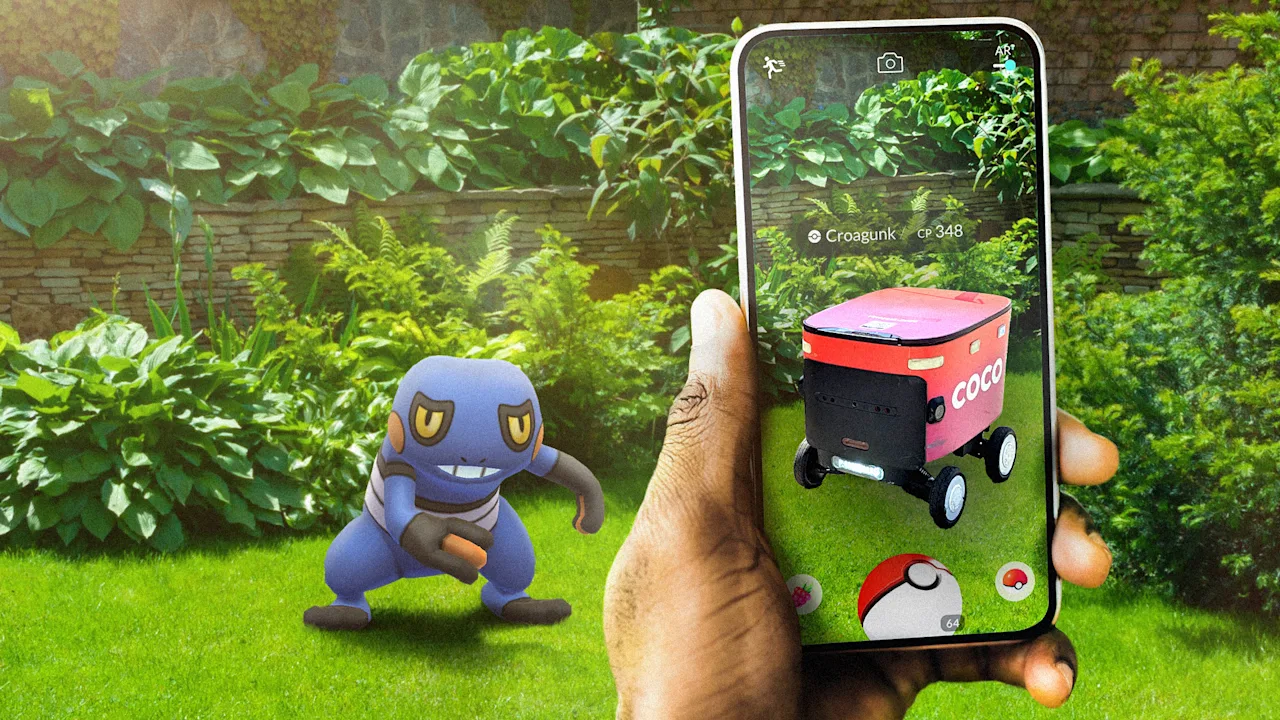
    But now, 10 years later, images captured by players looking to “catch them all” are helping Niantic Spatial—a spinout of Niantic, the San Francisco–based company behind the game—teach robots to navigate the world more effectively by building a highly accurate visual positioning system.

    “It turns out that getting Pikachu to realistically run around and getting Coco’s robot to safely and accurately move through the world is actually the same problem,” John Hanke, CEO of Niantic Spatial, told MIT Technology Review.

    According to MIT Technology Review’s recent report, Niantic Spatial partnered with Coco Robotics, whose flight‑case‑size delivery robots can often be spotted on the sidewalks of Los Angeles, Chicago, Jersey City, Miami, and Helsinki. But the success of the robots depends on them reaching their destination on time—meaning not getting lost.

    That’s where Pokémon comes in.

    When searching for highly coveted Pokémon, players flocked to hot spots, taking multiple scans of the surrounding urban environments and capturing many angles of a single location.

    These scans—as well as those captured by players of Ingress, another Niantic phone‑based AR game—became some of the 30 billion images used to train Niantic’s current visual positioning model.

    “We had a million‑plus locations around the world where we can locate you precisely,” Brian McClendon, CTO at Niantic Spatial, told MIT Technology Review.

    Gathering enough data to create one of the world’s largest image data sets required an enormous manpower—relying on players of a popular game to help. Just in its first week, Pokémon Go was downloaded by over 500 million people, still drawing in millions of users almost a decade later.

    However, not all data is used for the mapping efforts, with players having to opt in to scan their surroundings. For instance, the data used to train the model received scans from the 2020 feature called “Field Search,” which gave players in-game rewards in exchange for scanning landmarks.

    “We’ve been transparent about this”

    While many players may have opted in without understanding the implications, Niantic’s terms of service is transparent about the company using user content to produce new services.

    “Players have to choose to scan a specific public place—it’s not passive, and regular gameplay doesn’t train any AI,” a Niantic spokesperson told Fast Company when reached for comment. “We’ve been transparent about this since 2019 in our privacy policy and public announcements.”

    But while helping robots bring warm pizza to college students seems like a noble pursuit, not everyone is happy—or surprised.

    “500 million people played Pokémon Go; scanned every street, building, and corner on earth; thought they were catching Pikachu. Niantic was building a 30 billion image AI map of the world now powering delivery robots that don’t need GPS,” a user shared to X. “You were the product the whole time.”

    At the same time, many users claim to have seen it coming.

    “Anyone who thought the AR task was there for anything other than collecting real-world data is oblivious to the real world. I fully expected it,” one user shared on Reddit.

    Another added: “No shit, did you think we were scanning pokestops for shits and giggles?”

    And others are taking the news with humor.

    “Have you seen some of these poor bots trying to navigate,” one Redditor says. “We didn’t do a good job.”

    This story has been updated with Niantic’s response to our inquiry.


    Source link

    Share. Facebook Twitter Pinterest LinkedIn Tumblr Email Telegram Copy Link

    Related Posts

    Business

    The end of the ‘good enough’ worker

    June 9, 2026
    Business

    How housing market inventory is shifting across every state

    June 9, 2026
    Business

    Why Repair Cafés are becoming more popular amid the anti-consumerism movement

    June 9, 2026
    Business

    A trip to the center of Knicks merch mania

    June 8, 2026
    Business

    What kinds of knowledge will save you from AI?

    June 8, 2026
    Business

    When competence becomes a liability

    June 8, 2026
    Editors Picks

    Three sneaky-good moves the Yankees should make to shake up their roster

    January 25, 2026

    Five things you need to know about HC Biff Poggi

    December 11, 2025

    UK’s ex-health minister Streeting says will run to replace PM Keir Starmer

    May 16, 2026

    US naval blockade squeezes Iran’s oil exports, forces crude onto floating storage

    April 30, 2026

    After Khamenei’s killing, who is running Iran now?

    March 1, 2026
    About Us
    About Us

    Welcome to Benjamin Franklin Institute, your premier destination for insightful, engaging, and diverse Political News and Opinions.

    The Benjamin Franklin Institute supports free speech, the U.S. Constitution and political candidates and organizations that promote and protect both of these important features of the American Experiment.

    We are passionate about delivering high-quality, accurate, and engaging content that resonates with our readers. Sign up for our text alerts and email newsletter to stay informed.

    Latest Posts

    Storylines for the RBC Canadian Open: Will a Canadian win on home soil?

    June 9, 2026

    The end of the ‘good enough’ worker

    June 9, 2026

    Can Apple and Google stop children from sharing explicit images?

    June 9, 2026

    Subscribe for Updates

    Stay informed by signing up for our free news alerts.

    Paid for by the Benjamin Franklin Institute. Not authorized by any candidate or candidate’s committee.
    • Privacy Policy
    • About us
    • Contact us

    Type above and press Enter to search. Press Esc to cancel.